If you’ve priced out a 40ft container for a job that doesn’t actually need that much space, you already know the problem — you end up paying for volume you’ll never fill. A 20ft shipping container for sale is the right-sized answer for a huge share of storage and shipping needs, small enough to fit on a standard trailer, easy to place on most sites, and still large enough to hold a genuinely useful amount of cargo or equipment.
This 20ft shipping container for sale is built for businesses that need secure, weatherproof storage or straightforward international shipping without the footprint or cost of a larger unit. This page covers the full specification, what it’s built from, and what to check before you order.
What a 20ft Shipping Container Actually Is
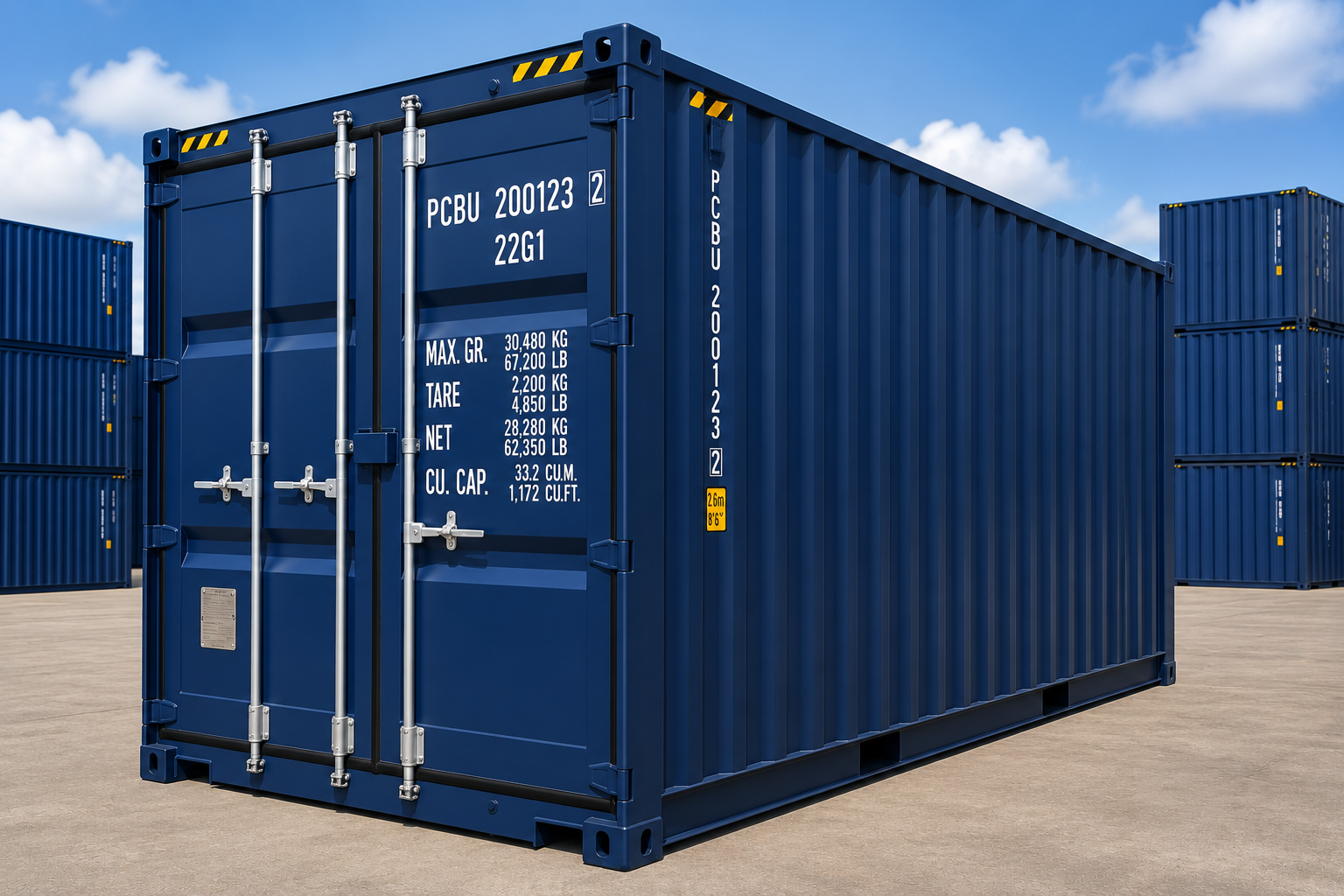
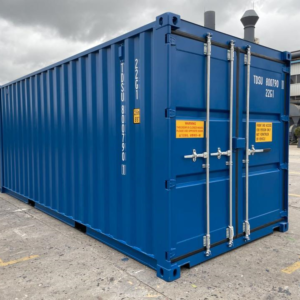
This is the standard dry cargo container that most people picture when they hear the word “shipping container” — a fully enclosed steel box with a single set of rear doors, a solid steel roof, and a floor rated for forklift traffic. No specialized features, no modifications, just a straightforward, secure enclosure built to a globally recognized standard so it handles the same whether it’s on a ship, a truck, or sitting stationary on your property.
Full Specification
| Specification | Details |
|---|---|
| External Length | 20 ft (6.06 m) |
| External Width | 8 ft (2.44 m) |
| External Height | 8 ft 6 in (2.59 m) |
| Internal Length | Approx. 19 ft 4 in (5.90 m) |
| Internal Width | Approx. 7 ft 8 in (2.35 m) |
| Internal Height | Approx. 7 ft 10 in (2.39 m) |
| Cubic Capacity | Approx. 1,170 cu. ft. (33.1 m³) |
| Maximum Gross Weight | 67,200 lbs (30,480 kg) |
| Tare Weight | Approx. 4,850 lbs (2,200 kg) |
| Maximum Payload | Approx. 62,350 lbs (28,280 kg) |
| Construction Material | Corten weathering steel |
| Floor | Marine-grade plywood, forklift-rated |
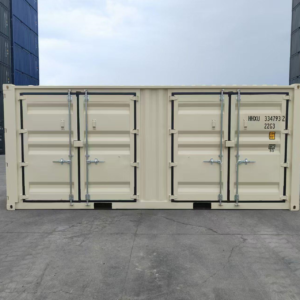
| Door Configuration | Full-width double doors at one end |
| Condition | New |
| Certification | CSC certified |
Confirm the exact tare weight and payload figure on your specific unit before ordering, since minor variations exist between production batches.
Wind and Watertight Construction
A properly sealed 20ft shipping container keeps contents completely dry and protected from outside air, which is what “wind and watertight” actually means in practice — not just resistant to rain, but sealed against dust, pests, and moisture infiltration through door seals and structural joints. This matters just as much for storage use as it does for actual shipping, since a container sitting on your property for years needs the same sealed protection as one crossing an ocean.
What People Actually Use a 20ft Container For
- On-site construction storage for tools, materials, and equipment
- General warehouse overflow storage
- Secure storage for businesses without dedicated warehouse space
- International shipping of general cargo, packaged goods, and equipment
- Converted use — workshops, site offices, pop-up retail, with appropriate modification
- Agricultural storage for equipment, feed, or harvested product
The 20ft size hits a practical sweet spot: large enough for genuine storage or shipping volume, small enough to fit on sites where a 40ft container simply wouldn’t have room to maneuver or sit.
Construction and Build Quality
Corten steel forms the entire structure — walls, roof, and door end — chosen across the container industry because it develops a stable, protective oxide layer that slows corrosion significantly compared to standard steel, particularly relevant for units that spend years outdoors in variable weather. The corrugated wall pattern isn’t decorative; it adds structural rigidity that lets the container support significant stacking weight without adding unnecessary steel mass. The floor is marine-grade plywood, rated for forklift traffic, so loading and unloading doesn’t require hand-carrying everything in and out.
Buying new means no prior dents, no patched corrosion, no accumulated wear on the door hinges and locking bars from years of previous use. For anyone planning to use the container long-term or in a demanding environment, that clean starting condition translates directly into a longer useful life before any repair or maintenance becomes necessary.
CSC Certification and What It Confirms
CSC certification, issued under the International Convention for Safe Containers, confirms the unit has passed inspection against internationally recognized structural safety standards. If you plan to ship this container internationally at any point — now or in the future — valid CSC certification is not optional; ports and shipping lines require it, and a container without it can be refused or delayed. We provide current CSC documentation directly with every unit.
Delivery and Logistics
We arrange delivery of 20ft shipping containers to buyers across Africa, the Middle East, Asia, Europe and the Americas. Being smaller and lighter than a 40ft unit, a 20ft container is generally more flexible to deliver — it fits on standard trailers, needs less turning space, and works with a broader range of unloading equipment. Still, confirm your site access and unloading method with us at quote stage so we can flag anything relevant before the delivery truck arrives.
Common Questions Before Buying
How much weight can be stacked on top of the container? Standard containers are rated for significant stacking weight when empty and properly supported at the corner posts, which is how they’re designed to be stored and shipped in ports. Confirm the specific rating for your intended use if you’re planning to stack multiple units.
Can this container be modified for other uses? Yes, 20ft units are commonly converted into workshops, offices, or retail spaces. Structural modifications like cutting openings for windows or doors should be done by someone experienced with container modification to avoid compromising the structural integrity.
Does the container need a foundation? A level, stable surface is sufficient for most storage use — concrete blocks or a compacted gravel pad work well. A full foundation is only necessary for permanent structural conversions.
How long does a new container last with proper care? With reasonable maintenance and dry storage conditions, a well-built steel container can remain fully functional for well over a decade, often much longer.
Buying New vs Used
| Factor | New | Used |
|---|---|---|
| Structural condition | No dents, no prior repairs | Variable, depends on prior use |
| Seal integrity | Full wind and watertight seal | Can be compromised from wear |
| Appearance | Clean, unmarked exterior | Shows prior branding, wear, or paint |
| Price | Higher upfront cost | Lower upfront cost |
| Best fit for | Long-term use, resale value, appearance-sensitive applications | Short-term or budget-conscious storage |
What to Confirm Before You Order
- Site access and space for a 20ft footprint, including delivery truck clearance
- Whether you need any modifications — ventilation, additional doors, shelving — arranged before delivery
- CSC certification documentation, provided directly with your order
- Realistic delivery timeline against your actual project schedule
- Ground surface preparation for long-term placement
A Practical Example
A small manufacturing business needed secure on-site storage for raw materials and finished inventory but didn’t have room for a full-size warehouse addition. A 20ft shipping container placed in an unused corner of their yard gave them locked, weatherproof storage without any construction, and because it was new, the seals and locking mechanisms worked reliably from day one without the maintenance a used unit might have needed.
Maintenance for Long-Term Storage Use
- Check door seals periodically for wear, particularly if the container is opened and closed frequently.
- Keep the exterior clear of vegetation growing against the walls, which can trap moisture against the steel over time.
- Touch up any paint damage promptly if the protective coating gets scratched, to prevent localized corrosion from starting.
- Ensure drainage around the base so water doesn’t pool against the container long-term.
What Drives the Price of a 20ft Shipping Container
- Steel market pricing. Container costs track global steel prices directly, and this is the single biggest factor in any quote.
- Order volume. Buying multiple units typically brings the per-unit price down, since delivery and paperwork costs spread across the order.
- Delivery distance. Trucking a container to your site is quoted separately from the unit itself and depends on how far it has to travel.
- Optional modifications. Additional doors, ventilation, shelving, or custom paint all add to the base price depending on your specific requirements.
- Current market demand. Container availability and pricing shift with global shipping demand and regional supply, similar to any commodity market.
Be cautious of a quote for a new 20ft shipping container that sits noticeably below what other suppliers are quoting for the same CSC-certified specification. That gap is usually either a used unit sold as new, a lower steel grade than advertised, or missing certification that will cause problems if you ever need to ship it internationally.
Comparing Container Sizes and Configurations
| Configuration | Best for | Footprint |
|---|---|---|
| 20ft standard | General storage, smaller shipments, tight sites | Compact, easy to place |
| 40ft standard double door | Larger volume, access from both ends | Double the length |
| 40ft open top | Oversized or top-loaded cargo | Same as 40ft standard |
| 20ft refrigerated | Temperature-sensitive storage | Same footprint, added equipment |
If your site has limited space, or you don’t need the volume a 40ft unit provides, the 20ft container is usually the more practical and cost-effective choice.
Regional Considerations for Import and Delivery
Import and placement requirements for shipping containers vary by location, and it’s worth checking these before finalizing an order:
- Customs classification. Confirm whether the container is entering as cargo-carrying equipment or as a standalone purchased asset in your country, since this can affect duties.
- Road transport permits. Most regions handle 20ft container transport on standard trailers without special permits, but confirm this for your specific location.
- Local zoning or placement rules. Some municipalities have restrictions on where a shipping container can sit, particularly for long-term or permanent placement rather than transit use.
We flag anything relevant to your destination at quote stage, but confirming local regulations with your own authority or logistics contact before delivery avoids surprises.
Converting a 20ft Container for Alternative Uses
Beyond straightforward storage and shipping, a 20ft shipping container is a popular starting point for conversion projects — site offices, small workshops, pop-up retail spaces, even compact living spaces with sufficient modification. The compact footprint makes it easier to transport and place than a 40ft unit for these projects, though any structural modification — cutting window or door openings, adding electrical or plumbing — should be handled by someone experienced with container conversion, since improper cuts can compromise the structural integrity that makes these containers strong in the first place.
Common Mistakes Buyers Make
- Not measuring the actual delivery site before ordering. Confirm there’s enough clearance for the delivery vehicle to maneuver and place the unit.
- Assuming all “new” containers are genuinely unused. Some sellers use “new” loosely — confirm the unit has never been in service, not just recently refurbished.
- Skipping the CSC certification check for storage-only use. Even if you’re not shipping internationally now, certification matters for resale value and future flexibility.
- Underestimating ground preparation needs. A container placed on uneven or poorly draining ground will develop problems faster than one on a properly prepared surface.
Who Buys This Configuration
- Construction companies needing secure on-site storage
- Small businesses without dedicated warehouse space
- Import and export traders shipping general cargo
- Agricultural operations storing equipment and supplies
- Property owners converting containers for alternative structural uses
How Ordering Works, Step by Step
- Send your requirements. Quantity, destination, and intended use.
- Receive a formal quote. Pricing for the unit plus delivery to your location, with CSC certification confirmed.
- Confirm delivery logistics. Site access and a realistic delivery window based on your actual location.
- Payment and order confirmation. Terms discussed directly based on order size.
- Delivery and documentation. The unit arrives with certification paperwork included.
Inspecting a New 20ft Shipping Container on Delivery
- Check the door seals close fully and the locking bars engage smoothly on both doors.
- Verify the CSC plate is present and current, visibly attached to the unit rather than only referenced in paperwork.
- Inspect the floor for any shipping damage that might have occurred during transport to your site.
- Confirm there’s no visible corrosion or paint damage, which shouldn’t be present on a genuinely new unit.
- Check that the container sits level once placed, adjusting the base surface if needed before you start loading it.
A few minutes of inspection on delivery day catches any issues while they’re still easy to address, rather than discovering a problem months into using the unit.
How Much a 20ft Container Actually Holds
At roughly 1,170 cubic feet of interior space, a 20ft shipping container holds more than most people expect on first glance. As a rough guide, it comfortably fits the contents of a two-to-three bedroom home during a move, roughly ten standard pallets of packaged goods, or a substantial amount of construction equipment and materials for a mid-size job site. The full-width door opening means you’re not fighting a narrow entry point to get larger items in and out, which matters as much for day-to-day access as it does for initial loading.
Ground Preparation Before Delivery
A shipping container doesn’t need a poured foundation for most storage applications, but the surface it sits on does affect how well it holds up over time. A level base — compacted gravel, concrete blocks at the corner points, or a paved surface — prevents the unit from settling unevenly, which over years can stress the door frame and affect how well the doors seal. If you’re planning genuinely long-term placement, particularly in an area with soft or shifting soil, it’s worth the modest upfront effort to prepare a proper base rather than placing the unit directly on bare ground.
Weather Performance Across Different Climates
A 20ft shipping container performs the same wind and watertight job whether it sits in a dry desert climate, a humid coastal region, or somewhere with real winter weather, but the maintenance attention it needs shifts depending on where it lives. In hot, dry climates, the main concern is UV exposure gradually affecting the exterior paint over many years rather than moisture. In humid or coastal environments, keeping door seals clean and checking for any early corrosion becomes more important, particularly near the base where condensation and rain runoff collect. In colder climates, confirm the door locking bars operate smoothly even when the metal contracts in low temperatures, since a seal that fits perfectly in summer can behave differently once temperatures drop.
Freight Terms for International Shipping Use
If you are buying a 20ft shipping container specifically to ship cargo internationally rather than for fixed storage, freight is quoted separately from the unit price, typically on FOB or CIF terms depending on whether you or we arrange the ocean freight. FOB gives you control over your own freight forwarder relationship, while CIF bundles freight and insurance into a single number, which is often simpler for a first-time buyer without an established shipping relationship. Either way, the CSC certification travels with the container and is what customs and port authorities will check regardless of which freight terms you choose.
Frequently Asked Questions
What’s the difference between a 20ft and 40ft shipping container?
The 40ft version offers roughly double the internal volume in a longer footprint, while the 20ft container is easier to place on smaller sites and more flexible to transport. The choice comes down to how much space your specific use case actually needs.
Is a new container more expensive than a used one?
Yes, typically, but the difference reflects the absence of wear, prior repairs, and the full remaining service life you get with a new unit.
Can a 20ft shipping container be used for permanent storage?
Yes, this is one of the most common uses. Placed on a stable, level surface, it provides secure, weatherproof storage for as long as you need it.
Do you deliver worldwide?
Yes, we arrange delivery of new 20ft shipping containers to buyers across Africa, the Middle East, Asia, Europe and the Americas.
Get a Quote on This 20ft Shipping Container For Sale
This 20ft shipping container for sale ships worldwide, CSC certified, wind and watertight, with delivery arranged to your site. Send us your destination, quantity, and intended use, and we’ll respond with current pricing and a realistic delivery window.
Need double-ended access for easier loading? Our 40ft standard double door shipping container offers cargo doors at both ends. Moving temperature-sensitive goods instead? See our 20ft refrigerated shipping container, or our 40ft open top shipping container for oversized cargo.

Reviews
There are no reviews yet.