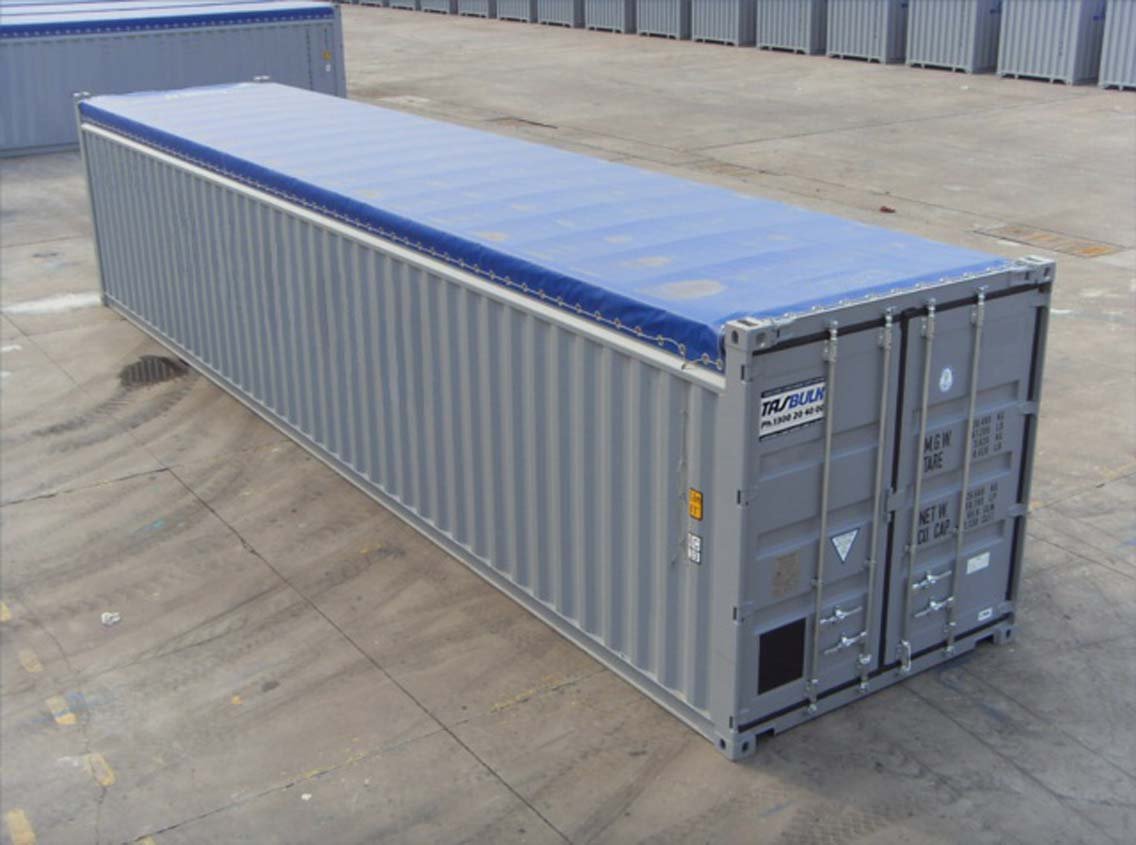
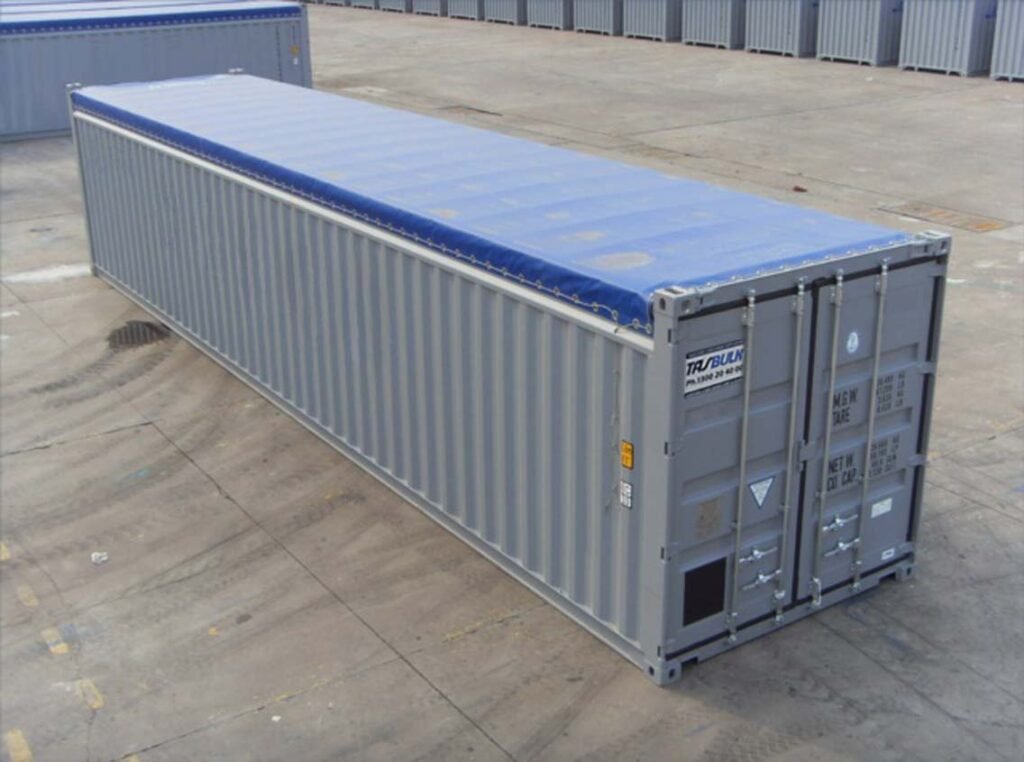
A one trip 40ft open top container is a near-new 40ft box with a removable tarpaulin roof. It has made only one loaded voyage since it was built, so the top rails are straight, the roof bows seat cleanly and the tarpaulin is in excellent condition. Take the roof off and you can lower long, tall or heavy cargo straight in by crane through an opening more than 11 metres long. Prime Cargo Box sells this one trip 40ft open top container wind and watertight and CSC plated.
It is the go-to container for long materials and crane-loaded cargo. Below is what one trip means, the full specification, how the roof works and how to load it safely.
What Is a One Trip 40ft Open Top Container?
New containers usually carry export cargo on their first journey rather than travelling empty. Once that cargo is delivered, many are sold locally. A container sold after that single load is called one trip.
An open top has steel walls, a floor and end doors like any container, but the roof is a set of removable steel bows covered by a heavy tarpaulin. Together, that gives a one trip 40ft open top container the top-loading flexibility of an open top with the condition of a near-new unit.
One Trip 40ft Open Top Container Specifications
| Specification | Details |
|---|---|
| Container type | 40ft open top container (40′ OT), standard height |
| Condition | One trip, near new |
| External length | 40 ft (12.19 m) |
| External width | 8 ft (2.44 m) |
| External height | 8 ft 6 in (2.59 m) |
| Internal length | Approx. 39 ft 5 in (12.03 m) |
| Internal width | Approx. 7 ft 8 in (2.35 m) |
| Internal height | Approx. 7 ft 8 in (2.34 m) to the roof bows; about 2.42 m without bows |
| Roof opening | Approx. 37 ft 11 in long x 7 ft 3 in wide (11.55 x 2.23 m) |
| Door opening | Approx. 7 ft 8 in wide x 7 ft 5 in high (2.34 x 2.28 m) |
| Cubic capacity | Approx. 2,360 cu ft (66.8 m³) |
| Tare weight | Approx. 8,900 lbs (4,050 kg) |
| Maximum gross weight | 67,200 lbs (30,480 kg) or 71,650 lbs (32,500 kg), depending on build |
| Payload | Approx. 26,400 to 28,450 kg, depending on the gross rating |
| Roof | Removable steel roof bows and tarpaulin cover |
| Floor | Marine-grade plywood |
| Doors | Double cargo doors at one end |
| Certification | CSC safety approval plate |
Figures vary slightly between factories. Carriers publish similar data, for example this Hapag-Lloyd 40ft open top specification. We confirm the plate details of your unit on the quote.
How the Roof Works
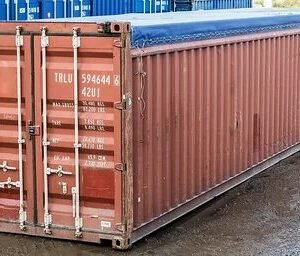
The roof bows drop into sockets along the top side rails and hold the tarpaulin up so rain runs off. A cable or rope through eyelets around the tarpaulin’s edge secures it to the container. To load from above, release the cable, fold back the tarpaulin and lift out the bows. After loading, refit the bows and pull the tarpaulin tight. Many open tops also have a swing-out header above the doors, which can be released for extra height when loading through the end.
Why Choose One Trip?
On an open top, the parts that wear are the top rails, the roof bows and the tarpaulin. Years of crane loading dent the rails and bend the bows, and sun and weather age the tarpaulin. A one trip 40ft open top container has all of these in near-new condition, so the roof seats properly and seals well with minimal maintenance. You save compared with a factory-new unit and avoid the repairs that often come with a used open top.
Who Uses It
Buyers of a one trip 40ft open top container include:
- Pipe, steel and timber merchants handling long lengths
- Machinery dealers and engineering firms shipping equipment
- Construction and civil contractors storing tall plant
- Exporters with long or crane-loaded cargo
- Project logistics firms moving awkward loads
Open Top or Standard Container?
Choose an open top when cargo is long, tall or heavy enough that crane loading is safer or faster. For palletised goods, a standard container is cheaper and its solid steel roof is more secure for unattended storage. If you need a lockable roof that can still be removed, ask us about hard-top containers.
Loading a One Trip 40ft Open Top Container
Lower cargo evenly along the floor, keeping the heaviest items near the middle of the container. Secure loads to the lashing points on the bottom rails before refitting the bows. Long items like pipe and beams should rest on timber bearers so slings can be removed and refitted at the other end. If cargo stands above the side walls, it counts as out of gauge for shipping, so check with your forwarder before booking. When closing up, tension the tarpaulin evenly along the full length and secure every eyelet.
Using It for Export
Because it is young and carries a valid CSC plate, a one trip 40ft open top container can be loaded and shipped straight away. For cargo that fits within the container’s height, it ships like any standard box. For cargo that stands proud of the side walls, the carrier will book it as out of gauge, which needs special stowage on the vessel and usually costs more, so plan cargo height early. Give your forwarder the container number and tare weight from the door markings, and on shipping units thread a customs seal through the tarpaulin cable before dispatch.
Long-Term Storage Tips
If a one trip 40ft open top container will sit on site as a store between crane lifts, keep the roof bows fitted and the tarpaulin fully tensioned, and keep the container level so water drains off the full length of the roof evenly. A tarpaulin is less secure than a steel roof, so it suits materials like pipe, timber and steel better than small high-value goods.
Compare Open Top Options
For unmarked paint, see the new 40ft open top shipping container. For a lower price, the used 40ft open top container is the budget option. For heavy but shorter loads, the one trip 20ft open top container is easier to place.
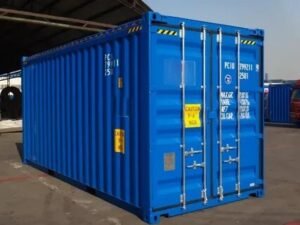
All open tops are on our open top shipping container for sale page.
What to Ask Before Buying
One trip is a trade description, and some sellers use it loosely. Before buying a one trip 40ft open top container from any supplier, ask for the manufacture date on the CSC plate, photos with the tarpaulin on and off, and confirmation that all bows are present and there are no repairs. We include all of this with every quote.
Markings and Registration
Containers carry an owner code and number registered with the Bureau International des Containers. On a one trip unit these may still be visible. They don’t affect use and can be painted over.
Site and Delivery
A 40ft container needs a long, straight truck approach and firm ground. Prepare a level base about 12.5 m by 2.5 m with room at the door end. If you will load from above, make sure a crane or telehandler can safely reach the whole length and there are no overhead cables. Our shipping and delivery policy explains how delivery is quoted.
Care
Keep the tarpaulin tight so water runs off. Check it every few months and patch small tears early. Store bows safely while the roof is open. Grease the door hinges and locking bars, and keep the top rails clean so the bows seat properly.
How to Order a One Trip 40ft Open Top Container
- Send your details. Quantity, delivery address and intended use.
- Get your quote. Price, delivery and plate ratings.
- Confirm access. We check truck and crane access.
- Pay and receive. See our billing and payment policy.
Frequently Asked Questions
Is a one trip 40ft open top container watertight?
Yes, with the tarpaulin fitted and tensioned correctly. Re-tension it after every lift so water runs off instead of pooling.
How long is the roof opening?
About 11.5 m, nearly the full internal length, and about 2.2 m wide. That is long enough to lower standard 6 m lengths of pipe or steel in pairs, or a single 11 m section, straight onto the floor.
Does a one trip 40ft open top container come with a tarpaulin and bows?
Yes. Every unit comes with a full set of bows and a tarpaulin in near-new condition.
Can I ship goods in a one trip 40ft open top container?
Yes. It carries a CSC plate and is accepted for shipping.
Do you deliver worldwide?
Yes. Contact Prime Cargo Box for a delivered price on a one trip 40ft open top container. Tell us your address or nearest port and whether a crane will be available on site.


Reviews
There are no reviews yet.