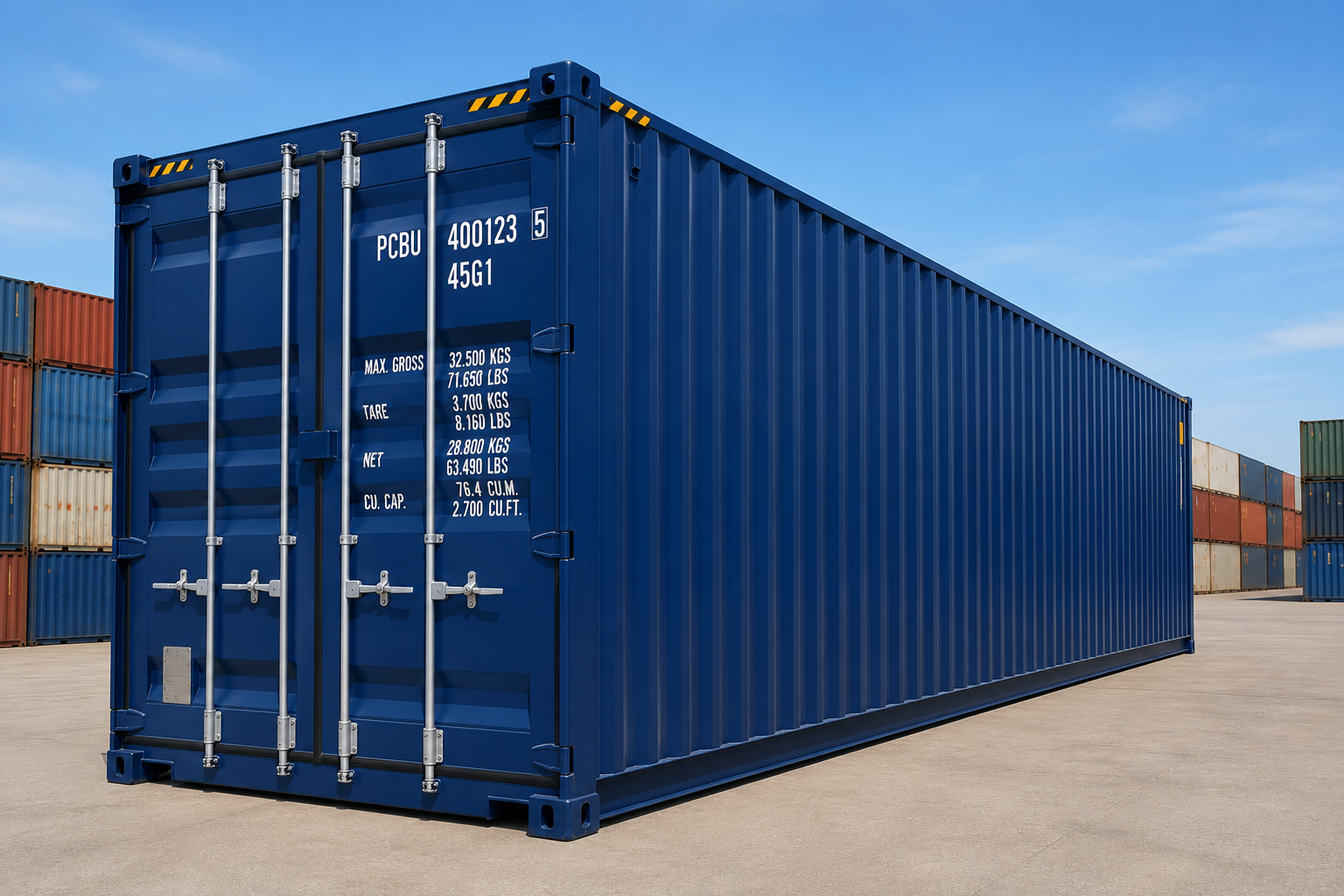
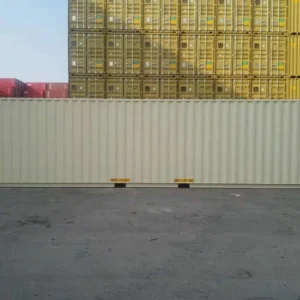
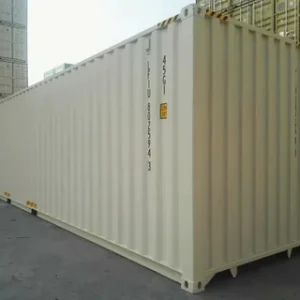
Loading from one end and hoping there’s a way to reach the far corner without unpacking everything in front of it — that’s the daily friction a 40ft standard double door shipping container for sale is designed to eliminate. Full cargo doors at both the front and rear mean you can load from one side and unload from the other, or reach deep into the container from either direction without shifting cargo out of the way first.
This 40ft standard double door shipping container for sale is built for businesses that move enough cargo, or store enough inventory, that single-ended access genuinely slows them down. This page covers the full specification, what the dual-door design actually changes in practice, and what to check before you order.
What a Double Door Container Actually Changes
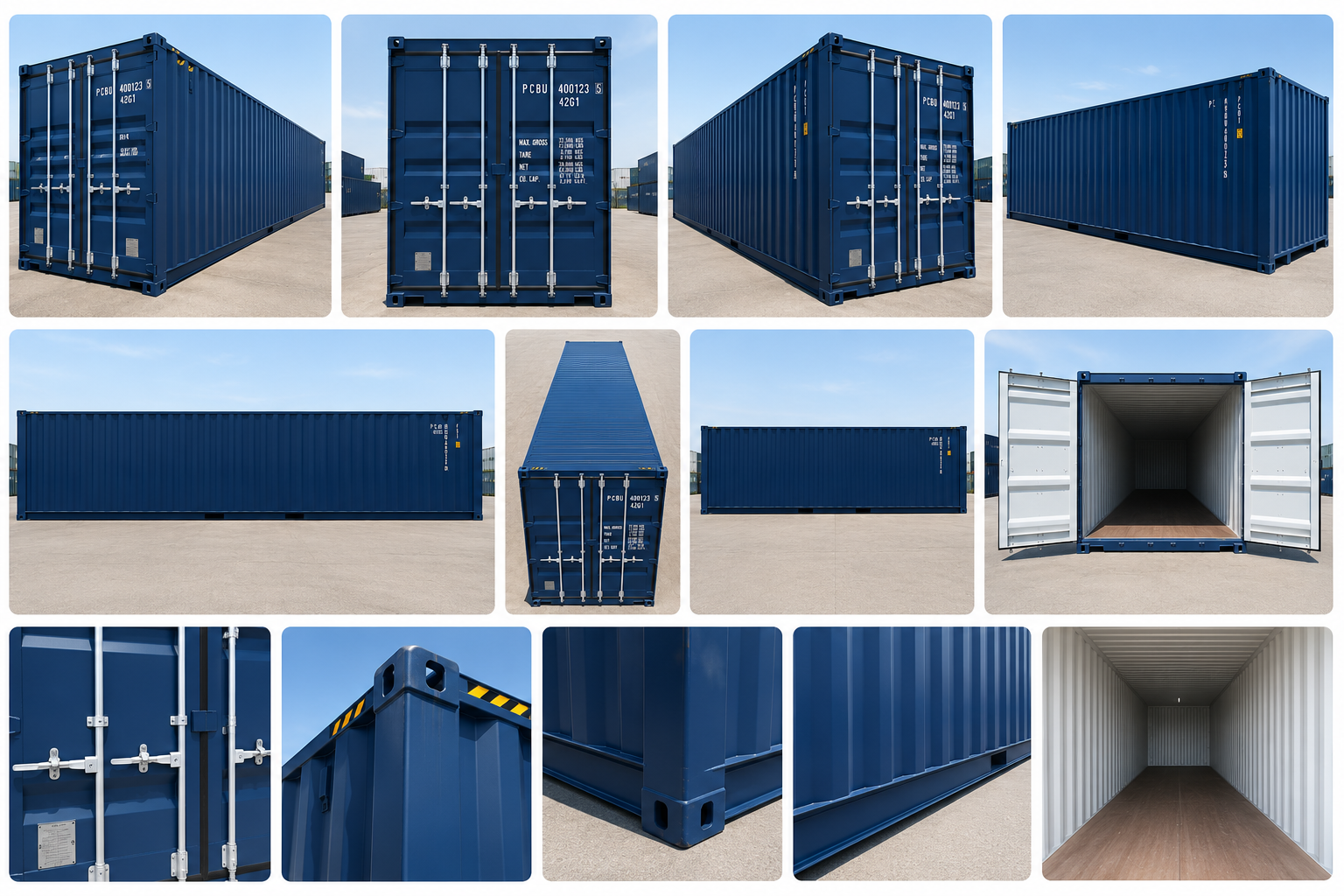
Structurally, this is a standard 40ft dry container — same steel construction, same certified strength, same floor rating. The difference is entirely at the ends: instead of one set of cargo doors, you get full-width doors at both ends, each opening independently. That means you can drive a forklift straight through, load pallets from both directions simultaneously, or simply access cargo near the far end without having to move everything stored closer to a single entry point.
Full Specification
| Specification | Details |
|---|---|
| Container Type | Standard dry shipping container, double door |
| External Length | 40 ft (12.19 m) |
| External Width | 8 ft (2.44 m) |
| External Height | 8 ft 6 in (2.59 m) |
| Internal Length | 39 ft 5 in (12.03 m) |
| Internal Width | 7 ft 8 in (2.35 m) |
| Internal Height | 7 ft 10 in (2.39 m) |
| Door Opening Width | 7 ft 8 in (2.34 m) |
| Door Opening Height | 7 ft 5 in (2.28 m) |
| Cubic Capacity | 2,390 cu. ft. (67.7 m³) |
| Empty Weight | 8,160 lbs (3,700 kg) |
| Maximum Payload | 59,040 lbs (26,780 kg) |
| Maximum Gross Weight | 67,200 lbs (30,480 kg) |
| Flooring | 28mm marine-grade plywood |
| Material | Heavy-duty Corten steel |
| Exterior Finish | Marine-grade paint |
| Certification | CSC certified |
Confirm the exact empty weight and payload figure on your specific unit before ordering, since minor variations exist between production batches.
Where Double-Door Access Actually Matters
- Cross-loading operations — receiving from one end while dispatching from the other without moving inventory around
- Warehouse and yard storage — placing the container between two access points so it can be reached from either side depending on which is more convenient
- Construction sites — accessing tools and materials from whichever end is closer to the current work area
- Distribution and logistics — loading pallets from both ends simultaneously to speed up turnaround
- Long-term storage — reaching cargo stored deep in the container without unpacking everything stored near a single door
If your operation genuinely uses both ends, the efficiency gain compounds daily — it’s not a one-time convenience, it’s a change to how quickly you can move cargo in and out every single time you use the container.
Construction and Build Quality
Heavy-duty Corten steel forms the entire structure, finished with marine-grade paint for additional corrosion resistance in demanding outdoor environments. The 28mm marine plywood floor is rated for forklift traffic, which matters more with a double-door unit since forklift access from both ends is one of the main reasons buyers choose this configuration in the first place. Both door sets use the same secure locking bar mechanism found on standard containers, so the dual-door design doesn’t compromise the container’s overall security — each end locks independently and just as securely as a single-door unit.
Buying new means both door sets start with tight seals and smoothly operating hinges and locking bars, which matters more here than on a standard container simply because there are twice as many door mechanisms that need to function reliably.
CSC Certification and What It Confirms
CSC certification, issued under the International Convention for Safe Containers, confirms the unit meets the structural safety standards required for international transport. The double-door modification doesn’t affect the underlying structural rating — the unit is engineered and certified to the same standard as a single-door container. We provide current CSC documentation directly with every unit we sell.
Delivery and Logistics
We arrange delivery of 40ft standard double door shipping containers to buyers across Africa, the Middle East, Asia, Europe and the Americas. Since many buyers of this configuration plan to position the unit for access from both ends, think through your site layout before delivery — confirm there’s clearance and access on both sides of where the container will sit, not just the side the delivery truck approaches from.
Common Questions Before Buying
Can each door be locked independently? Yes, each end has its own complete locking mechanism, so you can secure one end while leaving the other accessible if your workflow requires it.
Does the double-door design reduce the container’s strength? No, the unit is engineered and certified to the same structural standard as a single-door 40ft container.
Is this configuration more expensive than a standard single-door container? Generally yes, since it requires an additional full door assembly, but the cost difference is often worth it for operations that genuinely use both ends regularly.
Can I position the container so only one end is accessible, if my site changes later? Yes, having both ends functional gives you flexibility even if you only use one at a time — you’re not locked into a specific site layout.
Buying New vs Used
| Factor | New | Used |
|---|---|---|
| Door seal integrity | Both ends fully sealed | Wear more likely with two door sets in use |
| Structural condition | No dents, no prior repairs | Variable, depends on prior use |
| Locking mechanism condition | Smooth operation on both ends | Can be stiff or worn from repeated use |
| Price | Higher upfront cost | Lower upfront cost |
With twice the door hardware of a standard container, a used double-door unit has more components that could show wear. For operations relying on smooth, reliable access from both ends daily, new construction reduces that risk considerably.
What to Confirm Before You Order
- Site access and clearance on both ends of where the container will sit
- Whether your forklift or loading equipment can approach from both directions
- CSC certification documentation, provided directly with your order
- Realistic delivery timeline against your actual project schedule
- Ground surface preparation, particularly if both ends need equal access
A Practical Example
A regional distribution business was regularly bottlenecked by single-door container access — inbound stock had to be unloaded, moved out of the way, then outbound orders pulled from the same single opening. Switching to a 40ft standard double door shipping container let them receive inbound pallets at one end while staff picked outbound orders from the other, cutting the daily handling time significantly without any change to their actual storage capacity.
Maintenance for Long-Term Use
- Inspect both door sets regularly, not just the one used most often, since the less-used end can develop issues that go unnoticed longer.
- Keep both sets of hinges and locking bars lubricated if the doors see frequent use.
- Check seal integrity on both ends periodically, since a compromised seal on either side affects the container’s weatherproofing.
- Clear debris from both door tracks to keep opening and closing smooth on each end.
What Drives the Price
- Additional door assembly. A second full door set adds material and labor cost over a standard single-door container.
- Steel market pricing. Like any container, base steel costs track global steel pricing.
- Order volume. Multiple units ordered together typically bring the per-unit price down.
- Delivery distance and site complexity. Delivery is quoted separately and depends on distance and access requirements at both ends of the placement site.
Be cautious of a quote significantly below the market range for a new, CSC-certified double door unit — that gap usually means a used container, a lower steel grade, or door hardware that won’t hold up to the daily use this configuration is meant for.
Loading Efficiency in Practice
The real-world time savings from dual-end access add up faster than most buyers expect before they actually start using one. A single-door container forces every load and unload cycle through one opening, meaning cargo near the back has to wait until everything in front of it clears, or gets shuffled around to make room. With both ends open, a warehouse team can stage inbound goods at one door while outbound orders get pulled from the other, running both processes in parallel instead of queuing them through a single access point. Over a full working day, that difference in workflow efficiency is often the actual return on the extra upfront cost of the double-door configuration.
Comparing Configurations
| Configuration | Best for |
|---|---|
| 40ft double door | Cross-loading, dual-end access operations |
| 40ft open top | Oversized or top-loaded cargo |
| 20ft standard | Smaller volume, tighter sites |
| 40ft refrigerated | Temperature-sensitive cargo |
Who Buys This Configuration
- Distribution and logistics operations with high cargo turnover
- Construction companies needing dual-access on-site storage
- Warehouses positioned between two active work areas
- Import and export traders cross-loading between transport methods
- Businesses converting containers into dual-entry structures
How Ordering Works, Step by Step
- Send your requirements. Quantity, destination, and intended site layout.
- Receive a formal quote. Pricing for the unit plus delivery, with CSC certification confirmed.
- Confirm delivery logistics. Site access on both ends and a realistic delivery window.
- Payment and order confirmation. Terms discussed directly based on order size.
- Delivery and documentation. The unit arrives with certification paperwork included.
Regional Considerations for Import and Delivery
Import and placement requirements for shipping containers vary by location, and it’s worth checking these before finalizing an order:
- Customs classification. Confirm whether the container enters as cargo-carrying equipment or as a standalone purchased asset in your country, since this can affect duties.
- Road transport permits. A 40ft container is a long, heavy load on most road networks — confirm whether your region requires specific permits for oversized road transport.
- Local zoning or placement rules. Some municipalities restrict where a shipping container can sit, particularly for long-term or permanent placement rather than transit use.
We flag anything relevant to your destination at quote stage, but confirming local regulations with your own authority or logistics contact before delivery avoids surprises once the unit is already en route.
Positioning the Container for Maximum Dual-Access Benefit
Getting the full value out of a double door configuration depends on how the container is actually positioned once it arrives. A unit placed flush against a wall or fence on one end effectively becomes a single-door container in practice, regardless of what it’s capable of. If dual-end access is the reason you’re choosing this configuration, plan the placement site with clearance on both ends from the outset — enough room for a forklift or hand cart to approach from either direction, not just enough space for the container itself to physically fit.
Common Mistakes Buyers Make
- Ordering double doors without planning site access on both ends. The configuration only pays off if both ends are actually usable once placed.
- Assuming double doors mean reduced structural strength. The unit carries the same certified rating as a single-door container — this isn’t a tradeoff.
- Not checking both door sets on delivery. Inspect both ends thoroughly, not just the one you’ll use most often initially.
- Underestimating the price difference without understanding why. The additional door assembly is real added cost, not padding — factor it into your budget from the start.
Comparing New vs Refurbished Double Door Units
Some sellers offer refurbished double-door containers at a lower price point, repainted and with cosmetic repairs to disguise prior wear. The door mechanisms on a double-door unit see roughly double the use of a single-door container over its working life, which means refurbished units in this configuration are more likely to have hardware nearing the end of its reliable service life, even when the cosmetic finish looks acceptable. If you’re comparing a lower-priced refurbished option against a new unit, ask directly about the age and service history of both door assemblies, not just the general container condition.
Freight and Insurance Considerations for a Double Door Unit
When a 40ft standard double door shipping container is moving as active shipping equipment rather than sitting as fixed storage, freight terms work the same as any standard container — quoted FOB or CIF depending on whether you or the seller arranges ocean freight. The double-door configuration does not change freight classification or cost beyond the base unit price, since it ships and stacks identically to a single-door container in transit. Insurance considerations are also unchanged — standard cargo or asset insurance covers the unit the same way it would any other container of the same size and material.
Site Layout Examples for Dual-Access Use
A few common layouts make the most of double-door access: placing the container as a pass-through between a receiving yard and a staging area, positioning it at the boundary between two storage zones so each zone has its own dedicated door, or setting it up so a forklift can drive straight through during high-volume loading days. None of these layouts require special site preparation beyond what a single-door container would need — the main difference is simply planning for equipment and personnel access on both ends rather than just one, which is worth sketching out before delivery rather than figuring out after the container is already in place.
Frequently Asked Questions
What’s the advantage of double doors over a single-door container?
Access from both ends means you can load and unload simultaneously, reach cargo without unpacking around it, or position the container between two work areas for convenient access from either side.
Is the double door version wind and watertight like a standard container?
Yes, both door sets seal fully when closed, providing the same weatherproof protection as a single-door unit.
Can this container be converted for other uses given the double access?
Yes, the dual-door design is popular for conversion projects needing pass-through access, though structural modifications should be handled by someone experienced with container conversion.
Do you deliver worldwide?
Yes, we arrange delivery of new 40ft standard double door shipping containers to buyers across Africa, the Middle East, Asia, Europe and the Americas.
Get a Quote on This 40ft Standard Double Door Shipping Container For Sale
This 40ft standard double door shipping container for sale ships worldwide, CSC certified, wind and watertight, with delivery arranged to your site. Send us your destination, quantity, and site layout, and we’ll respond with current pricing and a realistic delivery window.
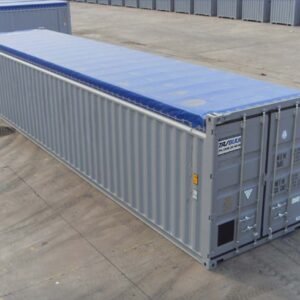
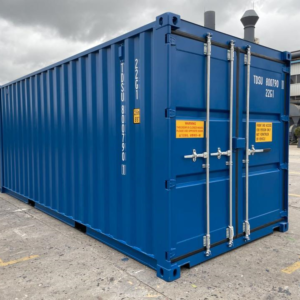
Need oversized top-loading instead? Our 40ft open top shipping container covers cargo that needs to be lowered in from above. For a smaller footprint, see our 20ft shipping container, or our 40ft refrigerated shipping container for temperature-controlled cargo.

Reviews
There are no reviews yet.