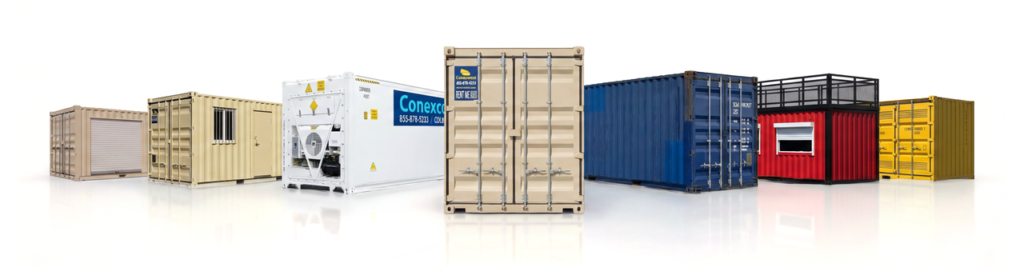
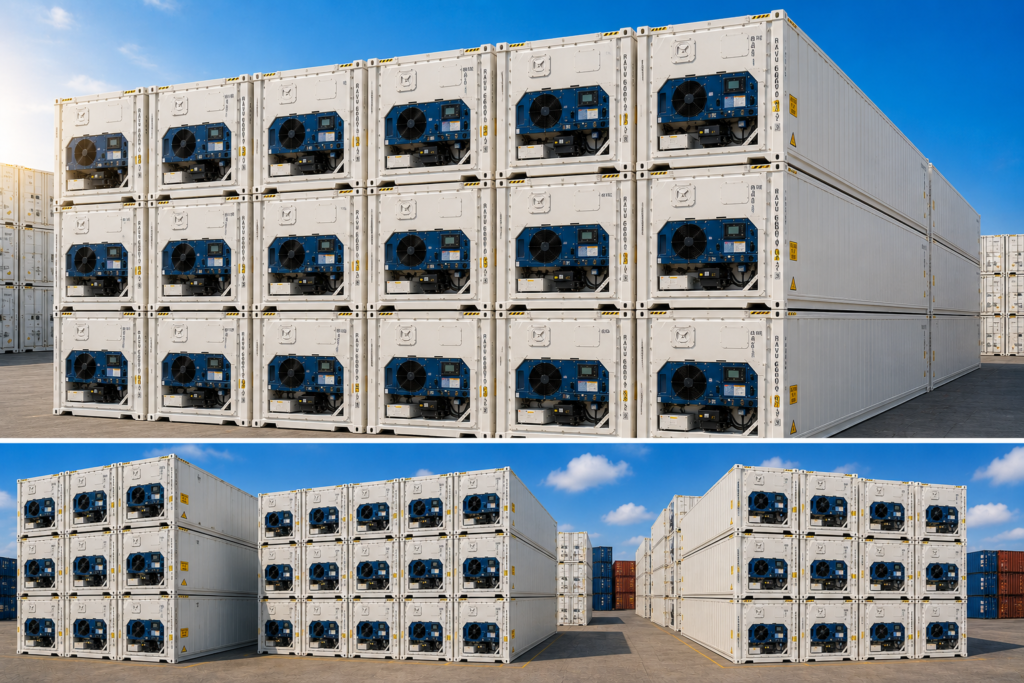
If you’re searching for cargo containers for sale, you’ve come to the right place. We sell shipping containers for customers who need dependable space for storage, commercial use, construction projects, equipment, inventory, transportation, and other practical applications.
We understand that buying a shipping container isn’t something most people do every day. You may know that you need a container but have no idea whether you should buy a 20ft container, a 40ft model, a high cube, a new one-trip unit, or a used container.
That’s completely normal.
The important thing is to start with what you actually need the container to do.
A small business looking for extra inventory storage has different requirements from a construction company buying several containers for job sites. A farmer storing equipment may care more about security and durability, while someone planning a container conversion may want a newer unit with a cleaner exterior and interior.
We offer cargo containers for sale to meet a range of these requirements. Our goal is simple: help you understand your options, choose the right container, and arrange delivery to your location. For the full order process, read how to buy a shipping container.
This guide covers what you should know before buying.
What Are Cargo Containers?
Cargo containers are the large steel containers originally designed to transport goods efficiently between different forms of transportation.
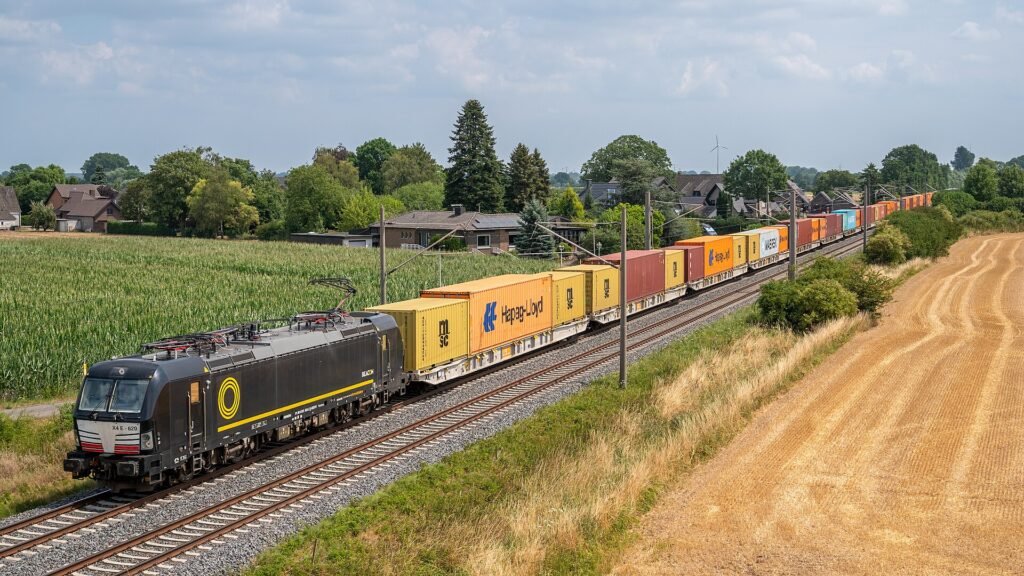
You’ve probably seen them stacked on cargo ships, sitting at ports, moving on freight trains, or being transported on trucks.
They’re also commonly called shipping containers, sea containers, freight containers, ISO containers, or intermodal containers.
The names may vary, but customers searching for cargo containers for sale are generally looking for the same basic product: a strong, standardized steel container that can be used for shipping, storage, or other suitable purposes.
One of the reasons these containers have become so popular outside the shipping industry is their versatility.
After their time in cargo transportation, many containers continue working for years as storage units. Others are modified into offices, workshops, retail spaces, equipment rooms, and other structures. For budget options, read about cheap shipping containers.
Newer containers are also available for customers who want something in better cosmetic condition.
Whatever you call them, they’re built to handle demanding environments.
Cargo Containers for Sale in Different Sizes
Size is one of the first decisions you’ll need to make.
The two sizes most customers ask about are 20ft and 40ft containers.
There are other configurations available in the container market, but these two lengths cover a large percentage of everyday storage and commercial requirements.
When looking at cargo containers for sale, don’t automatically assume that bigger is always better.
A 40ft container gives you considerably more storage capacity, but it also requires more room on your property and more space for the delivery vehicle to unload it.
A 20ft container is smaller but may be much easier to position on a tight site.
Think about three things: what you’re storing, how much space you have, and how the container will be delivered.
Getting those three things right will make choosing a container much easier.
20ft Cargo Containers for Sale
A 20ft cargo container is a good all-around choice.
It’s large enough to provide useful storage capacity but compact enough to work on many residential, commercial, agricultural, and construction sites.
Customers often use 20ft containers to store tools, equipment, building materials, household belongings, business inventory, machinery parts, and agricultural supplies.
Construction companies like them because they can provide secure storage directly on a job site without taking up the space of a larger unit.
Small businesses may use them when their existing warehouse or stockroom runs out of space.
Farmers and property owners may use them for tools and equipment that need to be kept together and protected.
If you’re browsing cargo containers for sale and you’re not sure what size to choose, a 20ft unit is often worth considering.
It’s also a popular starting point for smaller conversion projects.
Depending on the work involved and local requirements, a 20ft container may be adapted for uses such as a small office, workshop, kiosk, or equipment room.
If you’re planning a conversion, make sure you choose the right container before modifications begin. Starting with the wrong size can become expensive later.
40ft Cargo Containers for Sale
For customers who need substantially more space, a 40ft container is often the better option.
These containers are popular with businesses, contractors, farms, warehouses, manufacturers, and other customers who need to store larger quantities of goods or equipment.
A 40ft container gives you a long, continuous storage area.
That can be more practical than purchasing two smaller containers, particularly if you want everything stored in one place.
When comparing cargo containers for sale, consider the cost per amount of usable space rather than looking only at the purchase price.
A larger container may offer better overall value if you genuinely need the capacity.
The main thing to consider is your site.
A 40ft container needs a suitable placement area and enough access for the delivery vehicle. Before ordering, measure the site and look carefully at the route the truck will need to take.
A great container isn’t much use if the delivery truck can’t reach the place where you want it.
40ft High Cube Cargo Containers
High cube containers are popular because they provide additional internal height compared with standard-height models.
The difference may not seem huge until you start using the container.
That extra height can be valuable when you’re storing tall equipment, stacking goods, or planning a conversion.
Customers looking for cargo containers for sale for commercial storage often consider 40ft high cube units because of the additional usable volume.
They’re also popular for conversion projects.
If you’re adding insulation, ceilings, lighting, ventilation, or other interior features, those additions can reduce your usable internal height. Starting with a high cube container gives you more room to work with.
Before choosing between a standard and high cube container, think about your long-term plans.
If you only need straightforward ground-level storage for smaller items, a standard unit may be enough.
If you’re storing bulky equipment or modifying the interior, the additional height may be worth having.
New Cargo Containers for Sale
Customers often ask us about new containers.
In the shipping container industry, many containers sold as new are known as one-trip containers.
A one-trip container is generally manufactured, used for an initial cargo journey, and then sold into the container market.
Because transporting a brand-new empty container from the manufacturing location isn’t always economical, using it for cargo on its first journey makes practical sense.
As a result, a one-trip container may have minor marks from transportation and handling, but it will generally have experienced far less use than an older container that has spent years in active shipping service.
Newer cargo containers for sale are a good choice for customers who care about appearance.
They may also be suitable for conversion projects where starting with a cleaner unit can save preparation work.
If your container will be positioned somewhere highly visible, a newer unit may be worth the additional cost.
Used Cargo Containers for Sale
Used containers can offer excellent practical value.
A used container doesn’t have to look perfect to do a good job.
Containers that have spent time in cargo service will naturally show signs of use. You may see scratches, dents, faded paint, surface rust, shipping markings, patches, and previous repairs.
That’s normal.
The important question is whether the container’s condition is suitable for what you plan to do with it.
Customers searching for affordable cargo containers for sale often choose used units for general storage, construction sites, farms, industrial properties, and other situations where cosmetic appearance isn’t the main concern.
A used container can make a lot of sense if you’re storing tools or equipment and don’t care about a few dents on the outside.
Just make sure you understand the condition you’re buying.
Ask whether the container is wind and watertight, cargo-worthy, or sold under another condition grade.
The cheapest container isn’t automatically the best deal. Condition matters.
One-Trip vs. Used Cargo Containers
The choice between one-trip and used containers usually comes down to budget, condition, and intended use.
If you want a container that looks relatively clean and has experienced minimal previous use, a one-trip unit is probably the better option.
If you’re mainly interested in functionality and want to keep costs down, a used container may be enough.
When comparing cargo containers for sale, ask yourself a simple question: what will bother you more, paying extra for better condition or seeing dents and cosmetic wear every time you look at the container?
For an industrial storage yard, appearance may not matter.
For a retail business, residential property, or customer-facing location, it might matter quite a bit.
There’s no single correct answer.
Buy based on what you need rather than automatically choosing the cheapest or newest option.
Cargo Containers for Storage
Storage is one of the biggest reasons people buy shipping containers.
Sometimes you simply run out of room.
A business may have more inventory than its building can hold. A contractor may need somewhere secure for expensive tools. A farmer may need additional space for equipment. A homeowner may need temporary storage during a renovation.
Instead of immediately constructing a new building or renting off-site warehouse space, a shipping container can provide another option.
Our cargo containers for sale can be used for many suitable storage applications.
The advantage is that your storage is located where you need it.
You can walk out to the container and access your equipment rather than driving across town to a storage facility.
Before storing sensitive goods, consider the environment inside the container. Temperature, humidity, ventilation, and condensation can matter depending on your climate and what you’re storing.
The container needs to be suitable for the intended contents.
Cargo Containers for Business Inventory
Running out of inventory space is a common problem for growing businesses.
Moving to a bigger building isn’t always practical. It can be expensive, disruptive, and unnecessary if you simply need additional storage.
That’s where a cargo container may help.
Businesses can use containers to store suitable inventory, packaging materials, equipment, supplies, and seasonal goods.
Customers looking at cargo containers for sale for business use should think carefully about access.
If employees need to enter the container several times every day, place it somewhere convenient.
If you’re moving pallets or heavy equipment, make sure there’s enough room around the doors.
Organization also matters.
A large container can quickly become frustrating if everything is piled randomly from floor to ceiling. Shelving, racking, and a sensible layout can make the space much more useful.
The container provides the room. How you organize that room determines how useful it becomes.
Cargo Containers for Construction Sites
Construction sites are another natural fit for shipping containers.
Tools and building materials can be expensive. Leaving them exposed isn’t ideal, and transporting them back and forth every day wastes time.
A container gives contractors a dedicated place to keep suitable equipment and materials on-site.
Our cargo containers for sale may be used by construction businesses looking for job-site storage or as the basis for professionally modified site facilities.
A 20ft container may work well for smaller projects.
Larger sites may need 40ft units or several containers serving different purposes.
The important thing is placement.
A container should be positioned somewhere that’s convenient for workers but doesn’t interfere with vehicles, machinery, or the progress of construction.
As the project develops, access requirements may change, so think ahead before choosing the final position.
Cargo Containers for Farms
Farms have a habit of collecting equipment.
Tools, spare parts, maintenance supplies, seasonal equipment, and other items all need somewhere to go.
A shipping container can provide additional storage without requiring a traditional permanent building.
Farmers searching for cargo containers for sale should pay particular attention to site preparation.
Rural properties can have challenging ground conditions. A delivery vehicle carrying a heavy container needs safe access, and the container itself should be positioned on suitable supports.
Drainage matters too.
You don’t want water constantly pooling around the base of the container.
Think about convenience as well. Place the container somewhere that makes sense for daily use rather than simply choosing the first open piece of ground.
A few minutes of planning before delivery can save years of inconvenience.
Cargo Containers for Equipment Storage
Equipment storage is another common use.
Contractors, landscapers, maintenance companies, manufacturers, and other businesses often own tools and equipment that need secure, organized storage.
Depending on the type of equipment involved, a cargo container may provide a practical solution.
When shopping for cargo containers for sale, measure your equipment first.
Don’t estimate.
Check the dimensions of the largest items you intend to store and make sure they’ll fit through the container doors as well as inside the container itself.
Door clearance can be just as important as internal space.
If you regularly move equipment in and out, think about how you’ll handle loading and unloading.
Buying the right container is only part of the solution. The container also needs to work with your everyday operations.
Cargo Containers for Conversion Projects
Shipping container conversions have attracted a lot of interest over the years.
The strong steel structure gives people a starting point for a wide range of projects.
Depending on professional modifications and local requirements, containers may be converted into offices, workshops, retail units, kiosks, equipment rooms, and other functional spaces.
Customers buying cargo containers for sale specifically for conversion often prefer one-trip or newer units.
Starting with a cleaner container can reduce some preparation work and provide a better cosmetic foundation.
However, don’t assume that converting a container is as simple as cutting holes for windows and adding furniture.
Structural modifications need careful planning.
Cutting large sections from the walls can affect structural integrity. Electrical work should be completed properly. Ventilation, insulation, plumbing, foundations, and fire safety may need to be considered.
Local building codes, zoning restrictions, and permit requirements may also apply.
Plan the project before buying the container.
Buying Cargo Containers for Commercial Projects
Commercial buyers often have different priorities from individual customers.
You may need several containers.
You may need them delivered to multiple locations.
You may need consistent sizes and condition grades across an entire order.
If you’re sourcing cargo containers for sale for a commercial project, provide as much information as possible when requesting a quote.
Tell the supplier how many containers you need, what sizes you want, the preferred condition, and where they need to be delivered.
For multi-unit purchases, delivery logistics become particularly important.
A site needs enough room to receive multiple containers safely. The delivery schedule may also need to be coordinated with staff or other contractors.
Planning the entire order from the beginning is usually easier than treating every container as a separate purchase.
What to Check Before Buying a Cargo Container
Before spending your money, make sure you understand exactly what you’re buying.
Start with condition.
Is the container new, one-trip, or used?
If it’s used, what condition grade is it being sold under?
Next, confirm the size and configuration.
A 20ft standard container, 40ft standard container, and 40ft high cube are different products. Make sure the quotation matches what you requested.
Then look at delivery.
When comparing cargo containers for sale, always ask whether the advertised price includes delivery.
If it doesn’t, get a delivery quote before making your decision.
A container that looks cheaper online may end up costing more once transportation is included.
Finally, ask about the photographs.
Are you looking at the exact container you’ll receive, or are the images representative of the general condition?
There’s nothing wrong with representative photos as long as that’s made clear.
Understanding Cargo Container Condition
Condition terminology can be confusing if you’ve never bought a container before.
One-trip generally refers to a newer container with minimal cargo use.
Cargo-worthy usually refers to a container meeting certain requirements for cargo transportation, although certification and inspection requirements should always be confirmed if you actually intend to use the container for international shipping.
Wind and watertight containers are commonly purchased for storage applications.
Used containers may show considerable cosmetic wear while still being suitable for their intended purpose.
When browsing cargo containers for sale, don’t rely only on the label.
Ask what the condition description actually means for the container you’re considering.
If appearance is important, say so.
If you only care about secure storage and don’t mind cosmetic wear, say that too.
Clear expectations make it easier to find the right unit.
Preparing Your Site for Container Delivery
You found the right container.
You agreed on the price.
Now you need somewhere to put it.
Before delivery day, make sure the site is ready.
The delivery vehicle needs enough space to approach the placement area and unload safely.
Look for overhead power lines, tree branches, narrow entrances, walls, fences, parked vehicles, and other obstacles.
Ground conditions matter.
Soft or unstable ground can create problems for heavy delivery vehicles.
Your container should also be properly supported according to the site conditions and intended use.
When ordering cargo containers for sale, give accurate information about your delivery location.
If you’re unsure whether access is suitable, discuss it before scheduling delivery.
It’s much easier to solve an access problem in advance than when a truck carrying your container is already outside the property.
Decide Where the Doors Should Face
This is a small detail that can become a big annoyance if you get it wrong.
Decide which way you want the doors to face before delivery.
Think about how you’ll access the container.
Will you be carrying tools from a workshop?
Will forklifts need to approach the doors?
Will customers or employees need regular access?
Is the container going to become part of a larger conversion later?
Once the container is placed and filled with equipment, moving it becomes more complicated.
Plan the orientation before it arrives.
How Much Do Cargo Containers Cost?
There isn’t one worldwide price for shipping containers.
Prices change based on size, condition, location, availability, market conditions, and delivery requirements.
A used 20ft container located close to the customer will naturally be priced differently from a one-trip 40ft high cube that needs to travel a considerable distance.
That’s why customers looking for cargo containers for sale should focus on the total delivered price.
Ask for a clear quotation.
Know what you’re paying for the container itself and what you’re paying for transportation.
If additional equipment is required for unloading, find out whether that’s included.
The cheapest advertised price isn’t always the cheapest final price.
Compare like with like.
Cargo Container Delivery
Shipping containers are large pieces of equipment, so delivery requires planning.
The exact delivery method depends on your location, the container size, available equipment, and site conditions.
Before ordering, provide an accurate delivery address.
Tell the supplier about anything unusual that could affect access.
If the site is remote, narrow, steep, soft, or difficult to reach, mention it.
Customers purchasing cargo containers for sale should also make sure someone is available when required to confirm placement.
Once unloading begins, you want everyone to know exactly where the container is going.
Clear communication between the customer, supplier, and delivery team makes the process much easier.
Buying Cargo Containers Worldwide
Shipping containers are a global product.
They’re manufactured, transported, used, and resold across international markets every day.
We serve customers looking for cargo containers for sale for a range of applications and locations, subject to inventory and delivery availability.
If you’re purchasing from another region or country, logistics become particularly important.
You need to understand where the container is located and how it will reach you.
There may also be customs requirements, duties, taxes, port charges, or other costs depending on the transaction and destination.
These details should be clarified before completing an international purchase.
Worldwide availability doesn’t mean every container can be delivered everywhere at the same price.
Location matters.
Why Buy Cargo Containers From Us?
We sell shipping containers to customers who need practical solutions.
Whether you’re buying a 20ft container for extra storage or sourcing multiple 40ft units for a commercial operation, we want the buying process to be straightforward.
Our cargo containers for sale include options for different requirements, subject to current inventory and location.
We understand that customers want clear information.
You want to know what size you’re buying.
You want to understand its condition.
You want to know the price.
And you want to understand how delivery works.
That’s how buying a shipping container should be.
If you’re unsure what you need, tell us what you’re planning to store or what you’re trying to accomplish.
Sometimes the best way to choose a container is simply to talk through the project.
Frequently Asked Questions About Cargo Containers for Sale
Are cargo containers and shipping containers the same thing?
The terms are often used interchangeably. You may also hear sea container, freight container, ISO container, or intermodal container.
What is the most popular cargo container size?
20ft and 40ft containers are among the most commonly requested sizes. The right choice depends on your available space and storage requirements.
Can I buy a new cargo container?
Yes. Newer containers are commonly sold as one-trip units. These containers have typically made an initial cargo journey and generally have significantly less wear than older used containers.
Can I buy used cargo containers?
Yes. Used containers are popular for storage and other suitable applications. Their cosmetic condition varies depending on age and previous use.
Do you sell high cube containers?
High cube containers are available in the wider container market and are popular with customers who need additional internal height. Availability should be confirmed when ordering.
Can cargo containers be delivered?
Delivery options depend on the container location, customer destination, equipment availability, and site conditions.
Can I order several containers?
Yes, subject to inventory and logistics. For larger orders, provide the number of containers, required sizes, condition preferences, and delivery location when requesting a quote.
Can I convert a cargo container?
Containers can be professionally modified for various suitable uses. Structural modifications and other work should comply with applicable building codes, zoning rules, permits, and professional requirements.
What should I check before delivery?
Make sure the delivery vehicle has safe access. Check for narrow gates, overhead wires, low branches, soft ground, tight turns, and other potential obstacles.
How do I get a price?
Provide the size, quantity, preferred condition, and delivery location. This information makes it possible to determine availability and applicable pricing.
Find Cargo Containers for Sale Today
Buying a shipping container doesn’t need to be complicated.
Start by deciding what you need to store.
Choose the size that makes sense.
Think about whether you want a newer one-trip container or whether a used unit will do the job.
Prepare your delivery site.
Then ask for a clear price based on your actual location and requirements.
We offer cargo containers for sale for customers looking for dependable shipping containers for storage, construction, business inventory, agriculture, equipment, and other suitable applications.
Whether you need a compact 20ft unit, the additional capacity of a 40ft container, or the extra internal height of a high cube, the right container starts with understanding your requirements.
Don’t buy more container than you need.
Don’t buy less space than you’ll actually use.
And don’t choose a container based solely on the lowest advertised price without understanding its condition and delivery costs.
If you’re ready to buy, contact us with the size you need, the number of containers you’re looking for, and your delivery location.
We’ll help you check available cargo containers for sale and find the right shipping container for your needs.
A good container can provide years of practical use.
For some customers, it’s secure storage.
For others, it’s additional business space.
For a construction company, it may keep important tools close to the job.
For a farm, it may finally provide a dedicated place for equipment and supplies.
Whatever your reason for buying, choosing the right container at the beginning makes everything easier.
Looking for cargo containers for sale? Contact us today to check current shipping container availability, sizes, condition options, pricing, and delivery options for your location.