Shipping container prices at Prime Cargo Box start at $1,000 for a used 20ft container and $1,900 for a used 40ft. A one trip 40ft high cube is listed at $2,900, and a brand new 40ft high cube at $3,800. Refrigerated units sit higher, from $5,800 for a working used 20ft reefer. Those are our listed prices at the time of writing, in US dollars, before delivery.
That is the short answer. The longer answer is that a container’s price comes from five things: its size, its condition, its type, where it is sitting today, and how far it has to travel to reach you. Get those five right and you will know whether a quote is fair. Get one wrong and you can pay too much for a box you did not need, or too little for one that leaks.
This guide walks through real shipping container prices from our own stock, explains why two boxes that look the same can be hundreds of dollars apart, and shows how to work out the full cost of a shipping container once delivery and setup are added. Every product mentioned links to a live listing, so you can check the current number or order straight from the page. For exact inside, outside and door sizes, see our guide to shipping container dimensions.
Shipping container prices at a glance
Here is what our most popular dry containers cost right now. Dry means a standard steel box with no refrigeration, which is what most people buy for storage, site use and shipping. Ready to order? Our step-by-step guide shows how to buy a shipping container online.
| Container | Used | One trip | New |
|---|---|---|---|
| 20ft standard | $1,000 | $1,550 | $2,400 |
| 40ft standard | $1,900 | $3,200 | $3,400 |
| 20ft high cube | $1,650 | $2,950 | $4,250 |
| 40ft high cube | $2,200 | $2,900 | $3,800 |
Click any price to open that listing. Prices change as stock moves, so the product page always has the latest figure. Delivery is quoted separately because it depends on your address and site access. Buying mainly for storage? Compare our storage containers for sale by size and grade.
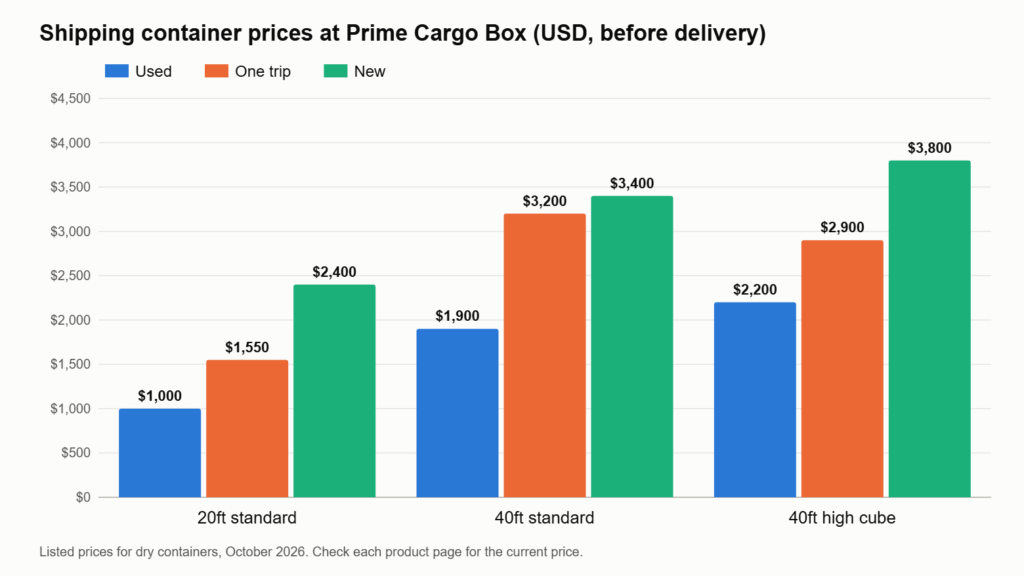
The chart makes one pattern easy to see. The gap between used and new is bigger on a 20 footer than you might expect, while the step from a 40ft standard to a 40ft high cube is small. We come back to what that means for value further down. On a tight budget? Our guide to cheap shipping containers shows where the real savings are.
Specialist container prices
Containers with extra doors, open roofs or refrigeration cost more to build, and that shows in the price.
| Container | Listed price |
|---|---|
| Used 20ft double door | $1,950 |
| One trip 20ft double door | $2,500 |
| New 20ft double door | $3,700 |
| One trip 40ft double door | $3,500 |
| New 40ft double door | $4,900 |
| Used 20ft open side | $2,950 |
| One trip 20ft open side | $5,200 |
| 40ft open side high cube, one trip | $6,200 |
| Used 20ft open top | $2,600 |
| One trip 20ft open top | $3,150 |
| New 40ft open top | $4,300 |
| Used 20ft reefer, working | $5,800 |
| One trip 20ft reefer | $6,200 |
| Used 40ft high cube reefer | $7,800 |
| One trip 40ft high cube reefer | $8,500 |
If you are not sure what each of these does, our guide to the types of shipping containers explains how every design opens and what it is built for.
What sets shipping container prices?
People often assume a container is a container and the price should be the same everywhere. In practice, shipping container prices move with a handful of factors, and most of them are easy to check before you buy.
1. Size
Length is the first thing that moves the price. A 40ft box uses roughly twice the steel of a 20ft, yet it rarely costs twice as much. Building, handling and selling one large unit is cheaper per foot than doing the same for two small ones. That is why our used 40ft shipping container at $1,900 costs less than two used 20ft containers at $1,000 each.
Height matters less than most buyers think. A high cube is one foot taller, 9 ft 6 in instead of 8 ft 6 in, and on a 40 footer the price step is modest. Our high cube vs standard container comparison covers when the extra foot earns its keep. Outside dimensions for standard boxes follow international rules, which is why every 20ft and 40ft unit shares the same footprint; the intermodal container overview explains how those standard sizes came about.
Less common lengths such as 10ft, 45ft and 53ft are made in smaller numbers, so they can cost more per foot and take longer to source. You can see what we carry in our 10ft shipping containers, 45ft high cube containers and 53ft high cube containers ranges.
2. Condition grade
Condition is the biggest swing factor in shipping container prices inside any one size. The same 20ft box can cost $1,000 used or $2,400 new. Sellers use a set of grade names, and knowing what they mean protects you from paying one-trip money for a tired box.
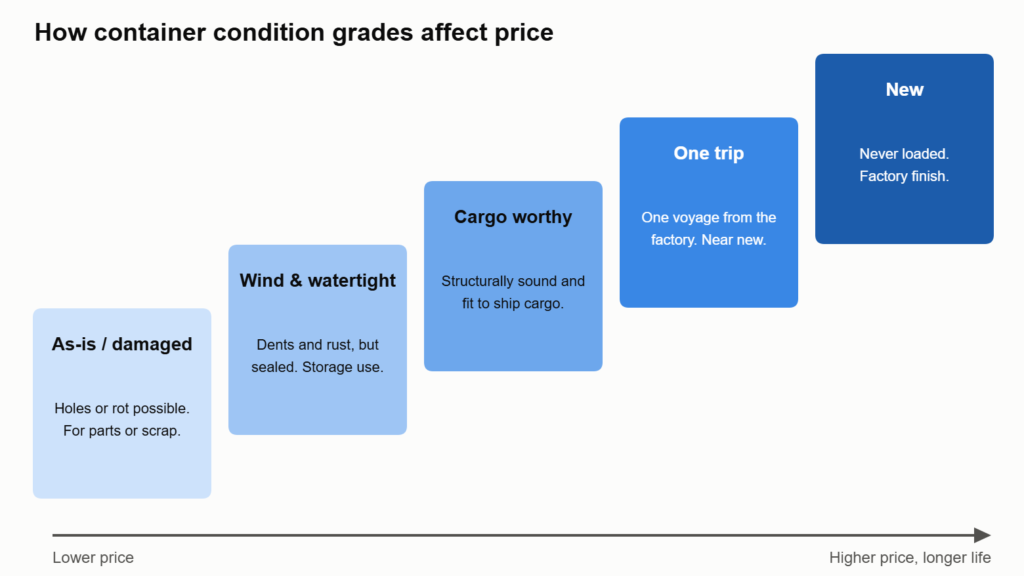
- New: never loaded with cargo. Clean paint, straight panels, tight seals. Our new shipping containers category lists every unit in this grade.
- One trip: built new, loaded once for the trip from the factory, then sold. Usually near new, with a few scuffs inside.
- Cargo worthy: used, but still structurally fit to carry cargo by sea. This matters if you plan to ship goods in it.
- Wind and watertight: used, with dents and rust, but no holes and doors that seal. The best value grade for storage.
- As-is: damaged or unchecked. Cheap for a reason, and rarely worth it unless you plan to cut it up.
Professional inspectors judge used containers against published repair and inspection criteria, such as those maintained by the Institute of International Container Lessors. You do not need to memorise those rules, but you should ask a seller which grade a box meets and what that grade covers. Our guide on one trip vs used shipping containers goes deeper into the trade-offs, and our used shipping containers page shows every used box in stock.

3. Container type
A standard dry box is the cheapest type to make. Every extra feature adds cost: a second set of doors, a folding side wall, a removable roof, or a refrigeration unit with insulation and a T-bar floor. Compare the one trip 20ft standard at $1,550 with the one trip 20ft open side at $5,200 and you can see how much a full-length side opening adds.
The question to ask is whether you need that feature every day. If you load from both ends constantly, a double door container saves real time and the premium pays for itself. If you only want a secure store, a plain box from our standard shipping containers range does the same job for less.
4. Where the container is sitting
Containers are heavy and awkward to move, so location shapes shipping container prices as much as the box itself. Regions that import far more goods than they export tend to collect empty containers, and that surplus pushes used prices down. Regions that export more than they import often run short of empties, and prices there rise. Inland depots usually cost a little more than port depots because someone has already paid to truck or rail the box there.
This is also why two quotes for the same grade can differ. One seller may have stock ten miles from you; another may need to bring a box in from a port several hundred miles away. When you compare shipping container prices, always compare delivered prices, not just the box.
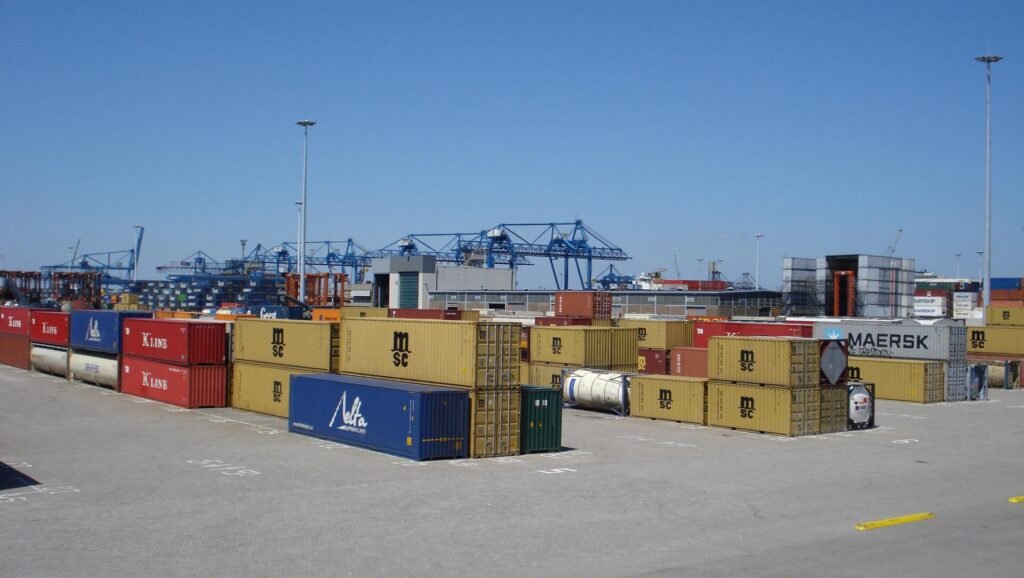
5. Steel costs and the freight market
New containers are built mostly from weathering steel, often called corten, which forms a stable rust layer that slows further corrosion. You can read how that steel behaves in this short guide to weathering steel. When steel prices climb, the cost of a shipping container built that year climbs with it, and new-build prices pull used prices along behind them.
Ocean freight demand matters too. When global shipping is busy, lines keep their containers working and fewer retire into the resale market, so used stock tightens. When trade slows, more boxes come off lease and used prices soften. Public freight rate trackers such as the Freightos Baltic Index and the Drewry World Container Index show how busy the shipping lanes are, which gives you a feel for where the market is heading. They track the price of moving cargo, not the price of buying a box, but the two tend to move in the same direction.
20ft shipping container prices
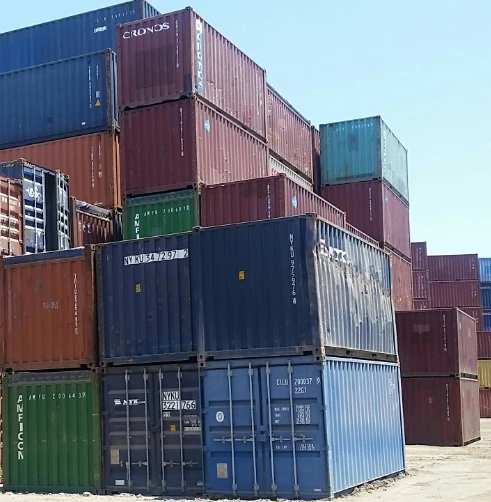
The 20 footer is the size most first-time buyers start with. It fits on a driveway or a small job site, a tilt-bed truck can usually place it without much fuss, and it holds about 33 cubic metres, roughly the contents of a one or two bedroom home.
| 20ft container | Price | Who it suits |
|---|---|---|
| Used 20ft shipping container | $1,000 | Budget storage, farms, yards |
| One trip 20ft shipping container | $1,550 | Homes, shops, anything on show |
| New 20ft shipping container | $2,400 | Conversions, long-term use |
| Used 20ft high cube | $1,650 | Taller items on a budget |
| One trip 20ft high cube | $2,950 | Small workshops and studios |
Among 20ft shipping container prices, the used box is hard to beat for pure storage. If the box will sit next to your house or shop, the one trip unit is worth the extra $550 for its clean paint and straight doors. The full range sits in our 20ft shipping containers category.
40ft shipping container prices
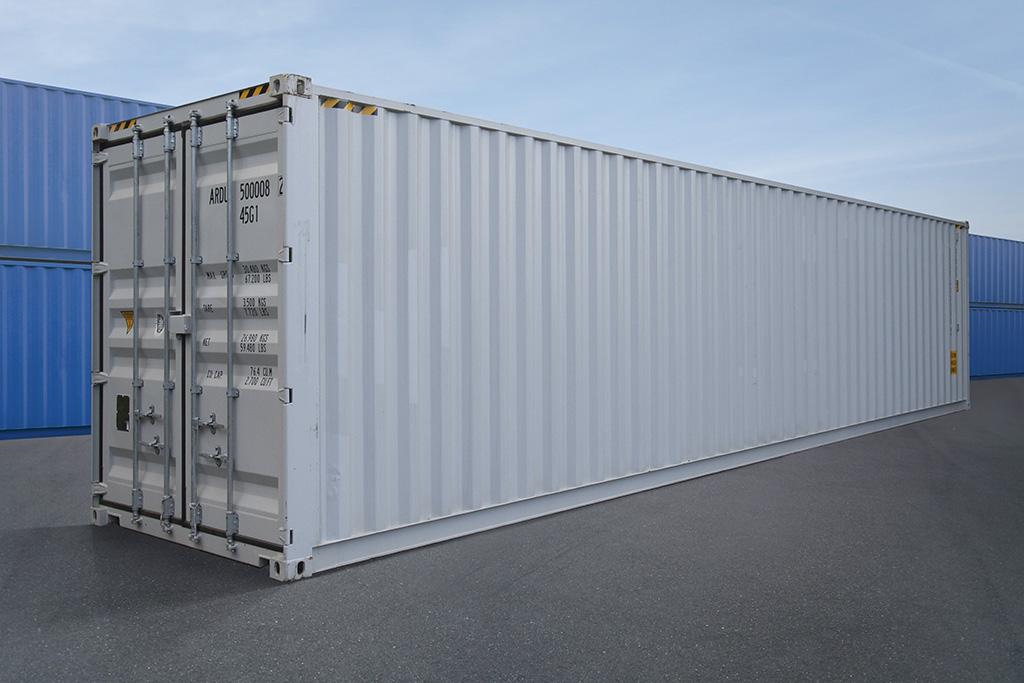
A 40ft container gives you twice the floor area of a 20ft, about 67 cubic metres, for a price that is nowhere near double. If you have room to deliver and place it, a 40 footer is often the better buy per square foot.
| 40ft container | Price | Who it suits |
|---|---|---|
| Used 40ft shipping container | $1,900 | Bulk storage, equipment, farms |
| 40ft one trip shipping container | $3,200 | Export cargo, tidy sites |
| New 40ft shipping container | $3,400 | Long service, conversions |
| 40ft standard double door | $3,900 | Drive-through storage |
Notice how close the one trip and new 40ft shipping container prices are. When the gap between grades is only a couple of hundred dollars, it usually makes sense to take the better box. Browse the full set in our 40ft shipping containers range, or read 20ft vs 40ft shipping container if you are torn between the two sizes.
High cube container prices
High cubes cost a little more than standard boxes of the same length and condition, and for many buyers they are worth it. The extra foot of internal height lets you stack pallets higher, fit taller machinery, or add insulation and a ceiling without the room feeling cramped.
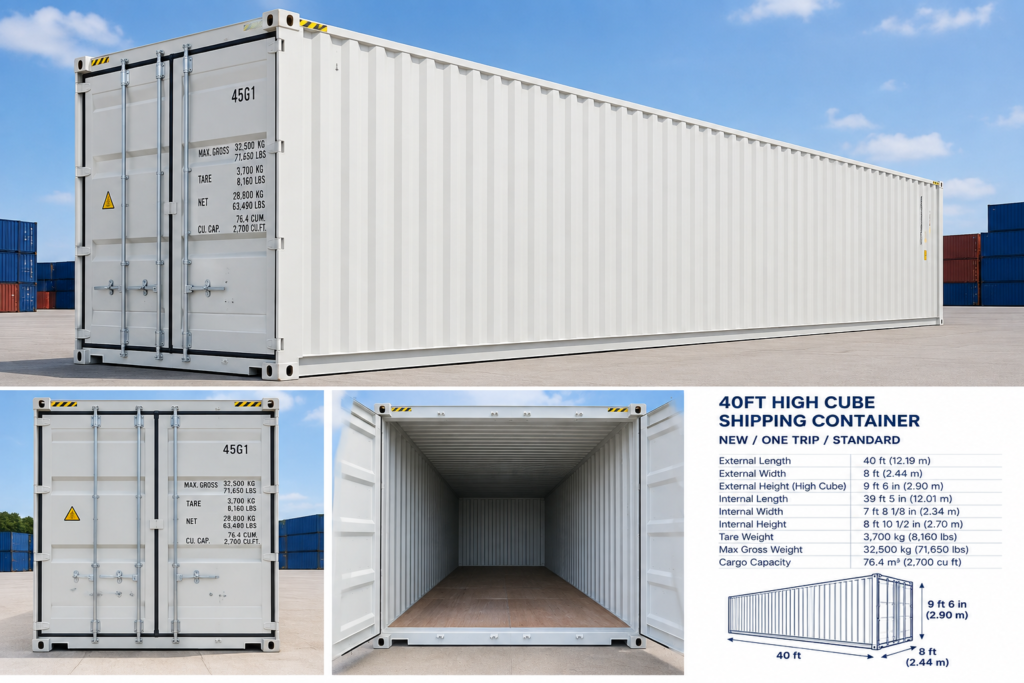
- Used 40ft high cube container: $2,200, only $300 more than a used 40ft standard.
- One trip 40ft high cube container: $2,900.
- New 40ft high cube container: $3,800.
- New 20ft high cube container: $4,250.
The used 40ft high cube is one of the best value boxes we sell. For $300 over the standard height you get about nine more cubic metres of space. See every option in our 40ft high cube containers category.
Specialist container prices explained
The price of a shipping container with special features reflects extra steel, hardware and labour. Here is what you are paying for with each type.
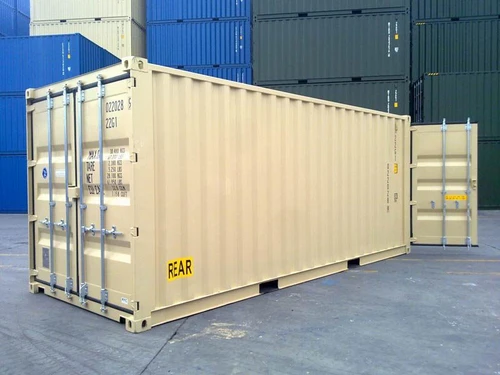
Double door containers
Doors at both ends mean you can reach anything without unloading the whole box. The second door set adds hinges, locking bars, seals and a reinforced end frame. Our one trip 20ft double door container is $2,500 and the new 40ft double door container is $4,900. More options sit in our double door containers range.
Open side containers
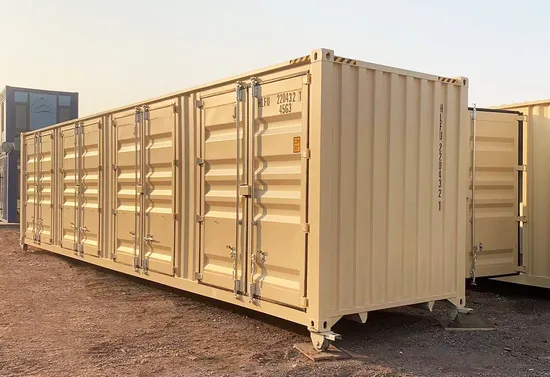
Open side boxes replace one long wall with folding doors, so the frame needs extra posts and a heavier structure. That is why they cost more than double doors. The used 20ft open side container is $2,950, while the 40ft open side high cube is $6,200. They earn their price when you load wide items with a forklift or want to open a whole side as a shop front. See all of them in open side containers.
Open top containers
Open tops swap the steel roof for removable bows and a tarpaulin so a crane can load from above. Prices run from $2,600 for a used 20ft open top to $4,300 for a new 40ft open top. Check the condition of the tarp and roof bows on any used unit, as replacements add to the cost. Our open top containers page lists every unit.
Refrigerated containers
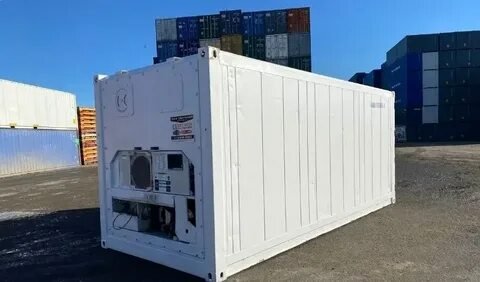
Reefers are the most expensive containers we sell because each one carries a refrigeration machine, insulated walls and a special floor for airflow. A used 20ft reefer is $5,800, and a one trip 40ft high cube reefer is $8,500. Running costs matter here as much as purchase price, since a reefer needs a suitable power supply. Our article on buying a reefer container explains what to check, and the refrigerated shipping containers page lists current stock. The refrigerated container overview is a good primer on how the cooling system works.
Shipping container prices by what you plan to do
The right container depends on the job. Here is how the numbers usually work out for the most common uses, with the boxes we would point you to first.
Storage at home or on a farm
For tools, garden gear, feed, furniture or seasonal stock, you need a box that keeps out water and thieves. Looks rarely matter. A used 20ft container at $1,000 or a used 40ft at $1,900 covers most needs. The shipping container cost here is mostly the box and delivery, with little else to add beyond a few blocks under the corners.
Building sites and contractors
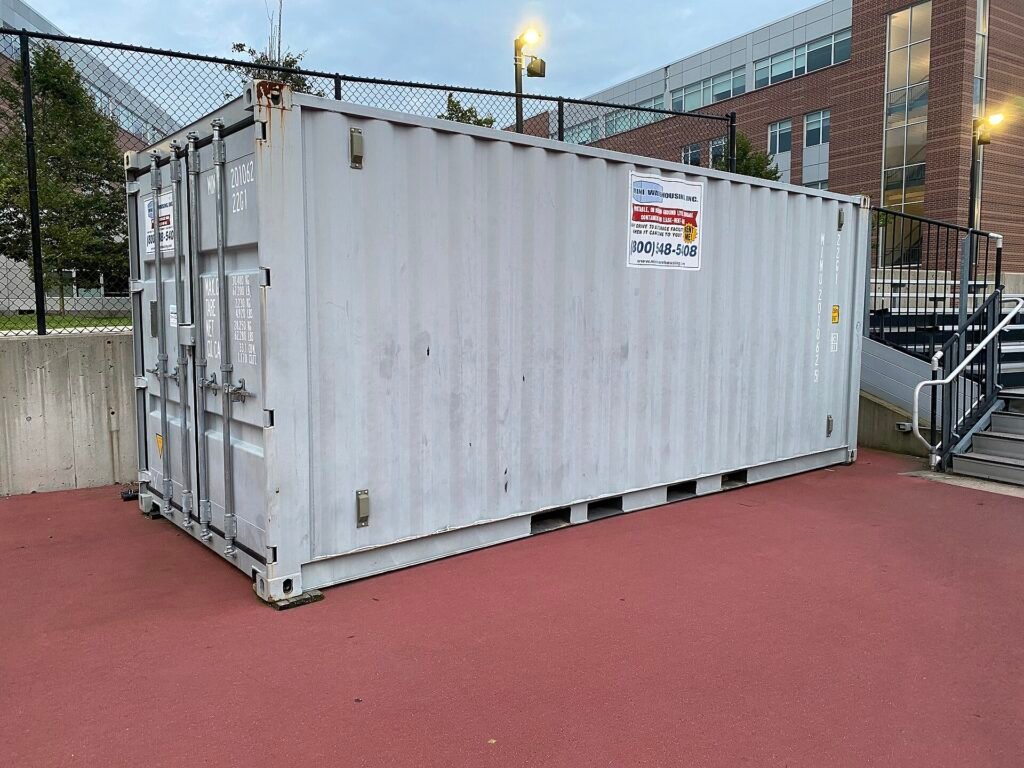
Contractors want secure, lockable storage that can move from job to job. A one trip or used 20ft is the usual pick because it fits on tight sites and is easy to relocate. If crews go in and out all day, a double door 20ft saves time because materials can be reached from either end. For larger projects, a used 40ft high cube doubles as a tool store and a dry place to take a break.
Site offices, workshops and studios
Once people work inside a container, condition and height matter more. A new 40ft high cube or a one trip 20ft high cube gives you straight walls for lining, clean floors and enough headroom for a ceiling. Add the cost of windows, a personnel door, insulation and power, and the total shipping container cost for a finished office is well above the box price, but still usually far less than a site-built room of the same size.
Shops, bars and pop-ups
Retail and hospitality buyers often choose an open side container because the whole wall becomes a counter. The one trip 20ft open side at $5,200 is the popular starting point. Because customers see the box up close, a one trip or new grade is worth the extra over used.
Cold storage
Restaurants, farms, caterers and event companies use reefers as walk-in cold rooms. Here the cost of a shipping container includes power: you need a suitable supply at the site, and the refrigeration unit uses electricity every hour it runs. A used 20ft reefer at $5,800 is the entry point, and our refrigerator containers page lists units suited to on-site storage.
Shipping your own cargo
If you plan to load the container and send it by sea, you need a box that is cargo worthy with a valid safety plate. A one trip unit such as our 40ft one trip container is the safest choice, because it has only made one voyage and its paperwork is fresh. A cheap storage-grade box may not be accepted by a shipping line, which would turn a saving into a loss.
New or used: a worked example
Say you need about 65 cubic metres of storage and you have room for one 40 footer. Using our listed prices:
- A used 40ft costs $1,900.
- A one trip 40ft costs $3,200.
- A new 40ft costs $3,400.
The used box saves $1,500 against new. If it is going behind a barn to hold equipment, that saving is pure gain, because a sound used box keeps things just as dry. If it is going beside your office as a showroom or meeting room, the new box is the smarter buy: it looks right on day one, and you start with full paint and seals instead of inheriting someone else’s wear. The one trip unit sits in the middle, but at only $200 below new, most buyers in that position simply go new.
The lesson is that shipping container prices should be judged against the job. A low shipping container cost is only a saving if the box does what you need.
What container specifications should a price include?
A fair listing tells you more than a price. Before you pay, make sure you know these details for the exact unit or batch:
| Specification | 20ft standard | 40ft standard | 40ft high cube |
|---|---|---|---|
| External size (L x W x H) | 20 x 8 x 8 ft 6 in | 40 x 8 x 8 ft 6 in | 40 x 8 x 9 ft 6 in |
| Metric size | 6.06 x 2.44 x 2.59 m | 12.19 x 2.44 x 2.59 m | 12.19 x 2.44 x 2.90 m |
| Approx. internal volume | 33 m³ | 67 m³ | 76 m³ |
| Doors | Double cargo doors, one end | Double cargo doors, one end | Double cargo doors, one end |
| Construction | Corrugated corten steel, steel frame | Corrugated corten steel, steel frame | Corrugated corten steel, steel frame |
| Floor | Marine-grade hardwood | Marine-grade hardwood | Marine-grade hardwood |
Weights, payload ratings and the exact internal size are printed on the door of every ISO container and listed on each of our product pages. If a seller cannot tell you the grade, size and condition of the box they are quoting, treat the price with caution.
Which container gives the best value for money?
The cheapest box is not always the best deal. A fairer way to compare shipping container prices is to look at what you pay for each cubic metre of space. Using our listed prices and the usual internal volumes of about 33 m³ for a 20ft, 67 m³ for a 40ft and 76 m³ for a 40ft high cube, the numbers look like this:
| Container | Price | Approx. volume | Cost per m³ |
|---|---|---|---|
| Used 20ft | $1,000 | 33 m³ | about $30 |
| Used 40ft | $1,900 | 67 m³ | about $28 |
| Used 40ft high cube | $2,200 | 76 m³ | about $29 |
| New 20ft | $2,400 | 33 m³ | about $73 |
| New 40ft | $3,400 | 67 m³ | about $51 |
| New 40ft high cube | $3,800 | 76 m³ | about $50 |
Two things stand out. First, used boxes cost roughly the same per cubic metre whatever their size, so with used stock you can simply buy the size that fits your site. Second, with new containers the 40 footers are far better value per cubic metre than a new 20ft. If you want new and have the room, a new 40ft high cube gives you the most space for each dollar.
Value is also about how long the box lasts. A new or one trip unit starts its life with you, while a used box has already spent years at sea. For a container that will sit in a yard holding tools, that rarely matters. For a site office, a shop or a home conversion where looks and lifespan count, the higher purchase price often works out cheaper over time.
The full cost of a shipping container
The sticker price is only part of the bill. Before you compare quotes, add up everything it takes to get the box onto your site and ready to use.
Delivery
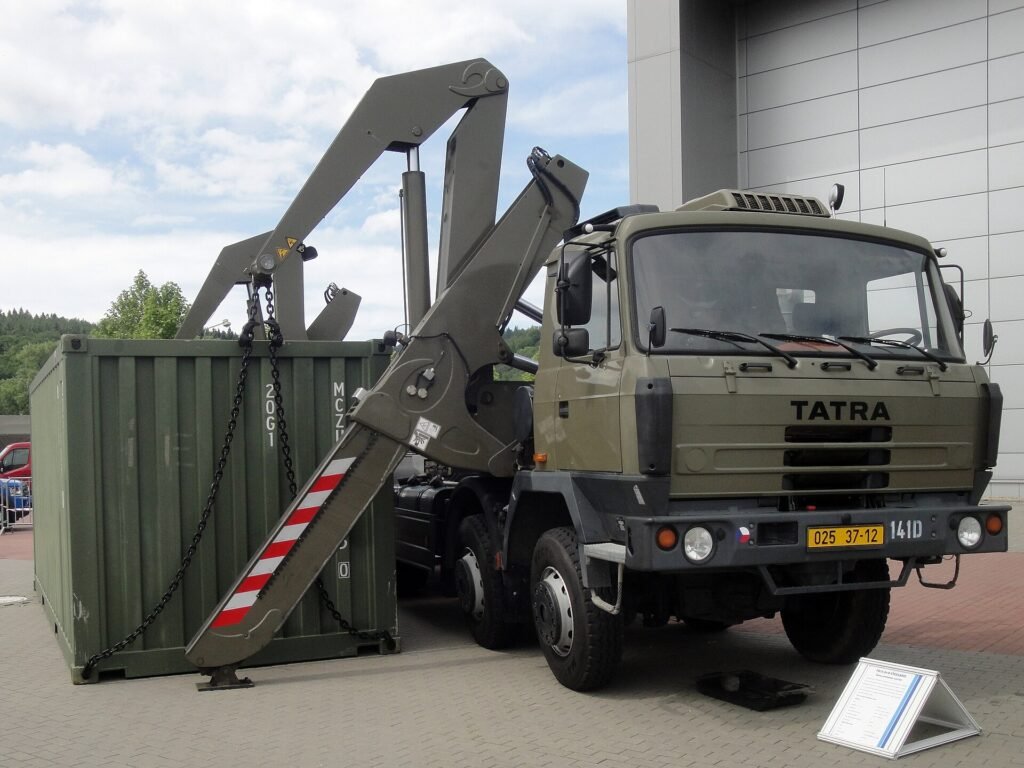
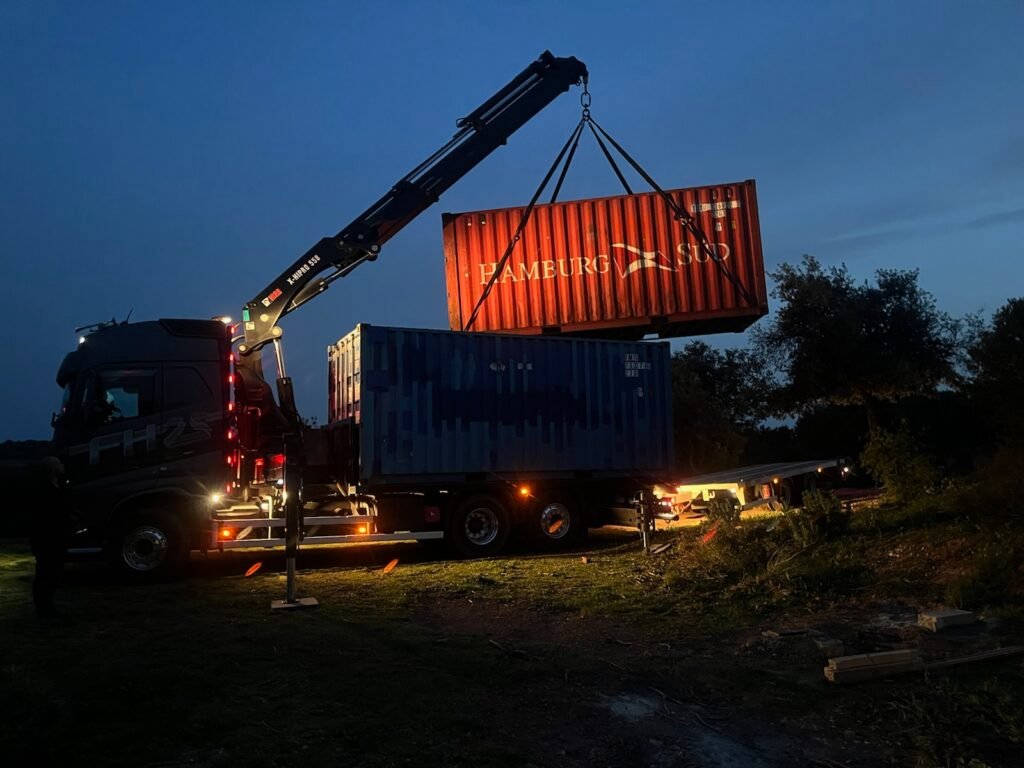
Delivery is usually the second largest item after the container itself, and it is the part of shipping container prices that varies most from one buyer to the next. The cost depends on distance from the depot, the size of the box, the truck needed and how easy your site is to reach. Tilt-bed trucks slide the container off the back and need a long clear run; side-lifter trucks lift it down beside the vehicle and suit tighter spaces. Our shipping container delivery guide explains how each method works and how to measure your site so the driver can place the box first time.
Site preparation
A container needs firm, level ground. On compact gravel or a few concrete pads it sits happily for years. On soft soil it can sink at one corner, which twists the frame and stops the doors from closing properly. Simple railway sleepers or concrete blocks under the corners cost little and protect the floor from damp. Count this as part of your shipping container cost and sort it out before delivery day.
Modifications
Windows, personnel doors, shelving, insulation, lighting and power all add to the cost of a shipping container, but they also turn a storage box into a workspace. Ordering them before delivery is usually cheaper than paying separate trades on site. Our modified shipping containers category and custom container modifications page show what we can fit.
Upkeep, permits and insurance
Containers need little care, but a coat of paint on scratches, a squirt of grease on the door hinges and a check of the seals each year keeps them sound and keeps your long-term shipping container cost low. Some councils and local authorities want a permit for a container that stays on a property for a long time, so check local rules before you order. If you store valuable goods, ask your insurer whether the contents are covered.
How to compare container quotes
When you put two quotes side by side, these are the questions that show you whether you are comparing like with like.
- Is delivery included? A low box price with expensive delivery can cost more than a higher price delivered free nearby.
- Which grade is it? Ask for the grade in writing: new, one trip, cargo worthy or wind and watertight.
- Can you see recent photos? Ask for pictures of the roof, floor, door seals and corner castings of the actual unit or a typical one from the same batch.
- What is the owner code and number? Every ocean container carries an ID mark registered under the BIC code system. It tells you the box is a genuine ISO container.
- Does it have a valid safety plate? If you plan to ship cargo in it, the container needs a current CSC safety approval plate, a requirement set by the International Convention for Safe Containers. For storage only, this matters less.
- What are the payment and pickup terms? Know when you pay, when the box ships and what happens if delivery is delayed.
Why shipping container prices differ between sellers
Ask three sellers for a used 40ft and you may get three different numbers. That does not always mean someone is overcharging. Shipping container prices differ between sellers for a few honest reasons.
- Grade definitions vary. One seller’s “good used” is another’s “wind and watertight”. Always ask what the grade covers.
- Stock location. A seller with boxes near you saves on delivery; one with stock far away has to add transport.
- Inspection and prep. Some sellers check, clean and repair each box before sale. Others sell straight off the stack. The checked box costs more and is worth more.
- Age of the stock. Two used containers in the same grade can be a few years apart in age, with different amounts of wear on floors and seals.
The cheapest price is only a bargain if the box matches the description. A quote that comes with clear photos, a stated grade and a delivered total is easier to trust than a bare number.
Buying a container outside your home market
Container buyers are spread across the world, and the cost of a shipping container changes once borders are involved. If you are buying from another country, plan for these extra items on top of the box price:
- Ocean or road freight from the selling depot to your nearest port or terminal.
- Import duties and taxes set by your own country, which vary widely.
- Port and terminal handling charges at both ends.
- Local delivery from the port to your site.
- Currency exchange, since our prices are listed in US dollars.
A one trip or cargo worthy container can carry your own goods on the way, which spreads the freight cost across the cargo and the box. Our team arranges international sales and export paperwork, so get in touch with your destination and we will work out the full shipping container cost before you commit.
Ways to lower the cost of a shipping container
- Buy the grade you need, not the best grade available. Storage on a farm does not need a new box. A used, wind and watertight unit at $1,000 does the same job as a new one at $2,400.
- Pick the bigger size when you are close. If you are weighing two 20ft boxes against one 40ft, the single 40 footer is cheaper and needs only one delivery.
- Choose a high cube for conversions. The extra foot is cheaper to buy now than to work around later.
- Prepare the site properly. A driver who can place the box in one go saves time, and a bad site can mean a second trip.
- Order modifications with the container. Shop work is usually cheaper than on-site work.
- Ask about multiple units. If you need several boxes, delivering them together can cut the delivery cost per unit.
Mistakes that make containers cost more
Most mistakes that push shipping container prices up happen before the box arrives. These are the ones we see most often.
- Comparing box prices instead of delivered prices. The nearest depot is often the cheapest overall even if its box costs a little more.
- Buying as-is to save money. Patching holes and replacing a rotten floor costs more than the difference between grades.
- Ignoring height. Buyers who later want a ceiling or racking often wish they had paid the small extra for a high cube.
- Forgetting access. If the truck cannot reach the spot, you pay for a crane or a second attempt.
- Choosing a special type you rarely use. An open side box is great for a pop-up shop but an expensive way to store garden tools.
How buying from Prime Cargo Box works
Every one of the shipping container prices in this guide comes from a live product page, so you can check the latest figure, see photos and read the full specifications before you commit. Here is the simple path most buyers follow:
- Pick your size and type from our full product range or one of the categories linked above.
- Choose the condition that suits your use: our used shipping containers for storage on a budget, or new shipping containers for long life and looks.
- Contact our team with your delivery address so we can quote delivery to your site.
- Prepare the ground using our site preparation guide.
- Take delivery and start using your container.
We also handle international sales and export paperwork, so buyers outside our local delivery area can still order. Our used shipping containers for sale and new shipping containers for sale pages explain our grading in more detail, and the cargo containers for sale guide covers the buying basics.
Frequently asked questions about shipping container prices
How much does a shipping container cost?
At Prime Cargo Box, a used 20ft container is listed at $1,000 and a used 40ft at $1,900. New units run from $2,400 for a 20ft to $3,800 for a 40ft high cube. Reefers start at $5,800. Delivery is quoted separately.
Why do shipping container prices vary so much?
Size, condition, type and location drive most of the difference. A used box near a busy import port is cheaper than a new one shipped inland. Steel costs and how busy global shipping is also push prices up or down over time.
Is a 40ft container twice the price of a 20ft?
No. Our used 40ft costs $1,900 against $1,000 for a used 20ft, so you get double the space for less than double the price.
Are used containers worth buying?
Yes, for storage. A wind and watertight used container keeps goods dry and secure at the lowest cost. For homes, offices or customer-facing sites, a one trip or new box usually looks better and lasts longer.
Does the price include delivery?
Our listed prices are for the container only. We quote delivery once we know your address and site access, because distance and truck type change the cost.
How much more does a high cube cost?
On a used 40ft, the high cube is $300 more than the standard height. That buys about one extra foot of headroom and around nine more cubic metres of space.
What is the cheapest container I can buy?
Our used 20ft shipping container at $1,000 is the lowest priced box in our current range.
Will shipping container prices go down?
Nobody can promise that. Prices follow steel costs and the global freight market, both of which rise and fall. If you need a container now, the best way to save is to choose the right grade and size rather than wait for the market.
Can I negotiate shipping container prices?
On a single container the listed price is usually close to final, but buying several units at once or combining deliveries can bring the total down. Ask our team when you request a quote.
How long does a container last?
A container built for ocean service is designed to survive years of heavy handling at sea. Kept on level ground, painted where scratched and with its seals checked, a storage container can last for decades. A new or one trip box simply gives you more of that life.
What is the cheapest way to get a 40ft container?
Buy used, choose a box from a depot near you, and have the site ready so delivery happens in one trip. Our used 40ft shipping container is the lowest priced 40 footer in our range.
The bottom line on container prices
Shipping container prices make sense once you break them down: size sets the base, condition moves it most, special features add to it, and delivery finishes the bill. For storage, a used box gives the lowest cost per cubic metre. For conversions and long-term use, a new or one trip 40ft high cube often gives the best value. Whatever you choose, compare delivered prices, check the grade and plan your site before the truck arrives.
Ready to buy? Browse our 20ft shipping containers, 40ft shipping containers and 40ft high cube containers, or ask us for a delivered quote on any container in this guide.
Cover photo: TrainLearnGrow (CC BY-SA 4.0)