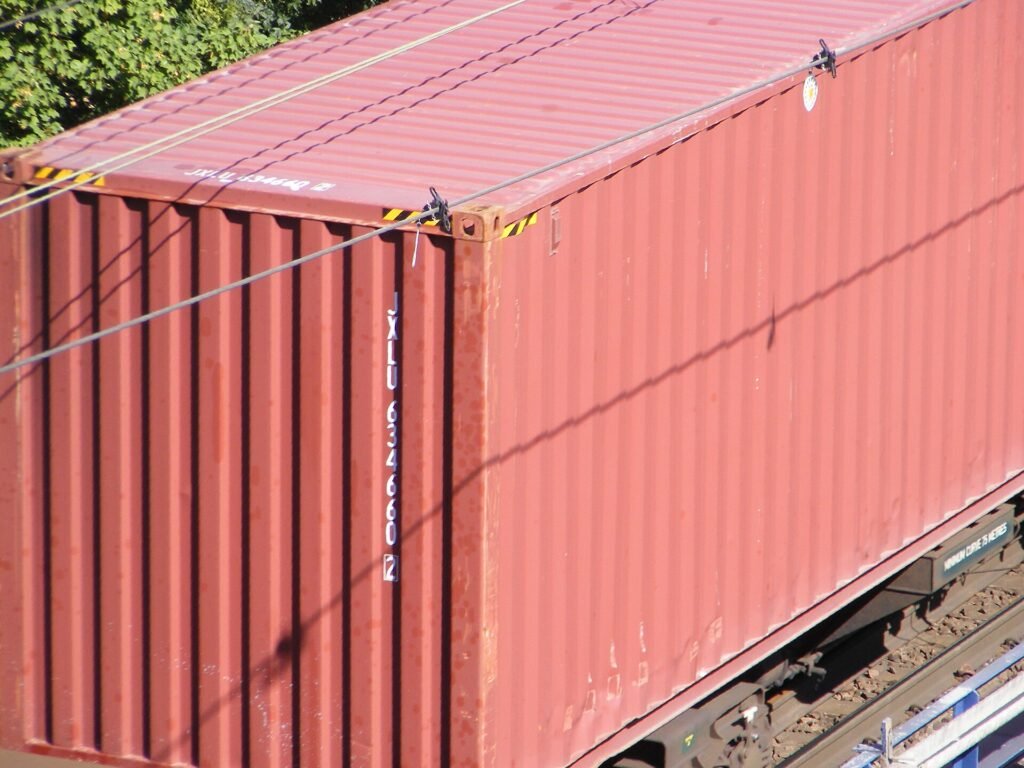
One foot doesn’t sound like much. On a shipping container, it’s the difference between pallets that stack two high and pallets that don’t, between a converted office that feels like a room and one that feels like a cupboard, and sometimes between a delivery that goes smoothly and one that gets stuck under a low bridge. You can see the price gap between heights in our shipping container prices guide.
That extra foot is what separates a high cube from a standard container. We sell both at Prime Cargo Box, in 20ft and 40ft lengths, so customers ask us about the high cube vs standard container choice every week. This guide explains what actually changes between the two, what stays the same, and how to decide which one belongs on your site or in your shipment.
What Is a High Cube Container?
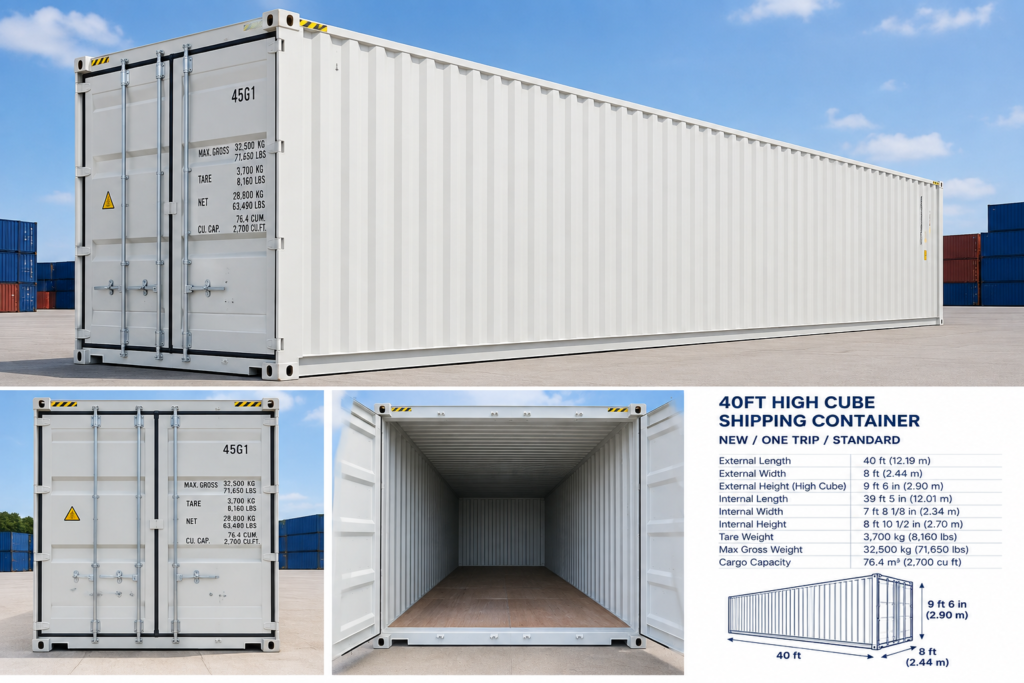
A high cube container is built exactly like a standard dry container, with the same length, the same width and the same steel construction, but it stands 9 ft 6 in (2.90 m) tall instead of 8 ft 6 in (2.59 m). That extra 30 cm or so carries straight through to the inside, so a high cube gives you roughly 2.70 m of clear internal height against about 2.39 m in a standard box. Exact heights and door openings for both are in our shipping container dimensions guide.
The name comes from the extra cubic capacity. Shipping lines adopted high cubes widely because light cargo often fills a container’s space before it reaches the weight limit, so a taller box means fewer containers per shipment. Today the 40ft high cube is the most common 40ft container in world trade.
A standard container, sometimes called a general purpose or GP container, is the 8 ft 6 in version. It’s still the most common 20ft size by a wide margin, and it remains the default choice for heavy cargo and many storage jobs.
High Cube vs Standard Container: Specifications Compared
The table below shows typical figures for standard and high cube dry containers in both lengths. Dimensions vary slightly between manufacturers, and the exact ratings of any unit are printed on its data plate.
| Specification | 20ft standard | 20ft high cube | 40ft standard | 40ft high cube |
|---|---|---|---|---|
| External height | 2.59 m (8 ft 6 in) | 2.90 m (9 ft 6 in) | 2.59 m (8 ft 6 in) | 2.90 m (9 ft 6 in) |
| Internal height | Approx. 2.39 m | Approx. 2.69 m | Approx. 2.39 m | Approx. 2.70 m |
| Door opening height | Approx. 2.28 m | Approx. 2.58 m | Approx. 2.29 m | Approx. 2.59 m |
| Internal length x width | 5.90 x 2.35 m | 5.90 x 2.35 m | 12.03 x 2.35 m | 12.03 x 2.35 m |
| Cubic capacity | Approx. 33.2 m³ | Approx. 37.4 m³ | Approx. 67.7 m³ | Approx. 76.3 m³ |
| Tare weight | Approx. 2,200 to 2,350 kg | Approx. 2,300 kg | Approx. 3,750 kg | Approx. 3,900 kg |
| Typical ISO size code | 22G1 | 25G1 | 42G1 | 45G1 |
Carriers publish similar data for their fleets, for example the Hapag-Lloyd 40ft high cube specification. External dimensions for both heights are defined in ISO 668, which is why a high cube still fits the same twist-locks, trailers and cranes as any other container.
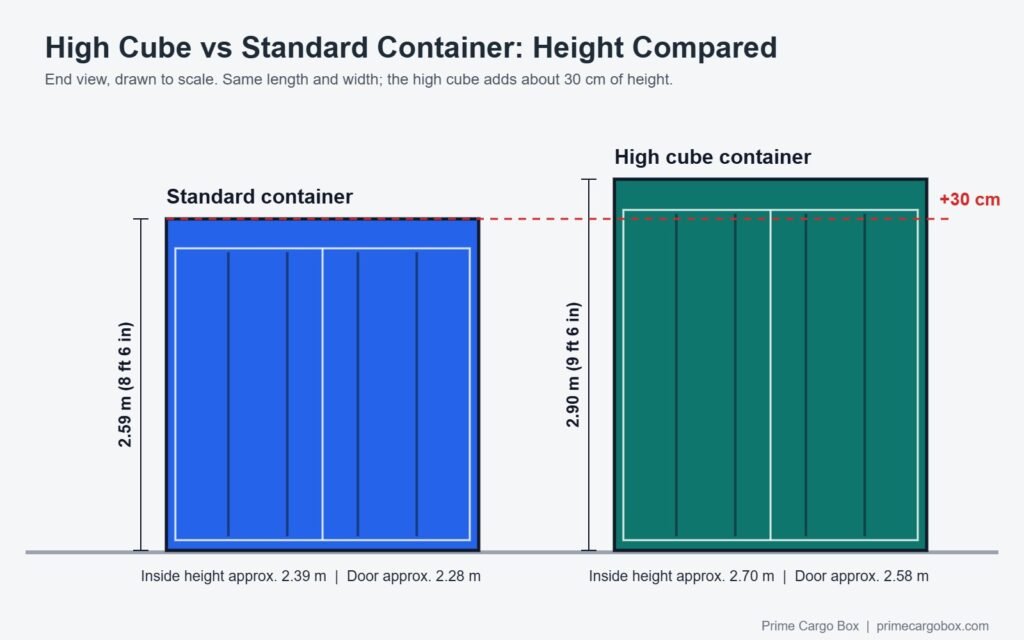
The key takeaway: length, width and floor area are identical. The high cube container gives you about 12% more volume purely through height, plus a door opening that is around 30 cm taller.
How to Tell a High Cube From a Standard Container
If you’re looking at containers in a yard, there are three quick ways to tell them apart.
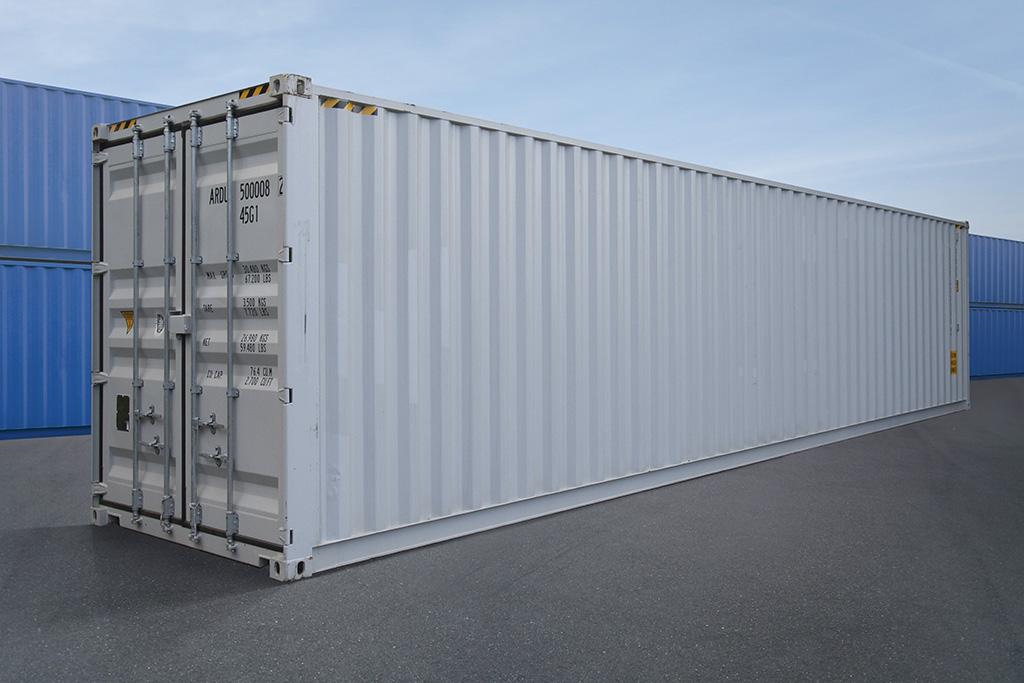
- Hazard stripes. Many high cubes have black and yellow diagonal stripes along the top rail at the door end, warning that the box is taller than normal. Not every unit has them, so don’t rely on this alone.
- The size and type code. Every container carries a four-character code on its doors. The first character shows length (2 for 20ft, 4 for 40ft) and the second shows height: 2 means 8 ft 6 in and 5 means 9 ft 6 in. So 22G1 is a standard 20ft and 45G1 is a 40ft high cube. The coding system is set out in ISO 6346.
- Measure it. A tape from the ground to the top of the roof will show either about 2.59 m or about 2.90 m.
When you buy from us, the listing and the quote state the height clearly, and you can always ask for the size code of the specific unit.
What the Extra Height Gets You
More volume for light cargo
A 40ft high cube holds about 76 m³ against about 68 m³ in a standard forty. If your cargo is light and bulky, such as furniture, textiles, packaged consumer goods or plastic products, that extra 8 to 9 m³ can mean one container instead of two over a series of shipments.
Pallets stacked two high
This is where the high cube container really earns its keep. A standard pallet with a load of around 1.2 m stands about 1.35 m tall including the pallet. Two of those come to roughly 2.7 m, which won’t fit under a standard container’s 2.39 m ceiling but often fits in a high cube, depending on the exact load height. For light goods that can be stacked, that can nearly double the number of pallets in the same floor space.
Taller items through the door
The door opening grows too, from about 2.28 m to about 2.58 m. Ride-on mowers with roll bars, small tractors, scaffolding towers, tall racking and machinery often clear a high cube door when they wouldn’t clear a standard one.
Headroom for conversions
If people will work inside the container, height matters more than almost anything else. Insulation and a ceiling lining can easily take 10 to 15 cm off the internal height. In a standard box that leaves a ceiling close to 2.2 m, which feels low. In a high cube you keep around 2.5 m, which feels like a normal room. Almost every container office, workshop and studio we see is built in a high cube for this reason.
What Stays the Same
It’s just as important to know what doesn’t change, because buyers sometimes expect more from a high cube than it can give.
- Floor area. A high cube has exactly the same internal length and width as a standard container, so it takes the same number of pallets on the floor.
- Payload. Maximum gross weight ratings are similar, and the high cube is slightly heavier empty, so it carries about the same weight, or a touch less.
- Width of the door. Both have doors about 2.34 m wide.
- Construction. Both are Corten steel with corrugated walls, marine plywood floors and the same locking gear.
- Footprint on site. A 40ft high cube needs the same ground space as a 40ft standard.
So if your problem is weight, or floor space, a high cube won’t solve it. It only helps when height or volume is the limiting factor.
When a Standard Container Is the Better Choice
A standard container is not the outdated option. In plenty of situations it’s the right one.
Heavy, dense cargo
Steel, tiles, stone, bagged cement, paper rolls and drinks reach the weight limit long before they fill a standard box. Paying for extra height you can’t use adds nothing. Many heavy-cargo shippers specifically choose standard 20ft containers for this reason.
Height-restricted sites and routes
A standard container is 30 cm lower on the truck and on the ground. If the delivery route passes under a low bridge, a covered loading bay or overhead cables, or the container has to fit under a carport or canopy, that difference can decide whether the delivery works at all.
Storage where height isn’t needed
For household goods, garden equipment, tools and boxed stock that won’t be stacked high, a standard container holds everything you need. The 20ft standard is also the most widely available and usually the lowest-priced container in its size, which matters for budget storage.
Stacking containers on top of each other
If you plan to stack containers on site, standard boxes keep the total height lower, which can matter for planning rules and for the reach of the crane doing the lifting.
Our new 40ft shipping container and new 20ft shipping container are both standard height and cover most of these jobs.
When a High Cube Container Is the Better Choice
- Light, bulky cargo for export. More volume per box means fewer boxes, and freight for a 40ft high cube is usually priced the same as or very close to a 40ft standard.
- Pallets you want to stack. Double stacking light pallets can nearly double usable space.
- Tall equipment. Machinery, mowers, racking and anything over about 2.2 m tall.
- Offices, workshops and studios. The extra height keeps a normal ceiling after insulation.
- Racking and shelving. Taller racks mean more storage on the same footprint.
For these uses, look at our new 40ft high cube container, the one trip 40ft high cube container, or, for tighter sites, the new 20ft high cube container.
The 20ft High Cube: A Special Case
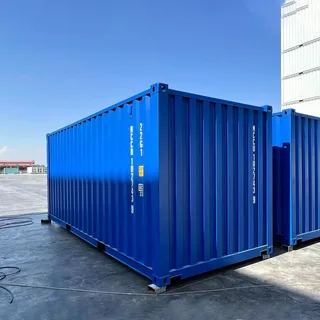
Most people picture a 40ft box when they hear “high cube”, and with good reason: shipping lines build far more 40ft high cubes than 20ft ones. That makes the 20ft high cube container less common and usually more expensive than a standard twenty.
It’s still worth considering if you have a small site and need height. Homeowners storing tall garden machinery, builders who want scaffolding to stand upright and small businesses planning an insulated office often find a 20ft high cube is the only container that ticks every box. We sell it new, one trip and used, but availability varies, so ask early if you need one.
High Cube Versions of Specialist Containers
The high cube vs standard container question doesn’t only apply to plain dry boxes. Several specialist containers are commonly built as high cubes, and knowing which ones helps when you compare options. Our overview of the types of shipping containers explains how each one opens and what it is built for.
Refrigerated containers
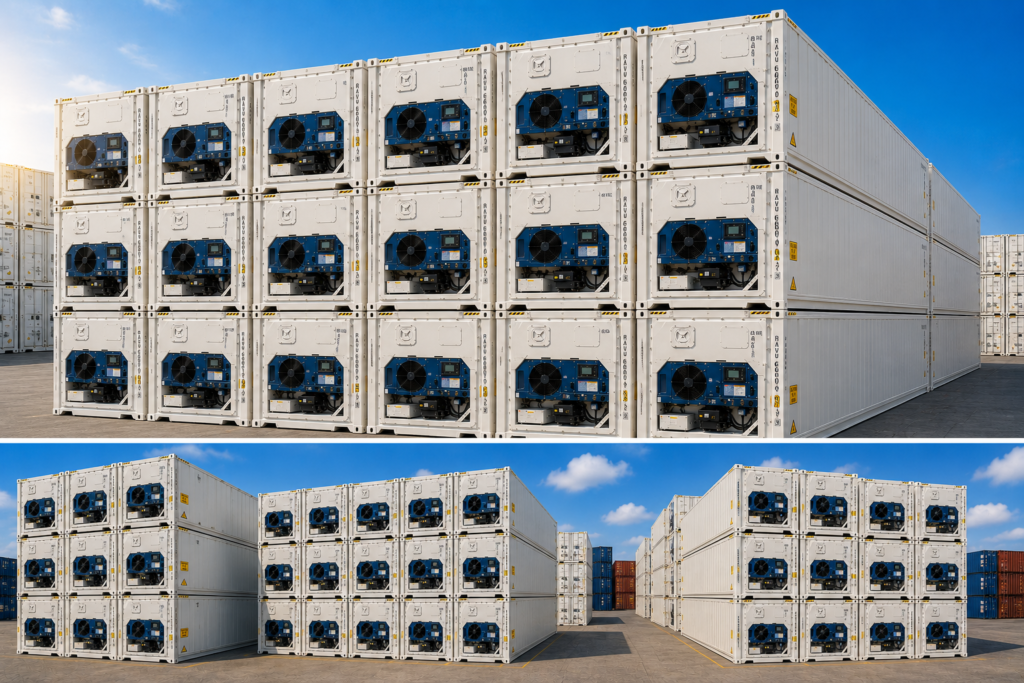
Most modern 40ft reefers are high cubes. The thick insulation and the slotted floor that carries cold air both take up height, so the extra foot keeps internal space reasonable. Even so, a 40ft high cube reefer has a lower inside height than a dry high cube, typically around 2.4 m. If you’re buying for cold storage, see our one trip 40ft reefer container and our guide to buying a reefer container.
Open side containers
Full side access containers in 40ft length are usually high cubes. The reinforced top rail needed to carry the side doors takes some height, so the extra foot helps keep the inside usable. Our 40ft open side container is a high cube with doors opening along almost the entire side.
Double door and open top containers
Tunnel containers with doors at both ends and open top containers are available in both heights, though standard height is more common in 20ft lengths. If you’re unsure which version a listing refers to, ask for the size and type code before you order.
A Practical Example
Here’s the kind of comparison we run through with customers. Say you need to store around 40 pallets of light packaged goods, each about 1.2 m tall including the pallet.
In standard 40ft containers, those pallets can’t be double stacked, so each box takes about 20 standard pallets on the floor. You’d need two containers. In 40ft high cubes, the same pallets can usually be stacked two high, so a single high cube container could hold close to 40 of them, provided the weight stays within the payload. One container instead of two halves the delivery, the ground space and, in most cases, the purchase cost.
Now flip it. If those 40 pallets were bagged cement, each pallet might weigh well over a tonne. You’d hit the payload limit long before you used the extra height, and the high cube would offer nothing extra. That’s the high cube vs standard container decision in a nutshell: volume problems favour the high cube, weight problems don’t.
Transport and Delivery Considerations
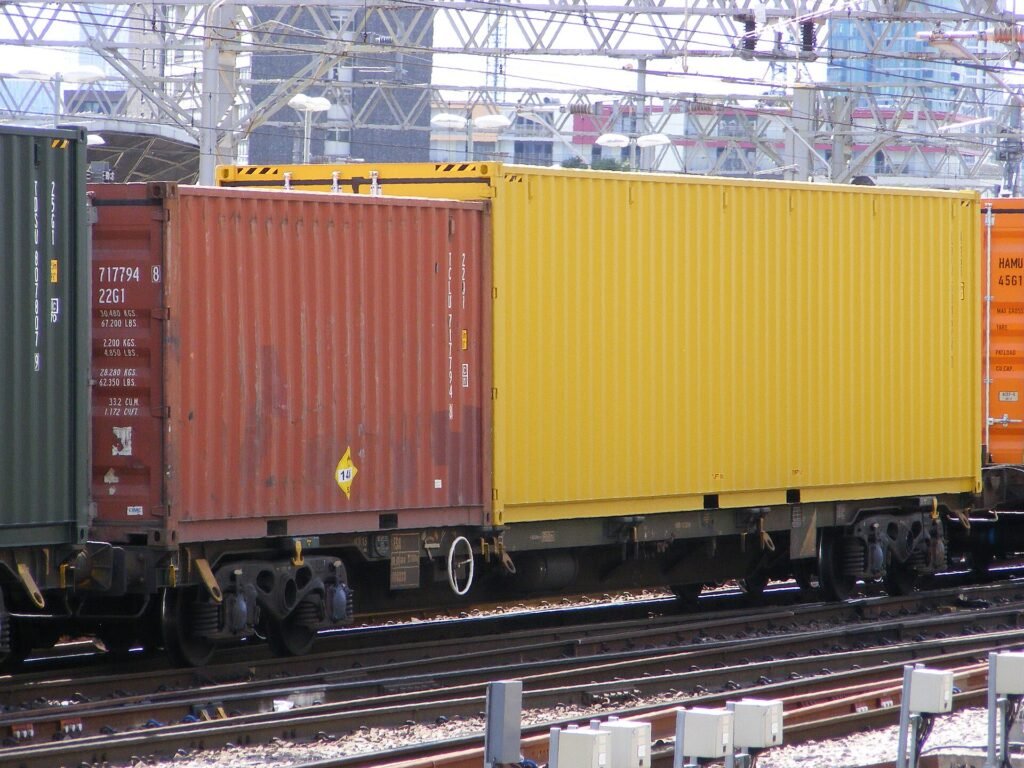
Height affects transport more than most people expect. On a standard trailer, a high cube can stand around 4 metres or more above the road, and many countries cap vehicle height at roughly that level. In some regions hauliers use low-deck trailers or plan routes around low bridges when moving high cubes.
For delivery to your site, check overhead clearance along the final part of the route: gateways, trees, carports, cables and covered entrances. A tilt-bed truck also raises the front of the container as it unloads, so it needs more vertical space than the container’s own height. Our guide to shipping container delivery explains clearance in more detail.
Cost: Is a High Cube Worth the Extra?
A high cube usually costs a little more than a standard container of the same length and condition. For 40ft containers the gap is often small, because high cubes are so common. For 20ft containers the gap is usually larger, because 20ft high cubes are scarcer.
Is it worth paying for? That depends on how much of the height you’ll actually use. A simple way to think about it: if you’d need even one extra container, or one extra shipment, because your goods don’t fit, the high cube has paid for itself. If your goods sit low on the floor and never go above head height, you’re paying for empty air.
Resale is worth a thought too. High cubes are popular for conversions, so a well-kept 40ft high cube tends to be easy to sell on later.
Condition: New, One Trip or Used
Both heights come in the same three grades. A new container has never been used. A one trip container has made a single voyage and is close to new. A used container has worked for years and shows wear but stays wind and watertight. For high cubes bought for conversions, new or one trip is usually the better base because straight walls are easier to cut and line. For budget storage, the used 40ft high cube container gives the most volume for the money. Our article on one trip vs used shipping containers covers the trade-offs.
Which Size and Height Should You Choose?
Height is only one half of the decision. Length is the other. A 20ft high cube and a 40ft standard solve very different problems. If you’re still deciding on length, read our comparison of the 20ft vs 40ft shipping container first, then come back to the height question.
Here’s a quick way to narrow it down:
| Your situation | Usually the best fit |
|---|---|
| Heavy cargo for export | 20ft standard |
| Light, bulky cargo for export | 40ft high cube |
| Budget storage, nothing tall | 20ft or 40ft standard, used |
| Stacked pallets or tall racking | 40ft high cube |
| Small site, tall equipment | 20ft high cube |
| Office, studio or workshop | High cube, new or one trip |
| Low bridge or carport on the route | Standard height |
Common Mistakes
Assuming a high cube carries more weight. It doesn’t. Payload is about the same as a standard container.
Forgetting the door height. Buyers sometimes measure the internal height and forget that the door opening is lower. Check the door figure for tall items.
Ignoring route height. A high cube that can’t pass under a bridge on the way to your site is a costly surprise.
Converting a standard box. It can be done, but many owners regret the low ceiling once the insulation is in.
Frequently Asked Questions
How much taller is a high cube than a standard container?
One foot, or about 30 cm. A high cube is 9 ft 6 in (2.90 m) tall outside and a standard container is 8 ft 6 in (2.59 m).
How much more does a high cube container hold?
About 12% more. A 40ft high cube holds around 76 m³ against about 68 m³ for a 40ft standard. A 20ft high cube holds about 37 m³ against about 33 m³.
Can a high cube container carry more weight?
No. Weight ratings are similar, and the high cube weighs slightly more empty, so payload is about the same.
Is freight more expensive for a high cube?
For 40ft containers, ocean freight is usually the same or very close for standard and high cube boxes. Road transport can cost more where the extra height requires special trailers or routing.
Does Prime Cargo Box sell both?
Yes. We sell standard and high cube containers in 20ft and 40ft lengths, new, one trip and used. Browse our 40ft high cube containers and standard containers, or contact us for a delivered price anywhere in the world.
Making the Call
The high cube vs standard container decision is really a question about height. If your cargo, equipment or project needs it, the high cube is worth every cent. If it doesn’t, a standard container does the same job for less and is easier to move. Tell us what you’re storing or shipping and where it’s going, and we’ll recommend the right box.
Cover photo: Sludge G / CC BY-SA 4.0, via Wikimedia Commons.