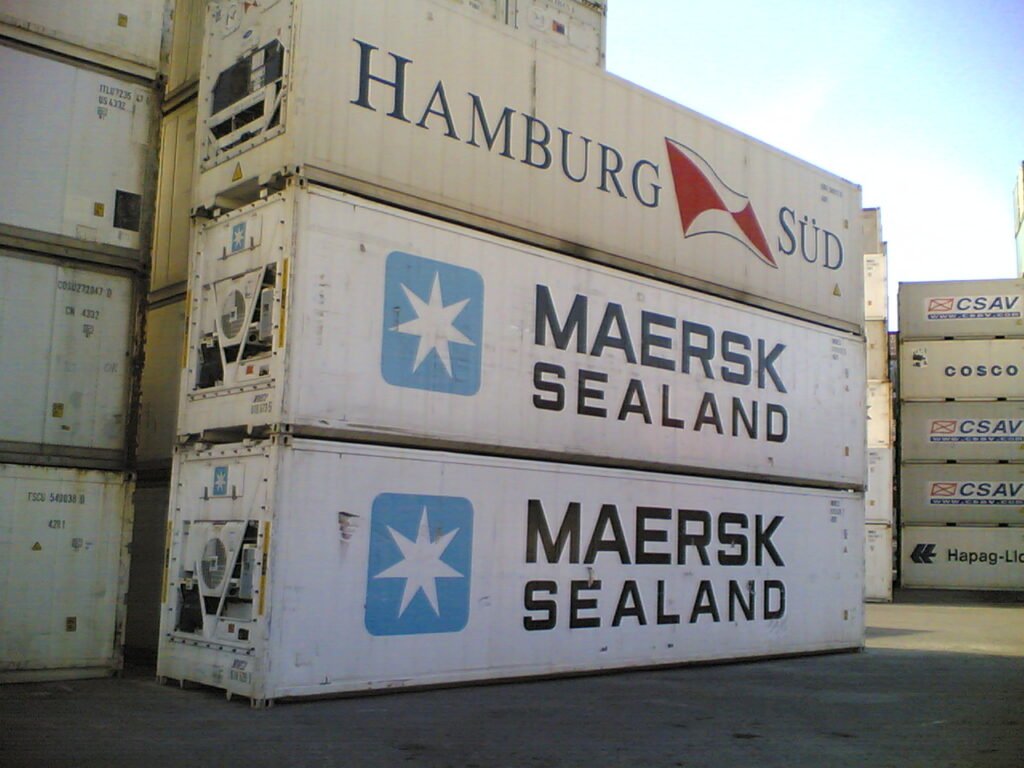
A refrigerated container is one of the fastest ways to add cold storage. There’s no building to construct and no cold room to design. The container arrives, it’s plugged in, and within hours you have a chiller or freezer that can hold a steady temperature for years. That convenience is why farms, food businesses, caterers and exporters buy reefers every day.
But buying a reefer container is not like buying a dry box. You’re buying a refrigeration machine as well as a steel shell, and the machinery, power supply and insulation matter as much as the outside condition. At Prime Cargo Box we sell new, one trip and used reefers in 20ft and 40ft sizes, and this guide covers everything we’d want a customer to know before they order one.
What Is a Reefer Container?
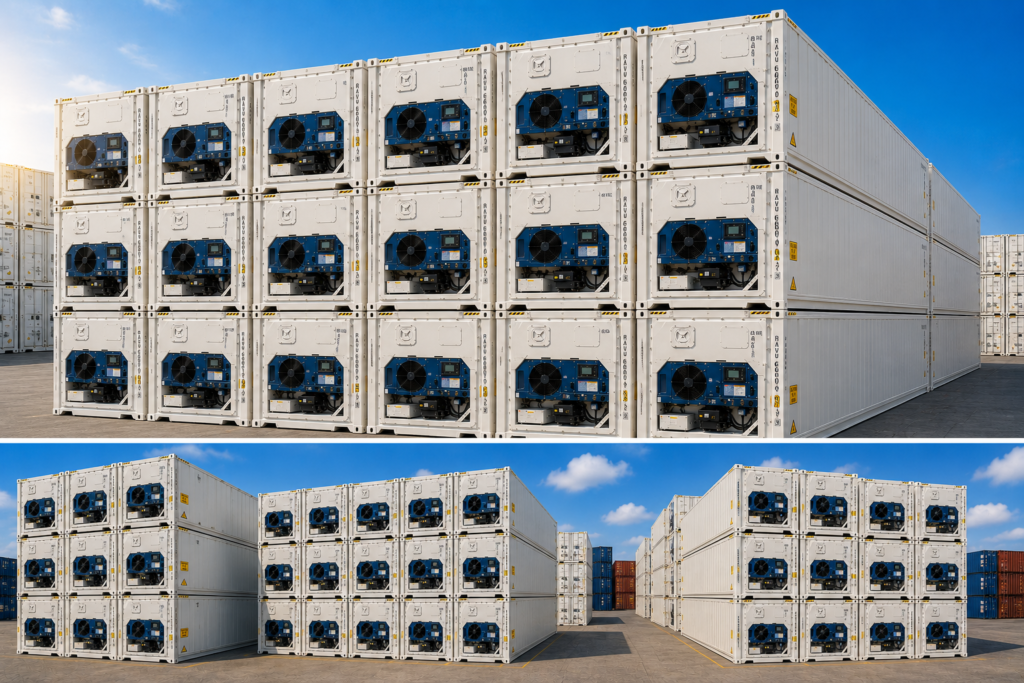
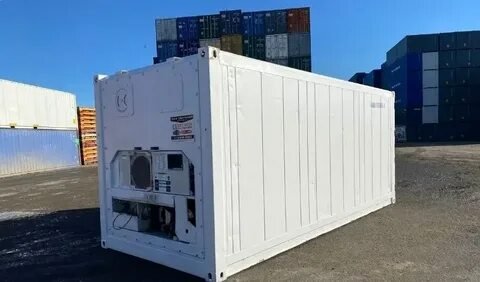
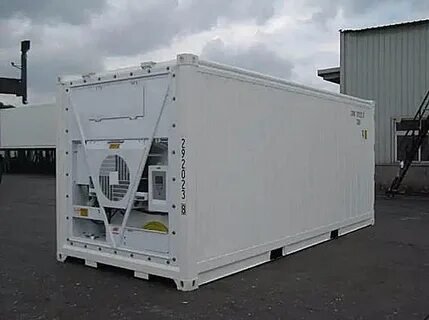
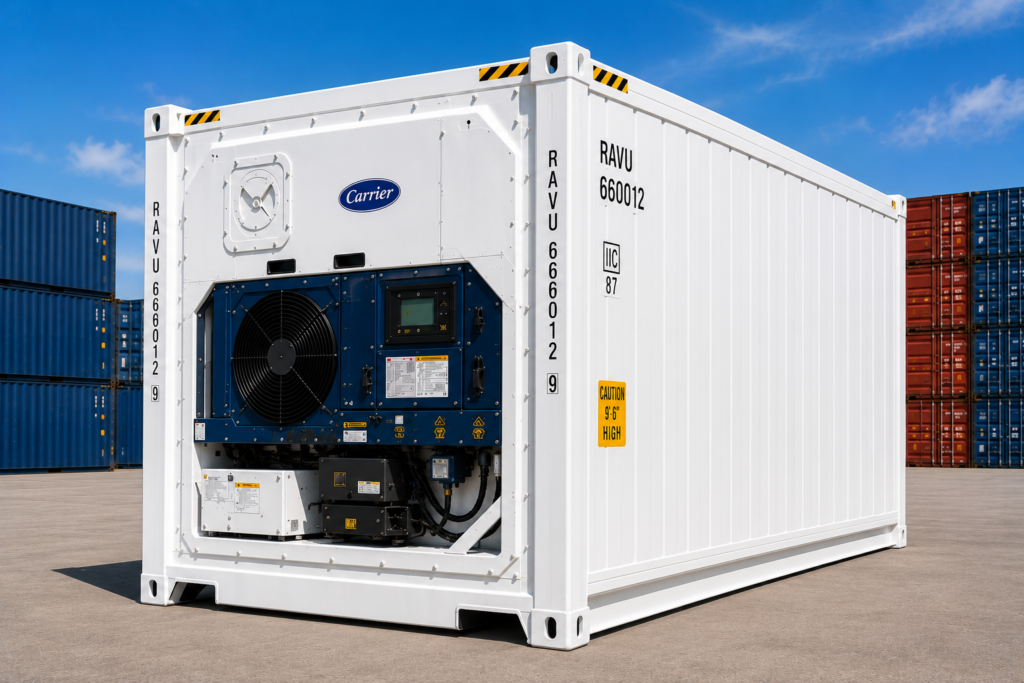
A reefer is a shipping container with its own refrigeration unit built into one end wall. The rest of the box is insulated with polyurethane foam, lined with stainless steel or aluminium, and fitted with a slotted aluminium floor that lets chilled air circulate under the cargo. The doors are insulated and sealed with heavy gaskets.
Shipping lines use reefers to move fruit, vegetables, meat, fish, dairy, flowers and pharmaceuticals around the world. On land, the same container works as a portable cold room. It is one of several types of shipping containers we sell, and the most specialised. You can read more about the history and design of the refrigerated container if you’re curious, but the practical points for buyers are covered below.
How a Reefer Container Works
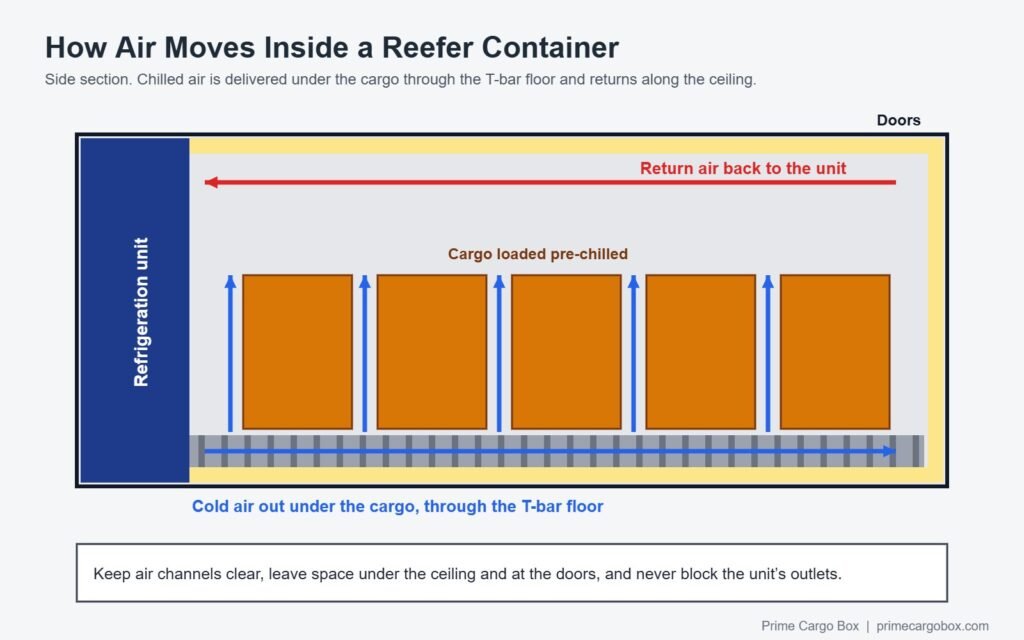
The refrigeration unit draws air from the top of the container, cools or warms it to the set temperature, and blows it down and under the cargo through the channels in the T-bar floor. The air rises up through the load and returns to the unit along the ceiling. This bottom-air system keeps temperatures even from the front of the container to the doors.
A digital controller lets you set the temperature, records readings and stores alarms. Many units also have an adjustable fresh air vent, which lets a small amount of outside air in to remove the gases that ripening fruit and vegetables give off. For frozen cargo the vent stays closed.
One important point: a reefer is built to hold temperature, not to cool warm goods quickly. Cargo should be loaded already chilled or frozen to the target temperature. Loading warm produce overloads the unit and leads to uneven temperatures.
Reefer Sizes and Specifications
Reefers come in two common sizes: the 20ft standard height reefer and the 40ft high cube reefer. The 40ft version is almost always a high cube, because the insulation and floor take up height that would otherwise make the inside too low. Figures below are typical; reefer dimensions vary more between builders than dry containers do, and the exact ratings of any unit are on its data plate.
| Specification | 20ft reefer | 40ft high cube reefer |
|---|---|---|
| External size | 6.06 x 2.44 x 2.59 m | 12.19 x 2.44 x 2.90 m |
| Internal length | Approx. 5.45 m | Approx. 11.58 to 11.60 m |
| Internal width | Approx. 2.28 m | Approx. 2.29 m |
| Internal height | Approx. 2.16 to 2.26 m | Approx. 2.40 to 2.43 m |
| Door opening | Approx. 2.29 x 2.26 m | Approx. 2.29 x 2.54 to 2.56 m |
| Cubic capacity | Approx. 28 m³ | Approx. 67 to 67.7 m³ |
| Tare weight | Approx. 2,860 to 3,100 kg | Approx. 4,400 to 4,800 kg |
| Maximum gross weight | Typically 30,480 to 32,000 kg | Typically 32,500 to 34,000 kg |
| Temperature range | Typically -30 °C to +30 °C | Typically -30 °C to +30 °C |
| Floor | Aluminium T-bar | Aluminium T-bar |
| Power | Three-phase, typically 380 to 460 V | Three-phase, typically 380 to 460 V |
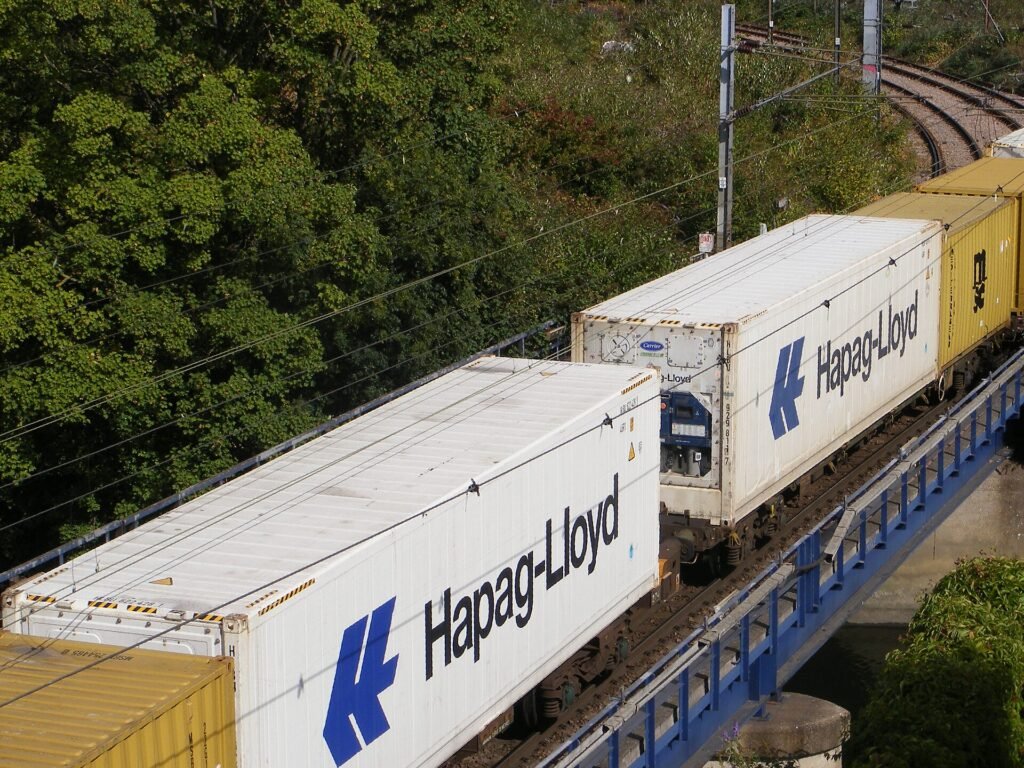
Carriers publish similar data for their own equipment, for example the Hapag-Lloyd 40ft reefer high cube specification.
Notice how much smaller a reefer is inside than a dry container of the same size. A 20ft reefer holds about 28 m³ against about 33 m³ in a dry twenty, because of the insulation and the machinery. Size your order on internal volume, not external length.
Which Size Should You Choose?
A 20ft reefer holds roughly 10 standard pallets on the floor and suits restaurants, butchers, small farms, florists and caterers. It’s easier to place on a small site and uses less power.
A 40ft high cube reefer holds roughly 20 to 23 standard pallets and suits packhouses, distributors, larger farms, exporters and events. It costs more to buy and run, but gives far more space per unit of power and per square metre of ground.
If you need two temperatures, for example a chiller and a freezer, two 20ft units can make more sense than one 40ft set to a compromise. The general size trade-offs are covered in our guide to the 20ft vs 40ft shipping container.
Power: The First Thing to Check
Before buying a reefer container, confirm you can power it. Container reefers run on a three-phase electrical supply, typically 380 to 460 volts at 50 or 60 Hz, and connect through a heavy-duty industrial plug, usually a 32-amp four-pin type. They will not run from an ordinary single-phase household socket.
If you don’t have three-phase power where the container will sit, you have three options: have an electrician run a suitable supply, use a diesel generator sized for the unit, or choose a site that already has industrial power. Shipping lines and hauliers use clip-on generator sets to keep reefers running on trucks and trains, and similar gensets can power a reefer on a remote site, though fuel costs add up over time.
Ask us for the electrical rating of the specific unit you’re buying, and give it to your electrician before delivery.
New, One Trip or Used Reefer?
With a dry container, condition mostly affects appearance and lifespan. With a reefer, it also affects the machinery, which is the most expensive part.
| Grade | Machinery | Best for |
|---|---|---|
| New | Unused | Long-term cold storage, regulated industries, maximum reliability |
| One trip | Very few running hours | Most buyers who want reliability at a lower price |
| Used, fully working | Years of service, tested and running | Budget cold storage, seasonal use |
| Non-working (insulated box) | Not working or removed | Insulated dry storage only |
A one trip reefer has a compressor, fans and controller with very few hours on them, so it’s usually more efficient and less likely to need repairs than a used unit. A used, fully working reefer costs much less and can give years of good service, especially for chilled rather than deep-frozen storage. Our article on one trip vs used shipping containers covers the general trade-offs between grades.
Be clear about what “working” means. A non-working reefer, sometimes sold as an insulated container, can be a useful insulated store, but it will not cool. Prime Cargo Box lists its reefers as fully working, meaning the unit runs, cools and holds a set temperature.
What to Check When Buying a Reefer Container
The machinery
Most container refrigeration units are made by a handful of manufacturers, including Carrier Transicold, Thermo King, Daikin and Star Cool. Ask for the make and model, the year, and whether a recent pre-trip inspection (PTI) has been carried out. A PTI is a standard test sequence that checks the unit can pull down to temperature and that its sensors and components work. A recent PTI report is one of the best signs that a used reefer is genuinely working.
The controller and alarm history
The controller stores alarms and, on many models, running hours. Stored fault codes and very high hours on a used unit are worth asking about. A technician can download the log.
The refrigerant
Older units commonly use R134a, while some newer machines use refrigerants such as R513A or R452A. Check which one your unit uses, because a local technician will need to service it.
The lining and insulation
Splits, holes or crushed panels in the inner lining let moisture into the insulation, which makes it heavier and less effective. On a used reefer, look along the walls, ceiling and the lower panels near the doors, where forklifts often strike.
Door seals and drains
The door gaskets should be intact and close evenly all the way round. The floor drains near the doors should be clear. Leaking seals waste energy and allow ice to build up.
The T-bar floor
Dents and damaged sections in the floor channels restrict airflow under the cargo. Minor dents are normal on a used unit; large damaged areas are not.
Running Costs
We can’t give a fixed running cost, because it depends on so many things: the set temperature, the outside climate, the condition of the machinery and insulation, how often the doors open and how warm the goods are when loaded. A chiller at +2 °C in a cool climate uses a fraction of the power of a freezer at -25 °C in a hot one.
What reliably lowers costs:
- Placing the container in shade, or under a simple canopy
- Loading goods already at the target temperature
- Keeping door openings short and fitting a strip curtain
- Keeping the condenser coil on the unit clean
- Replacing worn door seals promptly
- Choosing near-new machinery, which is generally more efficient
Once the container is running, an electrician can meter it to give you real figures for your site.
Site Preparation
A reefer needs everything a dry container needs, plus a few extras:
- A firm, level base. Reefers are heavier than dry containers, and a level box keeps the doors sealing and the drains working.
- Clear space around the refrigeration unit so it can draw in and exhaust air freely. Don’t box it in against a wall.
- Power within reach of the unit’s cable.
- Shade if possible.
- Room to open the doors and, ideally, a ramp so pallet trucks can roll in over the door sill.
Delivery works much like any container, though the weight sometimes calls for a crane or side-lifter. Our guide to shipping container delivery explains how to prepare the route and ground.
Loading a Reefer Correctly
Most temperature problems in reefers come from poor loading rather than faulty machinery. A few rules make a big difference:
- Pre-cool or pre-freeze goods before loading.
- Set the controller to the correct temperature and let the empty container reach it first.
- Stack goods on the T-bar floor without covering the air channels with loose cardboard or plastic sheets.
- Leave space below the ceiling and at the door end for air to return to the unit.
- Never block the air outlets at the machinery end.
- For fresh produce, set the fresh air vent as recommended for that product; keep it closed for frozen goods.
Popular Uses
- Farm and orchard storage after harvest
- Butchers, fishmongers and food processors
- Restaurants, hotels and caterers needing overflow chiller or freezer space
- Events and festivals
- Florists and plant nurseries
- Exporters shipping chilled or frozen cargo in their own container
- Pharmacies and clinics, subject to local regulations and temperature monitoring rules
Using Your Reefer for Export
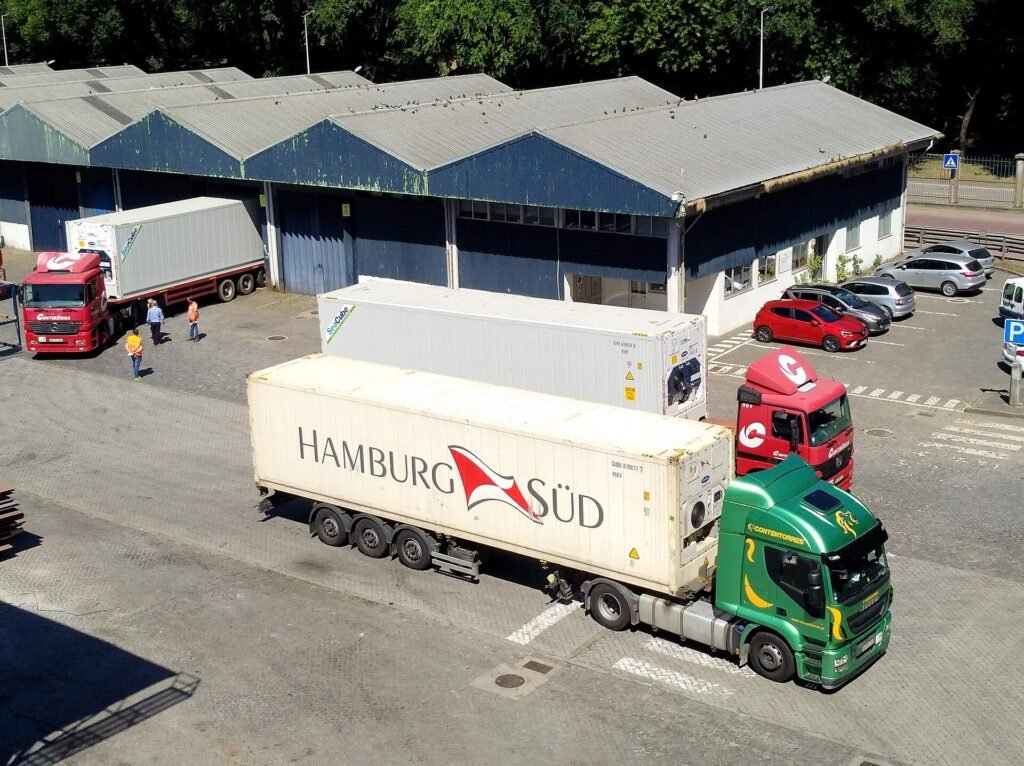
If you’re buying a reefer container to ship your own goods, it needs a valid CSC safety plate and machinery in good order. New and one trip units are the simplest choice. Before loading, pre-cool the container, record the set temperature on the shipping documents and give your forwarder the container number, tare weight and set point. Height matters too: modern 40ft reefers are high cubes, as explained in our guide to high cube vs standard containers.
Maintenance
A reefer needs more care than a dry box, but not much. Keep the condenser coil clean, check door seals regularly, keep the floor drains clear, and have a refrigeration technician service the unit about once a year. Keep temperature records if you store food or medicine; most controllers log them automatically.
Reefer Container vs Building a Cold Room
Many buyers compare a reefer with a built cold room before deciding. A permanent cold room can be larger and more efficient per cubic metre, and it can be designed around your workflow. It also takes time, planning approval in many places, building work and a significant upfront investment, and it stays where it’s built.
A reefer container is ready almost immediately, needs only a level base and a power supply, and can be moved, resold or added to as your needs change. For seasonal peaks, rented sites, growing businesses and anyone who needs cold storage quickly, buying a reefer container is usually the faster and lower-risk route. Some businesses start with one or two reefers and build a cold room later once their volumes are proven.
Common Mistakes When Buying a Reefer Container
Not checking the power supply first. A reefer that arrives at a site without three-phase power is just an insulated box until an electrician or generator is sorted out.
Sizing on external length. Insulation takes up space. A 20ft reefer holds noticeably less than a dry twenty, so plan on internal volume and pallet count.
Buying “working” without proof. Ask for the machinery details and a recent test or PTI report. A unit that ran last year may not run now.
Expecting it to cool warm goods quickly. Reefers hold temperature. Load chilled goods, or allow extra time and expect uneven temperatures if you don’t.
Boxing in the machinery. Placing the refrigeration end hard against a wall or fence starves it of air and drives up running costs.
Forgetting the weight. Reefers are heavier than dry containers. Make sure the base, the delivery truck and any lifting equipment can handle it.
Questions to Ask Before You Buy
- What size and how many pallets do I need to hold?
- What temperature will I run it at, chilled or frozen?
- Do I have three-phase power at the site, or will I need a generator?
- What is the machinery make, model and year?
- Is there a recent PTI report?
- What refrigerant does it use, and can a local technician service it?
- What condition are the lining, seals and floor in?
- Will I need a valid CSC plate to ship goods?
We answer all of these on every reefer quote.
Reefer Containers From Prime Cargo Box
We sell reefers in both common sizes and several grades, all fully working:
- One trip 20ft reefer container: near-new machinery in a compact size
- Used 20ft reefer container: budget cold storage for smaller sites
- One trip 40ft reefer container: high cube, near-new machinery
- Used 40ft reefer container: large capacity at a lower price
You can also browse our full refrigerated containers for sale range.
Frequently Asked Questions
What temperature can a reefer container reach?
Standard units typically cover -30 °C to +30 °C, depending on the machinery model. Specialist super-freezer units go colder but are rare and expensive.
Can a reefer run on normal household power?
No. It needs a three-phase supply, typically 380 to 460 V, or a suitable generator.
How long does a reefer container last?
The steel shell can last decades. The refrigeration unit is the part that wears, and with regular servicing it can run for many years. Near-new machinery gives the longest remaining life.
Can I use a reefer as normal dry storage?
Yes. Switched off, it’s an insulated box that keeps contents more stable than a dry container, though it has less internal space.
Do you deliver reefers worldwide?
Yes. Contact Prime Cargo Box with your location, the temperature you need and your power supply, and we’ll quote a suitable unit with delivery.
Before You Order
Buying a reefer container goes smoothly when you start with power, size and temperature, then check the machinery and insulation of the unit you’re offered. Get those right and a reefer will give you reliable cold storage for years. Send us your requirements and we’ll recommend the right unit.
Cover photo: Andrea Puggioni / CC BY 2.0, via Wikimedia Commons.