The cheapest shipping containers we sell right now are a used 20ft standard at $1,000, a used 20ft high cube at $1,650 and a used 40ft standard at $1,900. All three are wind and watertight, with lockable steel doors, and each one has its own product page with photos and specifications. If you want the most space for the least money, the used 40ft gives you about 67 cubic metres for roughly $28 per cubic metre, which is about as low as container storage gets.
Cheap shipping containers are not hard to find. Cheap ones that are still sound, that arrive on time and that do the job for years are another matter. This guide shows where the real savings are, what separates a good budget box from a bad one, and the mistakes that turn a cheap container into an expensive one. Every price here comes from our own live listings, so you can check the current figure or order straight from the page.
Quick answers
- Cheapest box: the used 20ft shipping container, listed at $1,000.
- Most space per dollar: the used 40ft shipping container, listed at $1,900 for about 67 m³.
- Cheapest tall box: the used 20ft high cube, listed at $1,650.
- Best budget pick for tall storage: the used 40ft high cube, listed at $2,200 for about 76 m³.
- Cheapest near-new box: the one trip 20ft, listed at $1,550.
Cheap shipping containers we sell today
These are the lowest priced containers in our range at the time of writing, in US dollars before delivery. Prices change as stock moves, so the product page always shows the current figure.
| Container | Grade | Listed price | Inside space |
|---|---|---|---|
| 20ft standard | Used, wind and watertight | $1,000 | about 33 m³ |
| 20ft standard | One trip | $1,550 | about 33 m³ |
| 20ft high cube | Used | $1,650 | about 37 m³ |
| 40ft standard | Used, wind and watertight | $1,900 | about 67 m³ |
| 20ft double door | Used | $1,950 | about 33 m³ |
| 40ft high cube | Used | $2,200 | about 76 m³ |
| 20ft open top | Used | $2,600 | close to a standard 20ft |
| 20ft open side | Used | $2,950 | close to a standard 20ft |
You can see every used unit in one place in our used shipping containers category, or compare all grades in our guide to shipping container prices.
What “cheap” should really mean
The lowest price on a page is not always the cheapest container. A better way to judge cheap shipping containers is to ask three questions:
- How much space do I get for the money? A used 40ft costs more than a used 20ft, but it holds twice as much, so the cost per cubic metre is slightly lower.
- How long will it do the job? A sound used box can keep goods dry for many years. A damaged one may need repairs in the first season.
- What will it cost to get it working? Delivery, site preparation and any repairs all count. A $900 box that needs a new floor is not cheaper than a $1,000 box that does not.
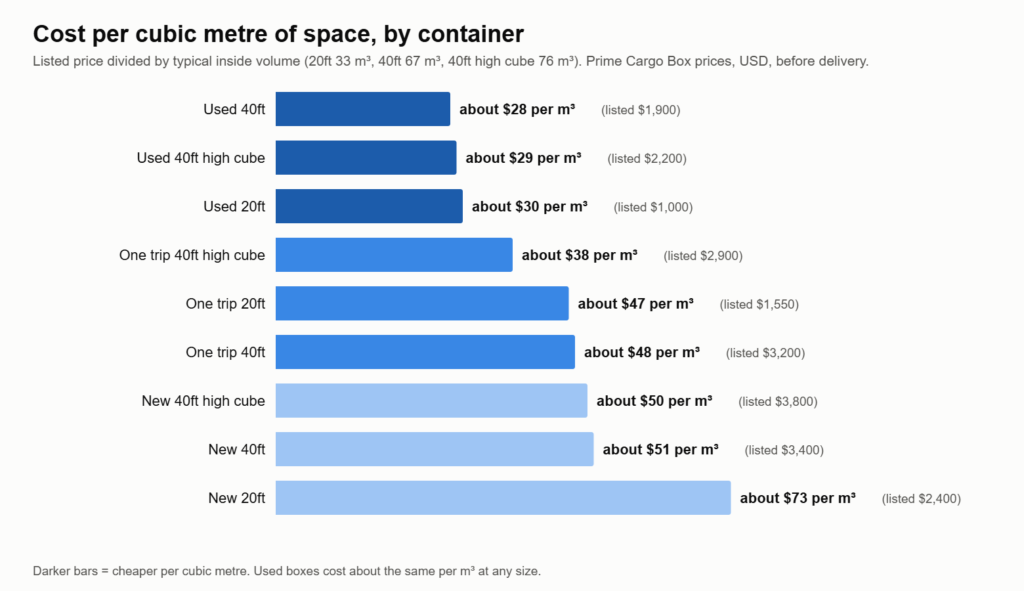
The chart at the top of this page shows the first point clearly. Used boxes cost roughly $28 to $30 per cubic metre whatever their size, while new boxes cost $50 or more. So if you want cheap shipping containers for storage, buy used and then pick whichever size fits your site.
Why some containers cost less than others
Two boxes that look the same in a photo can be hundreds of dollars apart, and knowing why helps you find cheap shipping containers that are still good. The reasons are usually simple.
Age and wear
Used containers have spent years at sea being lifted, stacked and loaded. That leaves dents, scratches and surface rust, which lower the price but rarely affect how well the box keeps out rain. Our one trip vs used guide explains what normal wear looks like.
Grade
Used boxes come in grades. Wind and watertight units are sold for storage. Cargo worthy units are fit to ship goods by sea and cost a little more. As-is units are sold without a guarantee that they are sealed, and they are the cheapest of all for a reason.
Size and type
Standard dry boxes are the cheapest type to build. Extra doors, open sides, open tops and refrigeration all add cost. If you do not need those features every day, a standard box saves money.
Location
Places that import far more than they export tend to collect empty containers, and that surplus pushes used prices down. A box near you also costs less to deliver than one that has to travel a long way.
The global freight market
When shipping is busy, lines keep their boxes working and fewer reach the resale market. When trade slows, more retire and used prices tend to soften. Containers are built to shared international standards, described on the intermodal container page, so used boxes from all over the world feed the same resale market.

Where cheap shipping containers come from
Most cheap shipping containers start life with a shipping line or a container leasing company. They spend years carrying cargo between ports, moving by ship, rail and truck. When a box gets older, or when its owner has too many in one region, it is taken out of ocean service and sold.
At that point the box is inspected and graded. Sound boxes with only cosmetic wear become wind and watertight or cargo worthy stock. Boxes with serious damage are sold as-is, repaired or scrapped. The sound ones are what you want: they have done their hardest work already, but the steel shell still has plenty of life left for storage on dry land.
That is the real reason cheap shipping containers are good value. You are buying a structure built for the sea and putting it to work somewhere much easier, such as a farmyard or a driveway.
Cheap versus too cheap: understanding grades
The grade is where most bargains go wrong. When you shop for cheap shipping containers, these are the terms you will see, from most to least expensive.
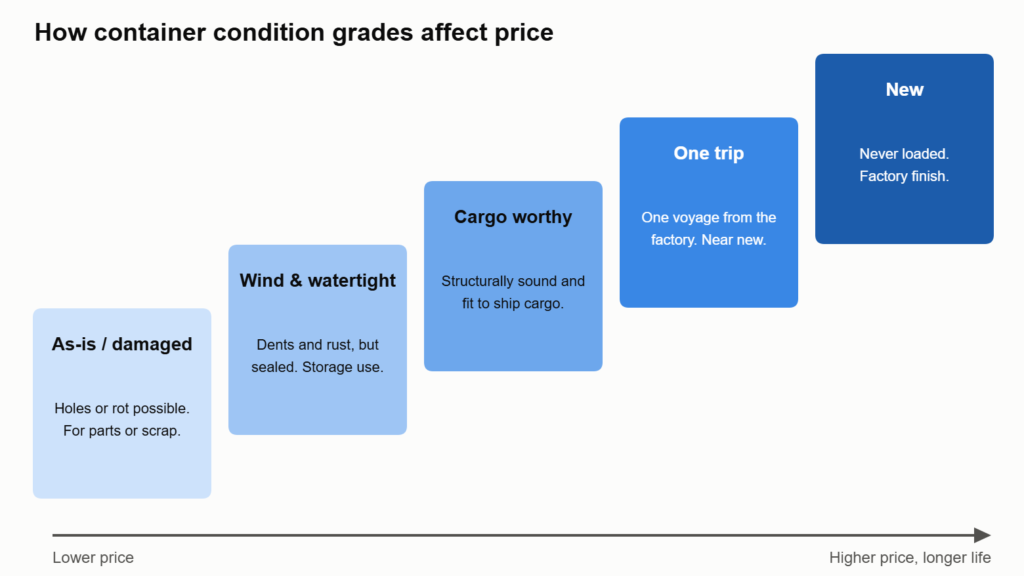
| Grade | What it means | Worth buying cheap? |
|---|---|---|
| New | Never loaded, factory finish | Not cheap, but the longest life |
| One trip | One voyage from the factory, near new | Good value if looks matter |
| Cargo worthy | Used, still fit to ship cargo by sea | Yes, if you need to ship goods |
| Wind and watertight | Used, dents and rust, but sealed | Yes, the best value for storage |
| As-is | Unchecked or damaged | Rarely, unless you plan to cut it up |
Professional inspectors judge used boxes against published repair standards, such as those set by the Institute of International Container Lessors. You do not need to know those rules, but always ask which grade a box meets and get the answer in writing. Each of our used listings states its grade on the product page.
How to check a cheap container before you buy
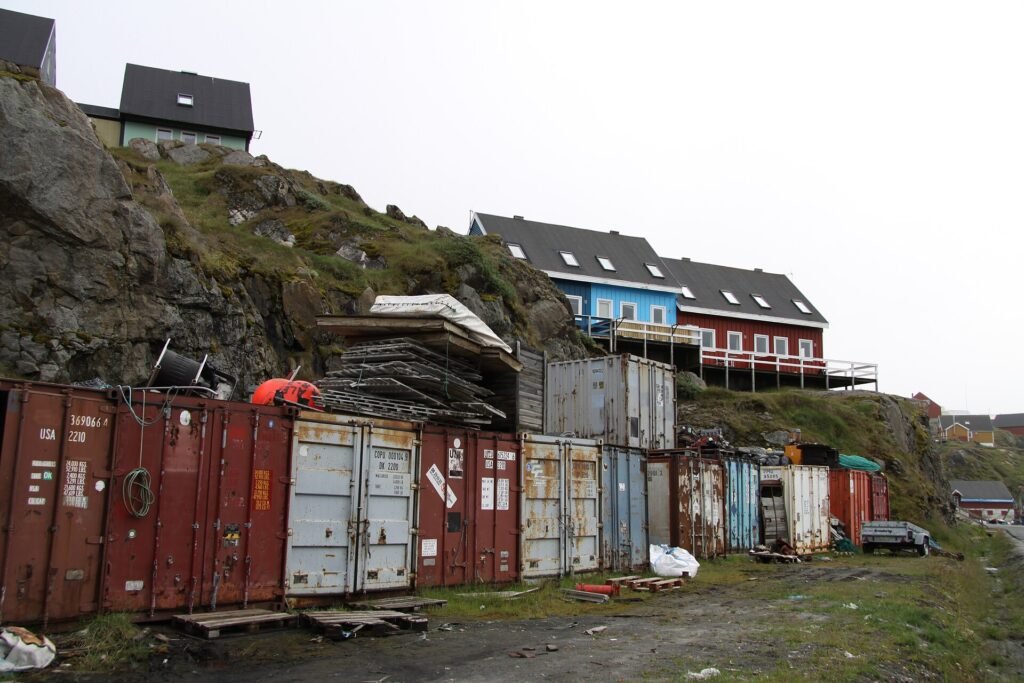
A low price is only a bargain if the box is sound. Whether you buy from us or anyone else, check these points from the photos and the listing.
- Roof: look for dents that could hold water and any rust that has gone right through.
- Walls: dents and surface rust are normal. Holes and heavy flaking rust at the bottom edges are not.
- Floor: it should be flat and solid, without soft or broken boards.
- Doors: they should open, close and lock. Torn rubber seals let in water.
- Corner castings and bottom rails: these carry the weight when the box is lifted. Heavy corrosion here is a warning sign.
- Door markings: the owner code, size code and weights should be legible.
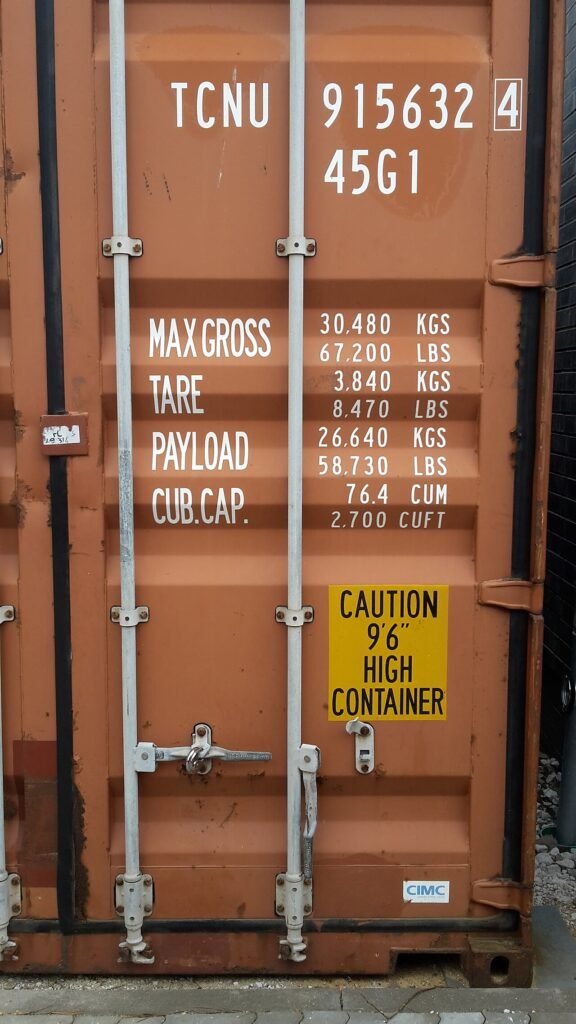
The owner code painted on each door is registered through the BIC code system, which helps confirm you are buying a genuine ISO container. If you plan to ship goods, the box also needs a current safety plate under the International Convention for Safe Containers. For storage only, that plate matters much less.
When the container arrives, step inside, close the doors and look for daylight. A wind and watertight box shows none. If something is wrong, take photos and contact us straight away; our Refund and Returns Policy explains how damaged or incorrect products are handled.
12 ways to pay less for cheap shipping containers
Most of the savings on cheap shipping containers come from decisions you make before you order. These are the ones that make a real difference.
- Buy used for storage. A wind and watertight box keeps things just as dry as a new one, for less than half the price.
- Pick the bigger box if you are close. Two used 20ft boxes at $1,000 each cost more than one used 40ft at $1,900, and need two deliveries.
- Only buy a high cube if you need the height. On a used 40ft the high cube is $300 more. Worth it for racking or machinery, not for boxes stacked once.
- Skip special features you rarely use. Open sides, open tops and extra doors add cost. A standard box does most jobs.
- Choose cargo worthy only if you will ship cargo. For storage, wind and watertight is enough.
- Compare delivered prices. A cheap box a long way off can cost more once delivery is added.
- Get the site ready. A truck that cannot place the box first time may need to come back. Our delivery guide explains what the driver needs.
- Use simple foundations. Concrete pads, blocks or sleepers under the corners work well and cost far less than a slab.
- Combine deliveries. If you need more than one box, ask about delivering them together.
- Do the easy upgrades yourself. Shelving, moisture absorbers and a coat of paint are simple weekend jobs.
- Buy the right size the first time. Buying a second box later costs more than buying the bigger one now.
- Look after it. Touching up scratches and greasing the doors keeps a cheap box working for years.
Hidden costs that make cheap shipping containers expensive
The box price is only part of the bill. Before you decide which of the cheap shipping containers to buy, add these up.
| Cost | Why it matters | How to keep it down |
|---|---|---|
| Delivery | Distance, truck type and site access all change the price | Buy from stock near you and prepare the site |
| Site preparation | A box on soft ground sinks and the doors jam | Gravel pad or blocks under the corners |
| Repairs | As-is boxes may need roof, floor or seal work | Buy wind and watertight or better |
| Second delivery attempt | If the truck cannot place the box, it may have to return | Check access, gates, cables and branches first |
| Permits | Some areas need one for long-term placement | Check with your local council before ordering |
| Extras | Locks, shelving and vents | Add only what you need, fit simple items yourself |
Our Shipping and Delivery Policy explains how delivery works and what the site needs on the day, and our team can confirm delivery to your address before you order.
Warning signs on very cheap listings
Because containers are expensive and hard to inspect from far away, very low prices attract fake listings. Slow down if you see any of these:
- A price far below every other seller, with no clear reason.
- Pressure to pay immediately, or a request to pay into a personal account.
- Stock photos only, or photos that do not match the description.
- No company address, phone number or published policies.
- Bank details that change by email partway through the order.
A real seller will answer questions, show the grade and photos, and publish its terms. At Prime Cargo Box our contact details are on every page and our billing, delivery and returns policies are published in full. If anything about a payment request ever looks different from what you expect, call us on +1 (209) 776 3645 before you send money. Our guide on how to buy a shipping container covers this in more detail.
Cheap shipping containers by job: a quick guide
| Job | Cheapest sensible choice | Listed price |
|---|---|---|
| Garden and garage overflow | Used 20ft | $1,000 |
| Moving house in stages | Used 40ft | $1,900 |
| Farm machinery | Used 40ft high cube | $2,200 |
| Site tool store | Used 20ft double door | $1,950 |
| Small workshop | Used 20ft high cube | $1,650 |
| Pop-up stall or wide items | Used 20ft open side | $2,950 |
| Cold storage | Used 20ft reefer | $5,800 |
Who should buy a cheap container, and who should not
Good fits for cheap shipping containers
- Home and garden storage where the box sits out of the way.
- Farms storing feed, tools and machinery.
- Building sites where the box is a lockable tool store for a few months or years.
- Businesses needing overflow stock space behind a shop or warehouse.
- Clubs and schools storing equipment.
When to spend a little more
- Offices, homes and studios. Straight walls and clean floors make conversions easier. Look at a one trip 40ft high cube or a new 40ft high cube.
- Shops and anything customers see. A one trip box looks far better. The one trip 20ft is only $550 more than the used one.
- Shipping your own cargo. You need a cargo worthy box with a valid safety plate. The 40ft one trip container is the safe choice.
The best cheap container for each job
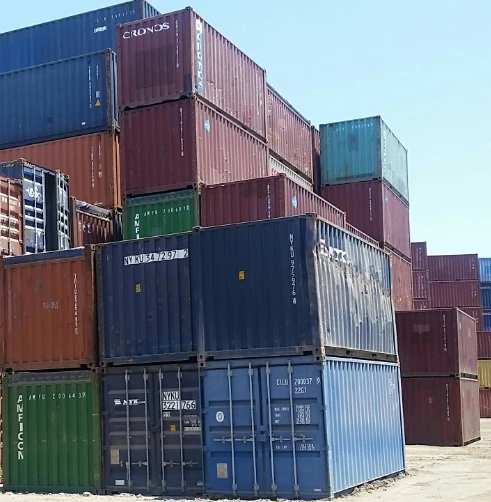
Cheapest home storage: used 20ft
The used 20ft shipping container at $1,000 holds roughly the contents of a one or two bedroom home and fits on most driveways. It is the lowest priced box we sell and the most common starting point.
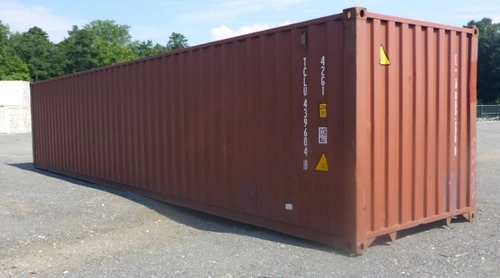
Cheapest big storage: used 40ft
The used 40ft at $1,900 gives you twice the floor area of a 20ft for $900 more. For farms, warehouses and anyone storing a lot, it is the best value per cubic metre in our range.
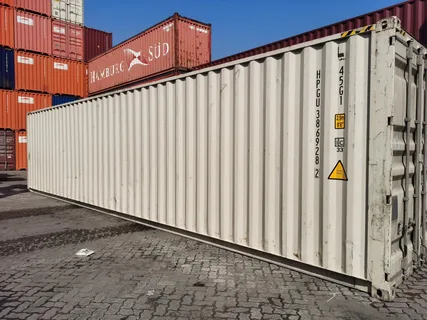
Cheapest tall storage: used high cubes
The used 20ft high cube at $1,650 and the used 40ft high cube at $2,200 both give about 2.70 m of inside height. Choose one if you plan tall shelving, store machinery or want to stack pallets two high. Our high cube vs standard guide explains the difference.
Cheapest easy-access box: used double door
The used 20ft double door at $1,950 opens at both ends, so you can reach the back without unloading the front. It suits contractors and anyone who uses the box every day.
Cheapest crane-loaded box: used open top
The used 20ft open top at $2,600 has a removable tarp roof, so heavy or tall loads can go in from above.
Cheapest wide-access box: used open side
The used 20ft open side at $2,950 opens its full length along one side, which makes it a budget option for pop-up shops and wide equipment.
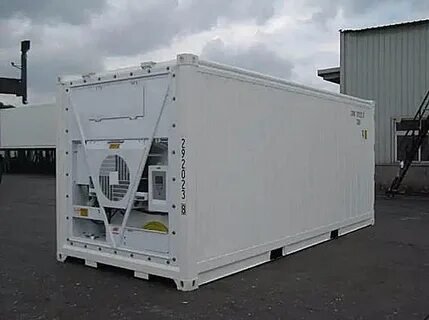
Cheapest cold storage: used reefer
The used 20ft reefer at $5,800 is sold in working order. It is the lowest cost way into walk-in cold storage, but check your power supply first. Our guide to buying a reefer container explains what to test.
Common myths about cheap containers
“Rust means it leaks”
Not usually. Surface rust and dents are cosmetic. What matters is whether the steel has rusted right through, which you can check by looking for daylight from inside with the doors shut.
“All used containers are the same”
They are not. Two used boxes can differ a lot in age, floor condition and door seals. That is why grades exist and why photos of the actual box or batch matter.
“A high cube is always worth it”
Only if you need the height. For boxes and furniture stacked once, a standard height used box does the same job for less.
“Dents weaken the container”
Small dents in the corrugated walls rarely matter for storage. The strength of a container sits mainly in its frame, corner posts and corner castings, so those are the parts to check most carefully.
“Cheap means no support”
It should not. Even the cheapest box in our range has its own product page, published delivery and returns terms, and a team you can call.
Budget projects with cheap shipping containers
A used box is a good starting point for more than plain storage. A few ideas that keep costs low:
- Garden or farm workshop. A used 20ft high cube with a workbench, battery lighting and a couple of vents makes a solid, lockable workshop.
- Feed and tool store. A used 40ft on sleepers keeps feed bags dry and off the ground, with tools hung on the walls.
- Site store for a building project. A used 20ft double door gives crews access from both ends, then gets moved to the next job.
- Club equipment store. A used 20ft painted in club colours holds kit, goals and line markers securely all season.
- Stock room for a small shop. A used box behind the shop frees up selling space inside.
If you want windows, doors, insulation or power fitted before delivery, our modified shipping containers range covers it. For a project where looks matter from day one, a one trip box is a better base than a used one.
Cheap fit-out ideas
You do not need to spend much to make a cheap container far more useful:
- Freestanding shelving down both long walls roughly doubles the useful space.
- Battery or solar lighting means no wiring and no electrician.
- Moisture absorbers and extra vents keep condensation down.
- Pallets on the floor keep goods off any damp.
- A lock box and a closed-shackle padlock make the doors far harder to force.
- A coat of metal paint protects the steel and helps the box blend in.
Questions to ask about any cheap container
- What grade is it, and can you put that in writing?
- Are these photos of the actual box or one from the same batch?
- Is it a standard height or a high cube?
- Do the doors open, close and lock properly?
- Is delivery included, or how is it priced?
- What happens if it arrives damaged or not as described?
- If I want to ship goods in it, does it have a current safety plate?
Our product pages and published policies answer most of these for every one of our cheap shipping containers, and our team answers the rest by phone or email.
Used 20ft vs used 40ft vs used 40ft high cube
These three boxes cover most budget buyers, so it is worth comparing them side by side.
| Used 20ft | Used 40ft | Used 40ft high cube | |
|---|---|---|---|
| Listed price | $1,000 | $1,900 | $2,200 |
| Inside volume | about 33 m³ | about 67 m³ | about 76 m³ |
| Cost per m³ | about $30 | about $28 | about $29 |
| Inside height | about 2.39 m | about 2.39 m | about 2.70 m |
| Ground needed | 20 x 8 ft plus door space | 40 x 8 ft plus door space | 40 x 8 ft plus door space |
| Best for | Driveways, gardens, tight sites | Bulk storage, farms, house moves | Machinery, tall shelving, stacked pallets |
All three cost about the same per cubic metre, so the right one is simply the one that fits your site and your things. If you have the space and expect your storage to grow, the 40ft is the better long-term buy. If the site is tight or the box may move later, the 20ft is easier to live with.
When a cheap container is not the cheapest option
Sometimes the lowest priced box ends up costing more. Watch for these situations:
- You will convert it into a room. Straightening dented walls and patching a worn floor can cost more than the price gap to a one trip box.
- Customers will see it every day. Painting and tidying a tired box takes time and money; a one trip box may look right from day one.
- You need to ship goods. A storage-grade box may not be accepted for sea freight, so you would need a cargo worthy one anyway.
- You need cold storage. A dry box with insulation added is not a substitute for a working reefer.
In those cases, look at our new shipping containers or one trip units. For everything else, cheap shipping containers in a sound used grade are hard to beat.
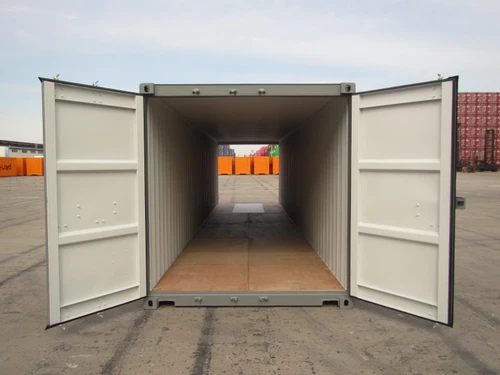
Cheap used versus one trip: a worked example
Say you need a 20ft box beside your house for garden gear. The used 20ft costs $1,000 and the one trip 20ft costs $1,550. Both keep things dry. The used box saves $550, which buys shelving, a good lock and a lock box. The one trip box looks near new, has straighter doors and will need less touching up over the years.
If the box sits behind a shed where nobody sees it, take the saving. If it sits on the front drive, many people find the one trip box is worth the extra just for how it looks. Either way, both are cheap shipping containers compared with a new one at $2,400, and both will do the job.
Making cheap shipping containers last
Containers are built from weathering steel, sometimes called corten, which forms a stable layer of rust that slows further corrosion. You can read how it works in this guide to weathering steel. A little care still goes a long way, especially on a used box:
- Keep it level and off the ground on blocks or sleepers so air flows underneath and the floor stays dry.
- Touch up scratches and rust spots with metal primer and paint each year.
- Clear the roof of leaves and standing water.
- Grease the hinges and locking bars once or twice a year.
- Replace torn door seals before water gets in.
- Keep the vents clear and use moisture absorbers to cut condensation.
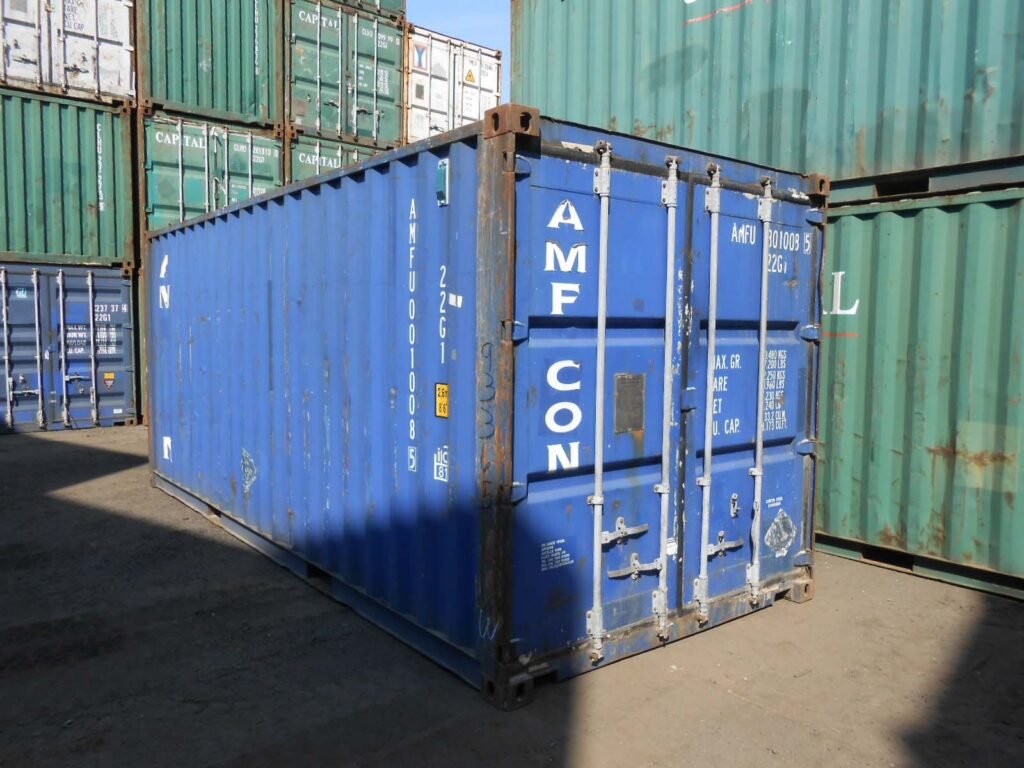
Packing tips that make a budget box work harder
A well packed used box holds far more and stays drier than one with everything piled on the floor. A few habits help:
- Heavy items low and at the far end, light items up high and near the doors.
- Leave a clear aisle down the middle so you can reach everything.
- Keep a small gap between goods and the walls so air can move and condensation does not soak into boxes.
- Use sealed plastic tubs for paper, fabric and anything that hates damp.
- Strap tall items to the lashing rings so they cannot tip.
- Keep a list on the inside of the door of what is stored where.
Set up like this, even the cheapest used 20ft becomes a tidy, useful store that you will actually enjoy using.
Is it cheaper to rent or buy?
For a job lasting a few months, renting a container can make sense. For anything longer, buying usually works out cheaper, and you keep the box at the end. If you no longer need it later, a container you own can often be resold. Our guide to storage containers for sale compares buying, renting and storage units in more detail.
Getting a fair delivered price
Delivery is the part of the bill that varies most from buyer to buyer, so it is worth a few minutes of planning. Measure the route from the road to the drop spot, note any gates, low cables or overhanging branches, and decide exactly where the doors should face. Send that to the seller with your address. The clearer the picture, the more accurate the delivered price and the less chance of a wasted trip.
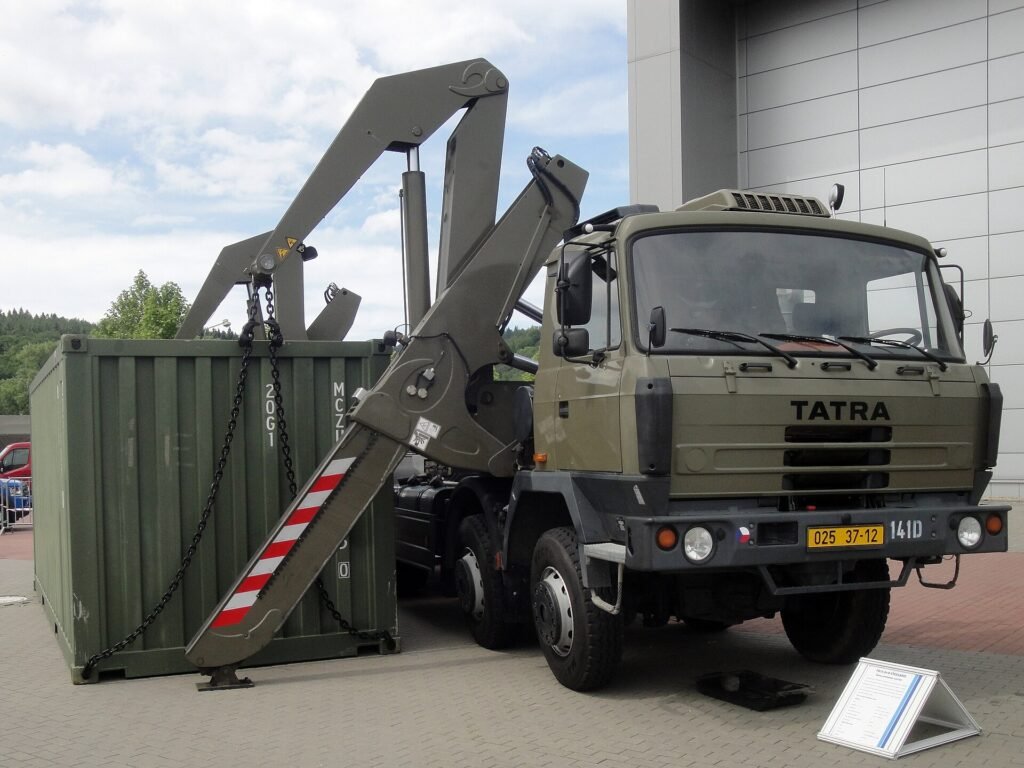
If you are buying more than one box, or a box plus extras such as a lock box or shelving, ask about doing everything in one delivery. And if your site is tight, ask whether a side-lifter truck is an option; it places the box beside the vehicle rather than sliding it off the back. Our shipping container delivery guide explains both methods.
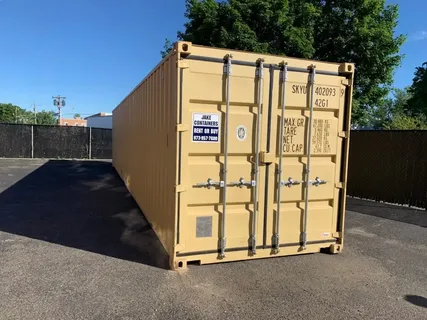
A second life for a steel box
Buying a used container also puts an existing steel structure back to work instead of building something new. A retired ocean box that becomes a farm store, a site office or a garden workshop keeps doing a useful job for years. For many buyers that is a nice bonus on top of the price.
Buyer’s checklist for cheap shipping containers
- I know what the box is for and what size I need.
- I have checked the grade, and it is wind and watertight or better.
- I have seen photos of the roof, walls, floor, doors and corners.
- I know whether it is a standard height or a high cube.
- I have compared delivered prices, not just box prices.
- My site is firm, level and reachable by a large truck.
- I have checked local rules for long-term placement.
- I know the seller’s returns and damage policy.
About Prime Cargo Box
Prime Cargo Box sells new, one trip and used shipping containers online, including standard 20ft and 40ft boxes, high cubes, double door, open side, open top and refrigerated units, plus custom modifications and international sales with export documentation. Each of our cheap shipping containers has a product page with photos, specifications and a listed price, and our billing, delivery and returns policies are published in full. You can reach our team on +1 (209) 776 3645 or at contact@primecargobox.com.
How to order cheap shipping containers from us
- Pick a container from the table at the top of this page, or browse our used shipping containers.
- Check the photos, grade, specifications and current price on the product page.
- Check that we can deliver to your address; if you are unsure, contact our team first.
- Prepare a firm, level spot with space for the doors and a clear route for the truck.
- Order online and choose from the payment options shown at checkout.
- Inspect the box on delivery and report any issue quickly with photos.
Not sure about size? Our guides to shipping container dimensions and 20ft vs 40ft containers will help, and our types of shipping containers guide covers every design.
What you get with every budget container
Even our cheapest boxes share the same basic build. Here is the short specification for a used dry container:
| Feature | Used 20ft | Used 40ft |
|---|---|---|
| Outside size | 20 x 8 x 8 ft 6 in (6.06 x 2.44 x 2.59 m) | 40 x 8 x 8 ft 6 in (12.19 x 2.44 x 2.59 m) |
| Inside space | about 33 m³, about 150 sq ft of floor | about 67 m³, about 305 sq ft of floor |
| Door opening | about 2.34 x 2.28 m | about 2.34 x 2.28 m |
| Build | Corrugated weathering steel, steel frame | Corrugated weathering steel, steel frame |
| Floor | Marine plywood or hardwood | Marine plywood or hardwood |
| Condition | Wind and watertight, cosmetic wear | Wind and watertight, cosmetic wear |
| Listed price | $1,000 | $1,900 |
Frequently asked questions about cheap shipping containers
What is the cheapest shipping container I can buy?
Our used 20ft shipping container, listed at $1,000 at the time of writing, is the lowest priced box in our range.
Are cheap shipping containers any good?
Yes, if they are wind and watertight. A sound used box keeps goods dry and secure for years. Avoid as-is boxes unless you know exactly what repairs they need.
Which container gives the best value?
Per cubic metre, a used 40ft is the best value we sell, at about $28 per cubic metre. A used 40ft high cube is close behind at about $29.
Why are some used containers so cheap?
Age, cosmetic wear, grade and location all lower the price. A box with dents and surface rust costs less than a clean one, even if both are sealed.
Do cheap shipping containers leak?
A wind and watertight container should not. Check for daylight from inside with the doors closed, and look at the roof and seals in the photos before you buy.
Is a used container safe to ship cargo in?
Only if it is cargo worthy with a current safety plate. Wind and watertight boxes are sold for storage, not for shipping goods by sea.
Does the price include delivery?
Our listed prices are for the container. Delivery depends on your address and site access, and our delivery policy explains how it works.
Can I make a cheap container look better?
Yes. A wash, some primer on rust spots and a coat of metal paint makes a big difference, and it protects the steel too.
How long will a cheap used container last?
A wind and watertight box kept level, painted where scratched and with its seals checked can serve as storage for many years. How long depends on its condition when you buy it and how well it is looked after.
Can I buy several cheap containers at once?
Yes. Ask our team about delivering more than one together, which is often cheaper per box than separate trips.
Is a cheap 40ft better than two cheap 20ft containers?
Usually, if your site has room. One used 40ft costs less than two used 20ft boxes and needs only one delivery. Two 20ft boxes make sense if you need them on different sites or want two separate stores.
Should I buy an as-is container to save money?
Only if you know exactly what is wrong with it and can fix it yourself. For most buyers, a wind and watertight box costs less overall once repairs are counted.
Are cheap shipping containers secure?
Yes. A used box has the same steel walls and locking bars as a new one. Add a closed-shackle padlock and a lock box for extra security.
Do you sell cheap containers outside the United States?
Yes. We handle international container sales with export documentation. Freight, duties and local delivery are added to the box price, so contact us with your destination.
Find your budget container
The best cheap shipping containers are used boxes that are still wind and watertight, in the size that fits your site, delivered without fuss. For most buyers that means a used 20ft at $1,000 or a used 40ft at $1,900. Spend a little more on a one trip box only when looks or long life matter.
Browse our used shipping containers, 20ft shipping containers and 40ft shipping containers, or contact our team and we will help you find the right budget container.
Cover photo: Quintin Soloviev (CC BY 4.0)