A shipping container workshop is a steel shipping container fitted out as a place to work: benches, power, lighting, ventilation and secure tool storage, in your garden, yard, farm or business site. The best base is usually a high cube, because the extra height leaves room for insulation and lights. At Prime Cargo Box a used 20ft high cube costs $1,650, a one trip 20ft high cube is $2,950 and a one trip 40ft high cube is $2,900, before delivery. Standard 20ft boxes start at $1,000.
This guide is for woodworkers, metalworkers, mechanics, makers, artists, bike builders, tradespeople and anyone who has outgrown the garage or the kitchen table. It covers which container to buy, layouts, power, insulation, dust and fume control, fire safety, noise, floors, security and planning, plus three example builds. Every price links to a container we sell right now.

Table of Contents
Shipping container workshop: the short answers
- Best container: a 20ft high cube for most hobby and trade workshops; a 40ft high cube for bigger machines or two zones.
- Cheapest start: a used 20ft high cube at $1,650 or a used standard 20ft at $1,000.
- Must-haves: safe electrics, lighting, insulation, ventilation and a good lock.
- Dust and fumes: woodworking needs extraction at the machine; welding indoors needs local exhaust ventilation.
- Before you buy: check access for the delivery truck, a level base and local planning rules.
Why build a shipping container workshop?
It is strong and secure
Tools are expensive and easy to sell, which makes sheds and garages a target. A shipping container workshop has steel walls, no windows unless you add them, and doors that lock with four steel bars. Add a lock box and a good padlock and it is far harder to break into than a timber shed.
It arrives ready to fit out
No foundations to pour, no walls to build, no roof to felt. The shell lands on your base in one piece and you can start fitting it out the same day.
It is cheaper than building
A brick or timber workshop of similar size needs foundations, materials and labour. A container gives you the shell for a fixed price, and you spend the rest on the inside.
It keeps the mess out of the house
Sawdust, noise, fumes and oily parts stay in the shipping container workshop, not in the garage next to the car or the spare room.
You can take it with you
Move house or change business premises and the workshop comes too. Empty the loose kit, lock the doors and any container truck can move it.
It lasts
Containers are made from corrugated weathering steel designed for years at sea. Kept on a level, dry base with a bit of paint now and then, a shipping container workshop will outlast most garden buildings.
Shipping container workshop vs garage, shed or rented unit
Here is a plain comparison of the usual options for workspace, based on how each works rather than on any brand.
| Point | Shipping container workshop | Garage | Timber shed | Rented unit |
|---|---|---|---|---|
| Security | High, steel and lock box | Medium | Low | Medium to high |
| Weather | Fully weatherproof | Good | Fair, needs upkeep | Good |
| Set-up time | Days | Already built (if you have one) | Days to weeks | Immediate |
| Monthly cost | None after purchase | None | None | Ongoing rent |
| Space for the car | Car stays in the garage | Car is pushed out | Not affected | Not affected |
| Moveable | Yes, by truck | No | Rarely | N/A |
| Distance from home | Steps away | Steps away | Steps away | A drive away |
A shipping container workshop gives you the security of a garage and the convenience of a shed, without the rent of a unit across town or giving up the space where the car lives.
Which container makes the best shipping container workshop?
20ft high cube: the all-rounder
A 20ft high cube is 2.90 m tall outside and about 2.69 m inside, around 30 cm more than a standard box. Once you add insulation and lights, that headroom matters. It fits in most gardens and yards and holds a long bench, a couple of machines and tool storage. A one trip 20ft high cube is $2,950 and a new one is $4,250.
40ft high cube: room for big machines
Double the floor. Split it into a clean area and a dirty area, or a workshop at one end and storage at the other. Good for car work, furniture making and small fabrication businesses. A one trip 40ft high cube is $2,900 and a new one is $3,800.
Standard 20ft: the budget option
Fine for electronics, bike repair, jewellery and bench work where you do not need tall machines or thick insulation. A one trip 20ft is $1,550.
Double door containers
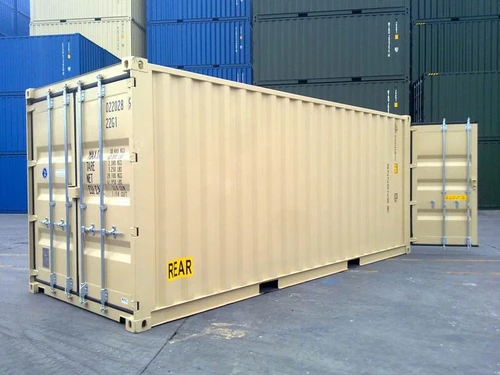
Doors at both ends give through-ventilation on hot days, let long timber or pipe slide straight through, and give a second exit. A one trip 20ft double door is $2,500. See our double door container guide.
Open side containers
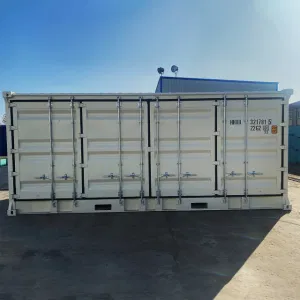
The whole long side opens. Ideal for working on vehicles, boats or big projects with the side open in good weather. A used 20ft open side is $2,950. Read the open side container guide.
Shipping container workshop prices
These are our current prices for the containers that make the best shipping container workshop bases. Delivery is quoted separately.
| Container | Condition | Price | Best for |
|---|---|---|---|
| 20ft standard | Used | $1,000 | Budget bench workshop |
| 20ft standard | One trip | $1,550 | Clean bench workshop |
| 20ft high cube | Used | $1,650 | Insulated workshop on a budget |
| 20ft high cube | One trip | $2,950 | The popular choice |
| 20ft high cube | New | $4,250 | Garden workshop on show |
| 20ft double door | One trip | $2,500 | Through access, long materials |
| 20ft open side | Used | $2,950 | Vehicle and big-project work |
| 40ft high cube | Used | $2,200 | Large workshop, low cost |
| 40ft high cube | One trip | $2,900 | Large workshop, near new |
Prices change with stock, so check each product page. Our shipping container prices guide explains what moves prices.
Shipping container workshop sizes and layouts
Outside sizes follow ISO 668, the international standard for freight container dimensions, so any container truck can deliver and move your workshop.
| Container | Inside (approx.) | Floor | Inside height after 50 mm roof insulation (approx.) |
|---|---|---|---|
| 20ft standard | 5.90 x 2.35 x 2.39 m | 13.9 m² | 2.34 m |
| 20ft high cube | 5.90 x 2.35 x 2.69 m | 13.9 m² | 2.64 m |
| 40ft high cube | 12.03 x 2.35 x 2.70 m | 28.3 m² | 2.65 m |
The last column is our own calculation; flooring and light fittings take a little more. The width is the real constraint: about 2.35 m, or roughly 2.25 m after insulating both walls. Plan your layout around it.
Bench-along-one-wall layout
A continuous bench down one long wall, tool storage above it, and the other wall kept for machines on mobile bases or tall storage. This leaves a working aisle of about a metre. It suits most 20ft builds.
U-shaped end layout
Benches on three sides at the closed end, with the doors as the entrance. Good for electronics, jewellery and model making where everything is within reach.
Two-zone 40ft layout
A clean zone for assembly and finishing at one end, a dirty zone for cutting, grinding or welding at the other, with a partition or curtain between. Dust and sparks stay away from finished work.
Machines on wheels
In a narrow space, mobile bases let you roll a table saw or bandsaw into the middle when you need it and push it back against the wall when you do not. Many owners do long cuts with the doors open.
Choosing machines that fit
Before buying big machines for a shipping container workshop, measure them with their infeed and outfeed space. A table saw ripping a long board needs room in front and behind; a container’s 6 m length helps, but its 2.35 m width does not. Benchtop and compact machines, track saws and mobile bases make far better use of the space than full-size cabinet machines.
Shipping container workshop ideas by trade and hobby
Woodworking
Bench, table saw, mitre saw, bandsaw and clamps. Dust extraction is essential (see below). A 20ft high cube or 40ft suits most woodworkers.
Metalwork and welding
Steel walls do not burn, which is a plus, but fumes and sparks need serious control. Use a separate container or zone for welding and keep flammables out.
Mechanics and car work
An open side or 40ft lets you work on cars, motorbikes and quads. Our car storage container guide shows what fits.
Bike repair
A workstand, wall-mounted tools, wheel truing and parts bins fit easily in a standard 20ft.
Electronics and 3D printing
Clean benches, good lighting, stable temperature and lots of sockets. Insulation and a small heat pump keep printers and solder working well year round.
Pottery, art and craft
Wheels, kilns, easels and drying racks. Kilns need proper ventilation, clearances and electrical supply, so plan these with a qualified electrician.
Tradesperson’s base
Electricians, plumbers and builders use a shipping container workshop as a yard base for tools, materials and a bench for pre-fabrication. See our construction storage container guide.
Small manufacturing
Leatherwork, signmaking, small furniture or product assembly can run from one or two containers on a business site.
Tool storage in a shipping container workshop
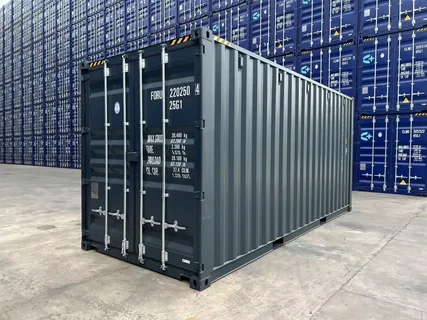
In a narrow box, organisation makes the difference between a pleasant shipping container workshop and a cramped one.
- Use the walls: pegboard, slatwall or French cleat rails on battens above the bench.
- Go up: high shelves along the top of the walls for things you use rarely.
- Magnetic strips: the steel walls behind the lining can hold magnetic tool racks if you leave areas unlined.
- Under-bench storage: drawers and bins under the worktop.
- Mobile carts: for tools you move between bench and machine.
- Timber and sheet racks: along the end wall or above the doors.
- Label everything so you spend time working, not searching.
Strap tall storage to the lashing rings so it cannot tip.
Power and electrics in a shipping container workshop
Safe electrics are not optional in a steel box. Use a qualified electrician to design and install the supply, and follow local wiring rules.
- Supply: usually an armoured cable from the house or building to a consumer unit inside the container.
- Protection: residual current protection and correct earthing. The container shell is metal, so bonding matters.
- Circuits: separate circuits for lighting, general sockets and big machines.
- Machines: check the power draw of compressors, saws, welders and kilns. Some larger machines need a three-phase supply.
- Sockets: plenty at bench height, so you are not running extension leads across the floor.
- Cable runs: surface trunking or conduit so you can reach cables later, rather than burying them in insulation.
Off-grid shipping container workshop
No mains power at the bottom of the field or on a remote site? An off-grid shipping container workshop is possible:
- Solar panels on the container roof, with batteries and an inverter sized for your tools.
- Battery power tools for most jobs, charged from the solar system.
- A generator for heavy machines, sited outside and away from the door.
- LED lighting to keep loads down.
- Insulation so you need less energy for heating and cooling.
Have a solar installer size the system for the machines you actually use; big saws, compressors and welders draw a lot of power.
Lighting and windows for a shipping container workshop
A container with the doors shut is dark. Good lighting makes a shipping container workshop safer and more pleasant.
- LED battens along the ceiling give bright, even light with little heat.
- Task lights over the bench and machines.
- Windows: one or two windows in the long walls add daylight and views. They must be cut and framed in steel before insulating.
- Glazed personnel door: lets light in and gives easy access without opening the cargo doors.
Openings like these are best done before delivery. Ask about our custom container modifications.
Insulating a shipping container workshop
A bare steel box is an oven in summer, a fridge in winter and drips condensation on cold nights. Insulation turns it into a usable shipping container workshop all year.
Closed-cell spray foam is the popular choice because it sticks to the corrugations and seals out damp air. Natural Resources Canada lists closed-cell polyurethane spray foam at about R-5.5 to 6.5 per inch, says it can be used as an air barrier and, at about 50 mm, can sometimes act as a vapour barrier, and states that foam insulation on interior surfaces must be covered with a fire-resistant material such as 13 mm drywall (Natural Resources Canada, Keeping the Heat In, insulation materials). That last point matters even more in a workshop full of sparks and hot tools.
Rigid foam boards with taped joints are a good DIY alternative. Whatever you use, insulate the roof, walls and doors, and line it with fire-resistant board. Our insulated shipping container guide goes into materials, space loss and condensation in detail.
Heating and cooling a shipping container workshop
Insulation keeps temperatures steadier, but most people still add some heating or cooling.
- Split heat pump: the most popular choice for an insulated shipping container workshop. It heats in winter, cools in summer and dries the air. Run the pipework through a sealed hole cut before insulating.
- Electric heaters: fine for occasional use. Keep them away from dust, shavings and solvents.
- Avoid open flames: unvented gas or paraffin heaters add moisture and fumes, and are dangerous around dust and flammables.
- Fans: a wall fan and open doors move hot air out on summer days.
- Shade: a light paint colour or a shade roof cuts summer heat dramatically.
Glues, finishes and batteries all work best at moderate temperatures, so a little heating in winter often pays off in better results.
General ventilation
Even without dust or fumes, people breathing, heaters and drying finishes make the air stale and damp. Every shipping container workshop should have:
- The factory vents kept clear.
- At least one extra vent at each end for cross-flow.
- An extractor fan with a matching inlet, ideally on a timer or humidity switch.
- Doors or windows you can open on good days.
General ventilation is the background; dust extraction and fume extraction deal with the specific hazards at the source.
Dust control for woodworking
Wood dust is the biggest health risk in a small woodshop, and a container concentrates it. Britain’s Health and Safety Executive warns that hardwood dust can cause a rare form of nasal cancer, and that wood dust can also cause asthma and harm the skin, nose, lungs and eyes (HSE on hazardous substances in woodworking). The same guidance recommends dust extraction and vacuum cleaners rated at least dust class M for cleaning up.
In practice, for a shipping container workshop:
- Extract at the machine. Connect saws, sanders and planers to a dust extractor.
- Do not sweep or blow dust. Vacuum with a suitable class vacuum instead.
- Add an air filter to catch fine dust that escapes.
- Wear a properly fitted respirator for dusty jobs.
- Empty extractors carefully and outside where possible.
- Keep dust off the floor; it is a slip and fire hazard.
Welding fumes in a container
Welding in an enclosed steel box needs real care. The HSE’s safety bulletin states that all welding fume, including mild steel, can cause lung cancer, that general ventilation does not achieve the necessary control, and that indoor welding requires engineering controls such as local exhaust ventilation (HSE safety alert on mild steel welding fume).
For a welding shipping container workshop:
- Fit fume extraction at the weld, ducted outside.
- Wear suitable respiratory protection when extraction alone is not enough.
- Keep doors open for extra airflow, but do not rely on that alone.
- Keep foam insulation fully covered with fire-resistant board.
- Clear flammables and keep a fire extinguisher by the door.
Spray finishing and paints
Finishes, stains, solvents and two-pack paints give off vapours that are harmful and can ignite. In a small steel box they build up fast. If you spray or apply finishes in a shipping container workshop:
- Choose water-based products where you can.
- Use extraction that pulls vapour away from you and outside, not just a fan stirring it around.
- Wear a respirator rated for the product, following the maker’s safety data sheet.
- Keep sparks, heaters and grinding well away from spraying.
- Store finishes in a metal cabinet and dispose of rags safely; some oily rags can self-heat.
- For regular spraying, consider a separate booth or container rather than doing it in the main workshop.
Fire safety in a shipping container workshop
- Cover all foam with fire-resistant lining.
- Store flammables such as solvents, fuels and finishes in a proper metal cabinet, away from heat.
- Fit a smoke or heat alarm. Heat alarms suit dusty workshops better than smoke alarms.
- Keep an extinguisher suitable for your work by the door.
- Keep the exit clear. A second door in a long container is a good idea.
- Clean up dust and offcuts regularly.
Noise in a shipping container workshop
A steel box rings like a drum. Insulation and lining calm it down a lot, which helps you and the neighbours. Rubber matting under machines cuts vibration, and acoustic panels on the end wall soak up echo. Wear hearing protection with loud machines, and think about working hours if neighbours are close.
Shipping container workshop floors and heavy machines
Container floors are thick marine plywood on steel cross members, built to carry heavy cargo. For a shipping container workshop:
- Protect the floor with rubber matting, vinyl or plywood sheets.
- Spread point loads from heavy machines with steel plates or thick ply pads.
- Bolt heavy machines through the floor into the cross members if they need anchoring.
- Keep oil off the wood. Drip trays under engines and compressors.
Working comfortably in a shipping container workshop
- Bench height: set it for the work you do most; standing work is usually around hip height, fine work a little higher.
- Anti-fatigue matting where you stand for long periods.
- Seating for detailed bench work.
- Clear walkway so you are not climbing over machines.
- First aid kit by the door.
- A small sink or water supply for cleaning hands and tools, if you can run water.
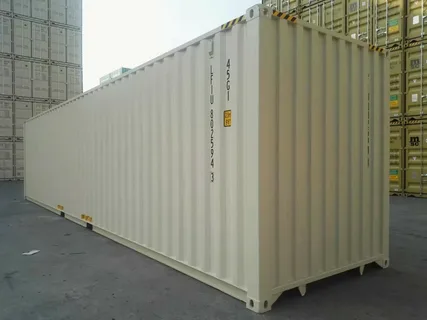
A comfortable shipping container workshop is one you will actually use.
Security for your tools
A shipping container workshop full of tools is worth protecting properly.
- Lock box over the cargo door hasp.
- Hardened padlock with a closed or shrouded shackle.
- Security-rated personnel door if you add one.
- Window bars or film on any windows.
- Alarm and camera.
- Insurance: tell your insurer about the workshop and the value of the tools.
Our secure storage containers guide covers locks in more detail.
Running a business from a shipping container workshop
Plenty of small businesses start in a container, and some never leave. If you plan to trade from a shipping container workshop:
- Check planning and business-use rules for your site, especially in residential areas.
- Get the right insurance for tools, stock and public liability if customers visit.
- Follow workplace safety rules if you employ anyone, including dust, fume, noise and electrical safety.
- Plan power for the machines you will grow into, not just the ones you have.
- Think about customers: a clean entrance, good lighting and a small counter area help if people collect work.
- Brand it: paint and a sign turn a steel box into a shop front.
Our shipping container pop up shop guide has ideas for making a container customer-friendly.
Shipping container workshop planning and placement
A shipping container workshop that stays put is often treated like any other outbuilding. In England, for example, the Planning Portal limits outbuildings to a single storey and sets a maximum height of 2.5 metres for a building, enclosure or container within two metres of a boundary (Planning Portal guidance on outbuildings). A standard container is 2.59 m tall and a high cube 2.90 m, so placement and local rules matter. If you run a business from it, or neighbours will hear machines, check with your local council first.
Base and delivery
- Concrete pads or sleepers under the four corners, level and slightly raised.
- A straight, firm route for the delivery truck, clear of cables and branches.
- Doors facing where you want to work, with room for them to open fully.
Our shipping container delivery guide explains truck types and space needed.
Budget checklist for a shipping container workshop
Fit-out costs vary a lot by country and finish, so we have not put numbers on them. Use this list when you collect quotes.
- Container: from $1,000 (used 20ft) or $1,650 (used 20ft high cube).
- Delivery and base.
- Openings: windows, personnel door, vents.
- Electrics by a qualified electrician.
- Insulation and fire-resistant lining.
- Heating or cooling.
- Benches, storage and flooring.
- Dust extraction or fume extraction.
- Fire safety kit.
- Security: lock boxes, padlocks, alarm.
Many people start with the container, a bench and lights, then insulate and add machines as budget allows.
Two containers: workshop plus storage
Many owners end up with two boxes. One becomes the clean, insulated shipping container workshop; the other stores timber, stock, garden kit or vehicles. Placed side by side with a roof between them, they create a covered outdoor work area for big or messy jobs. Our shipping container barn guide shows how that layout works, and portable storage container covers using a second box for storage.
Three example shipping container workshop builds
These are examples to show how the pieces fit together, not stories about real customers.
A hobby woodworker’s garden workshop
A one trip 20ft high cube at $2,950 with a window and a glazed personnel door cut in before delivery. Closed-cell foam on the roof and walls, lined with fire-resistant boards, LED battens and a bench down one wall. A dust extractor connected to the table saw and sander, an air filter on the ceiling, and machines on mobile bases.
A mobile mechanic’s yard base
A used 20ft open side container at $2,950. With the side open, there is room to work on bikes and small engines under cover. A bench, parts racks and a compressor in one corner, with drip trays and rubber matting. Locked tight at night with lock boxes on both sets of doors.
A small fabrication business
A one trip 40ft high cube at $2,900, split into two zones. Cutting and welding at one end with fume extraction ducted outside and a heat alarm; assembly and finishing at the other. Three-phase supply for the bigger machines, fitted by an electrician.
How to build a shipping container workshop, step by step
- Decide the work you will do and list your machines and their sizes.
- Choose the container size, height and doors.
- Check planning and placement rules.
- Order openings such as windows, personnel door and vents before delivery.
- Prepare the base and access route.
- Take delivery and level the container.
- Run electrics with a qualified electrician.
- Insulate and line with fire-resistant board.
- Fit benches, storage and floor protection.
- Install dust or fume extraction and safety kit.
- Fit security: lock boxes, padlocks, alarm.
Specifications of popular shipping container workshop bases
One trip 20ft high cube ($2,950)
- Outside: 20 ft x 8 ft x 9 ft 6 in (6.06 x 2.44 x 2.90 m)
- Inside: about 5.90 x 2.35 x 2.69 m
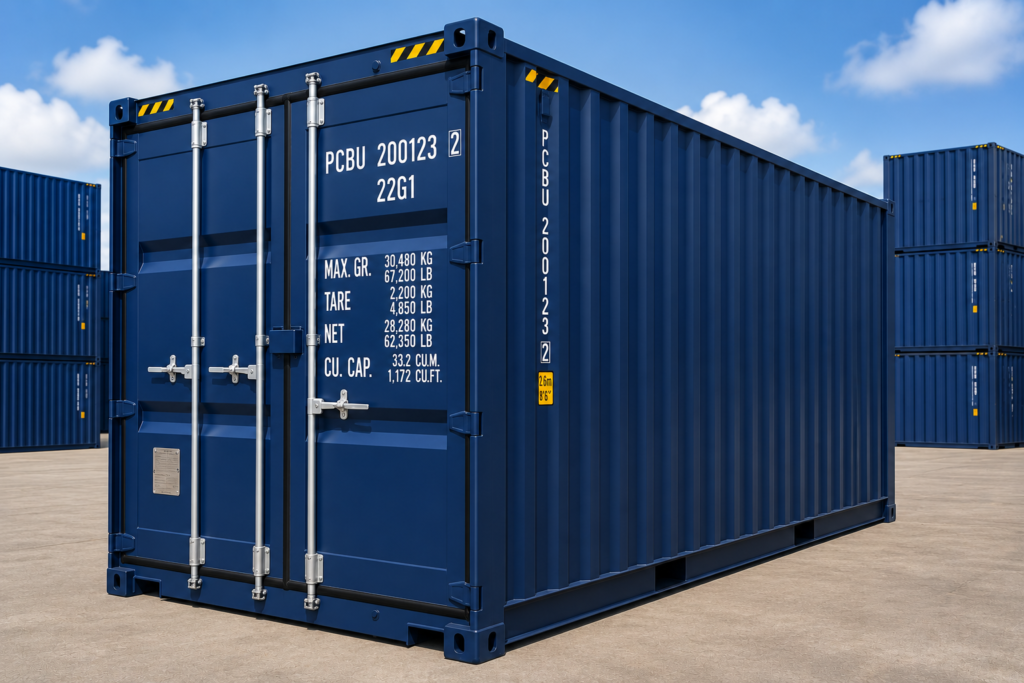
- Build: corrugated weathering steel, marine plywood floor, four-bar locking doors
- Condition: one voyage only, near new
One trip 40ft high cube ($2,900)
- Outside: 40 ft x 8 ft x 9 ft 6 in (12.19 x 2.44 x 2.90 m)
- Inside: about 12.03 x 2.35 x 2.70 m
- Condition: one voyage only, near new
Used 20ft standard ($1,000)
- Outside: 6.06 x 2.44 x 2.59 m
- Inside: about 5.90 x 2.35 x 2.39 m
- Condition: wind and watertight, cosmetic wear
New, one trip or used shipping container workshop?
- Used: best value if the workshop is in a yard or you plan to clad it. Treat rust before insulating. See used shipping containers for sale.
- One trip: clean steel, straight walls, easy to fit out neatly. The usual choice for a garden shipping container workshop.
- New: factory fresh. Browse new shipping containers for sale.
Compare conditions in one trip vs used shipping container.
Questions to answer before you buy
- What work will I do, and which machines will I use?
- Will I weld, spray finishes or make a lot of dust?
- How tall are my tallest machines and materials?
- Do I need power, water or three-phase supply?
- Where will it sit, and can a truck reach it?
- Will neighbours hear it?
- Will I run a business from it?
Send us your answers and we will suggest the right container for your shipping container workshop.
Common shipping container workshop mistakes
- Buying a standard height box and losing headroom to insulation.
- No dust extraction for woodworking.
- Welding indoors with only an open door for ventilation.
- Leaving spray foam exposed.
- DIY electrics in a metal box.
- Cutting openings after insulating.
- Ignoring planning height rules near boundaries.
- Weak lock on a box full of tools.
Looking after your shipping container workshop
- Touch up scratches and rust on the outside once a year.
- Clear the roof of leaves and standing water.
- Grease door hinges and locking bars.
- Check door seals and window seals.
- Empty and service dust extractors and filters.
- Test alarms and check extinguishers.
- Have electrics inspected periodically.
How to order your shipping container workshop container
- Pick your container from the 20ft range, the 40ft high cube range or all our containers.
- Tell us it is for a workshop and ask about windows, doors, vents and lock boxes.
- Send site photos and access details.
- Get your delivery quote, pay and book. See our billing and payment policy and shipping and delivery policy.
New to containers? Read how to buy a shipping container, or contact us with your plans.
Workshop terms explained
- High cube: a container one foot taller than standard, giving more headroom.
- LEV: local exhaust ventilation, extraction that captures dust or fume at the source.
- RPE: respiratory protective equipment, such as a fitted respirator.
- Dust class M: a vacuum rating for medium-hazard dusts, including wood dust.
- Consumer unit: the box with circuit breakers and protection devices.
- Three-phase: a higher-capacity power supply used by some large machines.
- Personnel door: a normal-size door cut into the container side.
- Lock box: a steel shroud protecting the padlock.
- Closed-cell foam: dense spray insulation that also blocks air and moisture.
Shipping container workshop FAQs
How much does a shipping container workshop cost?
The container starts at $1,000 for a used 20ft and $1,650 for a used 20ft high cube at Prime Cargo Box. Electrics, insulation, lining, windows, benches and delivery are extra and depend on your plans.
What size container is best for a workshop?
A 20ft high cube suits most hobby and trade workshops. Choose a 40ft high cube for large machines, vehicles or two work zones.
Do I need to insulate a container workshop?
For year-round use, yes. Insulation controls heat, cold and condensation. Cover foam with fire-resistant lining.
Can I weld in a shipping container workshop?
Yes, with proper fume extraction at the weld, suitable respiratory protection where needed, fire-resistant lining and good fire safety.
Do I need planning permission?
It depends on your location, size, placement and use. Check local rules, especially near boundaries and if you run a business.
Can I put heavy machines in a container?
Yes. Container floors are built for heavy cargo. Spread point loads and anchor machines into the cross members if needed.
Do you deliver worldwide?
Yes. Send your address and site photos for a delivery quote.
Can I use a reefer container as a workshop?
You can, because it is already insulated, but cutting windows and doors into its sealed panels damages the insulation. A dry high cube that you insulate yourself is usually the better shipping container workshop base.
How long does it take to set up?
Delivery takes a day. A basic fit-out with lights, bench and power can be done in a weekend once the electrician has finished. A fully insulated and lined workshop usually takes a few weeks of spare time.
Can a shipping container workshop have a proper door instead of cargo doors?
Yes. A steel personnel door can be cut into the side and framed before delivery. Many owners keep the cargo doors for moving machines and materials in and out, and use the personnel door every day.
Is a used container good enough for a workshop?
Yes, if it is wind and watertight. Treat any rust and clean the inside before insulating. Choose one trip if the workshop sits close to the house and looks matter, or if you want the cleanest surfaces for lining.
Will a container workshop get too hot in summer?
A bare steel box can get very hot in direct sun. Insulation, a light paint colour, shade over the roof, cross ventilation and a small heat pump keep the inside comfortable. Position the doors and windows to catch any breeze, and avoid storing heat-sensitive glues and finishes near the roof.
About Prime Cargo Box
Prime Cargo Box sells new, one trip and used shipping containers to makers, tradespeople, businesses and homeowners worldwide. We help you choose the right base for your shipping container workshop and arrange openings before delivery. Read more about us.
Final word
A shipping container workshop gives you a strong, secure, weatherproof space to make things, delivered ready to fit out. Choose a high cube for headroom, get the electrics done properly, insulate and line it, control dust and fumes, and lock it up well. For most people a one trip 20ft high cube at $2,950 is the right start, a used 20ft high cube at $1,650 keeps costs down, and a one trip 40ft high cube at $2,900 gives room for bigger projects. Browse our containers or ask for a quote today.