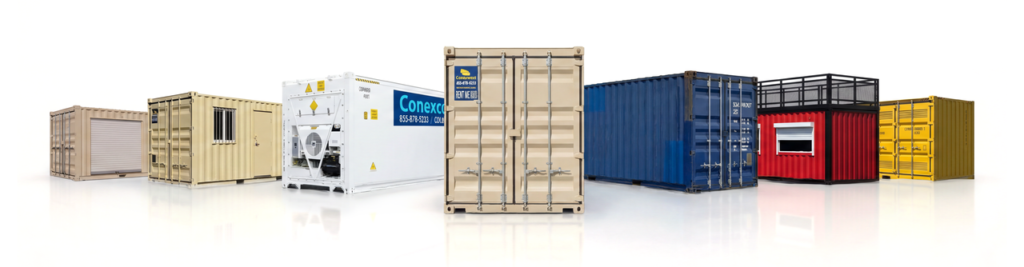
A shipping container pop up shop is a small shop, cafe, bar or kiosk built inside a steel shipping container, so it can be delivered to a site, opened for trade and moved on later. The best base for one is an open side container, where the whole long wall folds open into a shopfront. At Prime Cargo Box a used 20ft open side container costs $2,950, a one trip 20ft open side is $5,200 and a one trip 40ft high cube open side is $6,200, before delivery. Plain 20ft containers for conversion start at $1,000.
This guide is for small businesses, market traders, coffee sellers, fashion brands, farmers, event companies and anyone thinking about a shipping container pop up shop. It covers which container to buy, prices, layouts, permits, accessibility, power, fit-out, security and moving it. Every price links to a container we sell now, so you can go straight from planning to ordering.
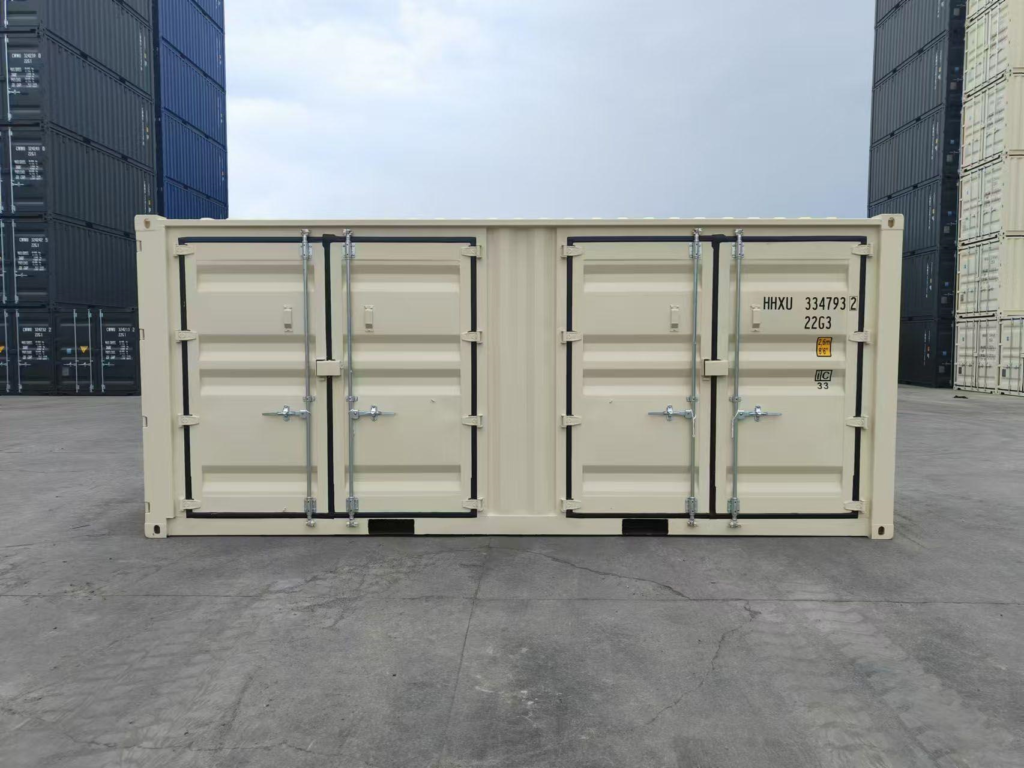
Table of Contents
Shipping container pop up shop: the short answers
- Best container: a 20ft open side. The full side opens, so customers see and reach everything.
- Cheapest start: a used 20ft open side at $2,950, or a used 20ft standard at $1,000 if you plan to cut in a serving hatch.
- Best looking: a one trip 20ft open side at $5,200 or a new one at $5,700.
- Bigger shop: a one trip 40ft high cube open side at $6,200 gives double the floor and extra headroom.
- Floor space: about 13.9 m² inside a 20ft and about 28 m² inside a 40ft.
- Before you buy: secure the site and check what licences and permissions you need.
Why a shipping container pop up shop works
Retail space is expensive and leases are long. A shipping container pop up shop flips that. You buy the shell once, fit it out the way you want, and put it wherever the customers are: a market, a festival, a car park, a beach front, a campus or your own land.
Low start-up cost
Compared with leasing and fitting out a shop unit, a container is a small, fixed cost. The shell already has a floor, walls, roof and lockable doors. You add the counter, shelves, lights and branding.
Quick to open
A shipping container pop up shop arrives in one piece on a truck. Once the site and permissions are ready, you can be trading within days rather than waiting months for a building project.
Secure when closed
At the end of the day you close the steel doors, lock the bars and go home. Stock stays inside. No shutters to fit, no glass to smash.
You can move it
If a spot is quiet, move. If a festival season ends, take the shop to the next one. A shipping container pop up shop can follow your customers in a way a fixed shop never can.
It gets noticed
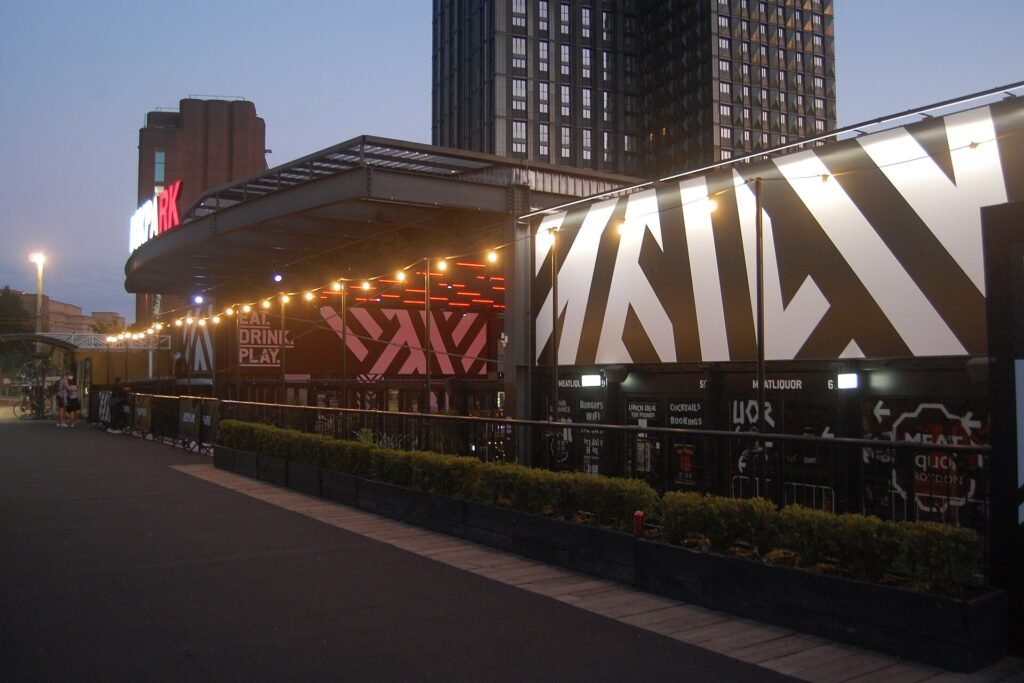
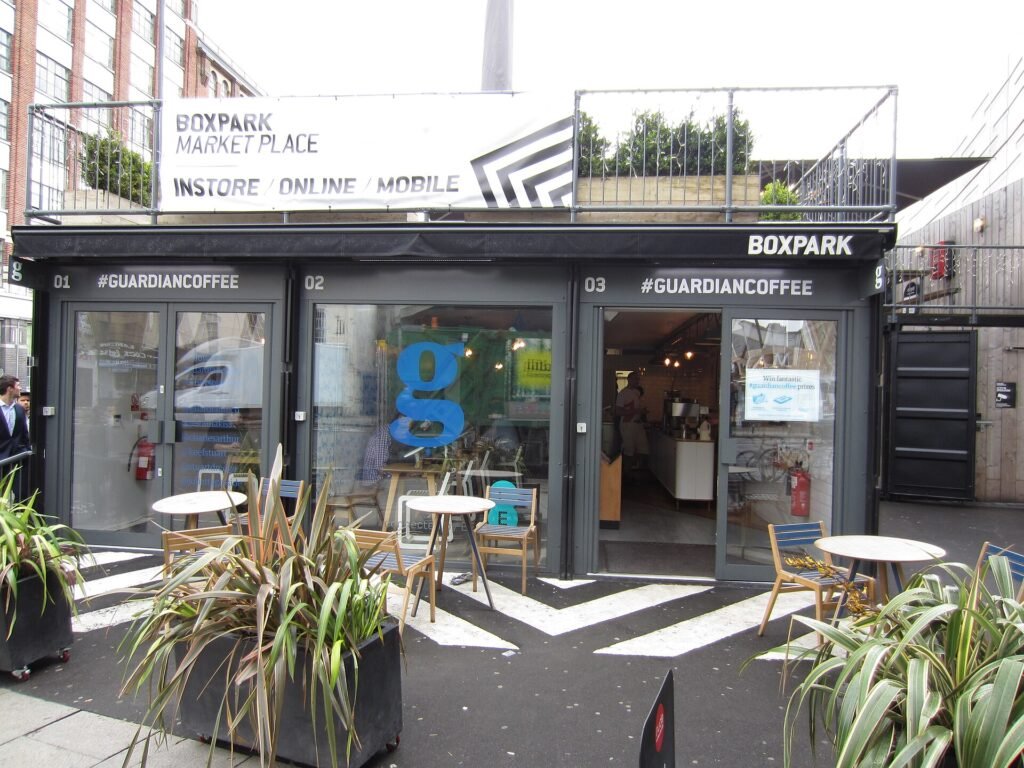
A brightly painted container stands out on a busy street or event field. Many brands use a container shop as much for marketing as for sales. London’s Boxpark, opened in 2011, showed how a whole row of containers can become a shopping and food destination.
It lasts
Containers are built from weathering steel designed to cope with years at sea. That steel forms a tight surface rust layer that slows further corrosion, which is why it resists the open air far better than ordinary carbon steel (Total Materia on Corten weathering steel). With basic care, the shell will outlast many seasons of trading.
Shipping container pop up shop vs other ways to start trading
A container is not the only way to get a small retail business on the street. Here is how it compares with the usual alternatives, based on how each option works rather than on any particular brand.
| Option | Upfront cost | Security overnight | Weather | Moveable | Long-term value |
|---|---|---|---|---|---|
| Shipping container pop up shop | Container plus fit-out | High, lockable steel | Fully enclosed | Yes, by truck | Container keeps resale value |
| Gazebo or market stall | Low | None, packed away daily | Poor in wind and rain | Yes, by hand | Little |
| Food truck or trailer | Higher | Medium | Enclosed | Yes, drives itself | Vehicle depreciates |
| Leased shop unit | Deposit, fit-out, long lease | High | Fully enclosed | No | Fit-out stays with landlord |
The container sits in a sweet spot. It is far sturdier and more secure than a stall, cheaper to own than a truck in most cases, and does not tie you into a long lease. The big catch is that you need somewhere to put it and a truck to move it. If you want to trade in a different place every day, a vehicle may suit you better. If you trade in one place for weeks or months at a time, a shipping container pop up shop usually wins.
Which container makes the best shipping container pop up shop?
You can build a shipping container pop up shop from several container types. The right one depends on how customers will shop: from outside at a counter, or by walking in.
20ft open side: the classic choice
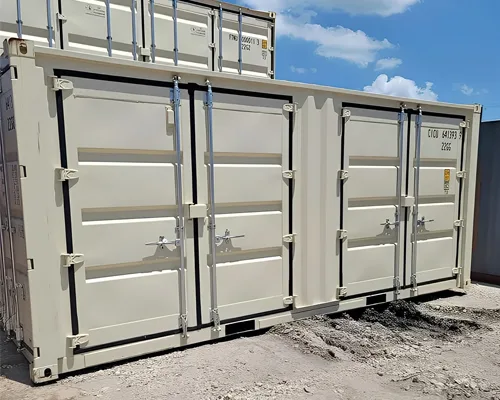
The full long side folds open on hinged doors, creating a wide shopfront with no cutting needed. Customers browse from outside or step in. When you close up, the side doors lock just like normal container doors. This is the container most people picture when they think of a shipping container pop up shop. We cover it in depth in our open side container guide.
40ft high cube open side: room to walk in
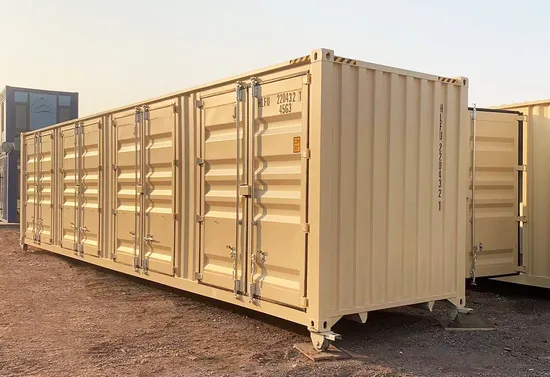
Double the length and an extra foot of height. Room for a proper walk-in shop with a till area at one end and stock at the other, or two businesses sharing one box. The used 40ft open side is $5,500.
Standard 20ft with a serving hatch
A cheaper route. Buy a plain 20ft box and have a hatch cut into the side with a lift-up steel flap that becomes an awning. Good for coffee, street food and ticket booths where customers stay outside. The end doors stay as the staff and delivery entrance. A one trip 20ft is $1,550; ask about custom container modifications for the hatch.
Double door (tunnel) container
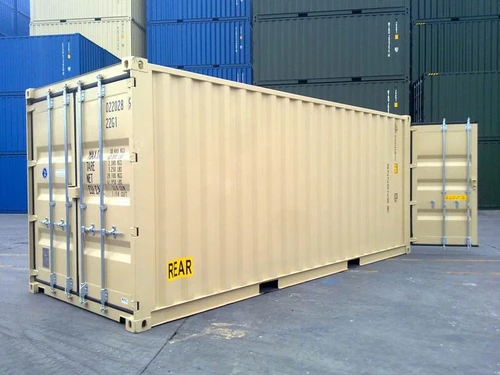
Doors at both ends. Open one end as the shopfront and use the other for stock and staff, or open both for a walk-through shop. A one trip 20ft double door is $2,500. Read our double door container guide for ideas.
High cube for headroom
If you will add a ceiling, insulation and lights, the standard 2.39 m inside height shrinks quickly. A high cube gives about 30 cm more. A one trip 20ft high cube is $2,950. See high cube vs standard container.
Reefer for chilled stock
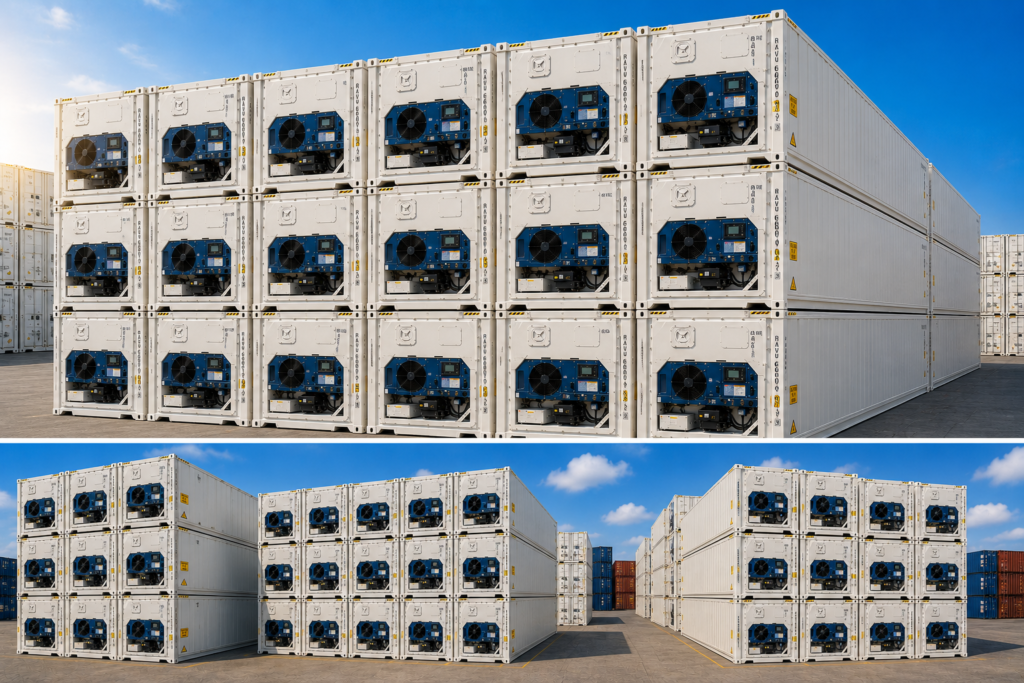
Selling ice cream, drinks or fresh food in volume? A refrigerated container next to your shipping container pop up shop gives you walk-in cold storage. Read our cold storage container guide.
Shipping container pop up shop prices
These are our current prices for the containers that make the best shipping container pop up shop bases. Delivery is quoted separately once we know where the shop is going.
| Container | Condition | Price | Best for |
|---|---|---|---|
| 20ft open side | Used | $2,950 | Market stalls, first pop-up on a budget |
| 20ft open side | One trip | $5,200 | Brand shops, cafes, fashion |
| 20ft open side | New | $5,700 | Flagship pop-ups, long-term use |
| 40ft open side high cube | Used | $5,500 | Walk-in shops, shared units |
| 40ft open side high cube | One trip | $6,200 | Showrooms, bars, larger retail |
| 20ft standard | Used | $1,000 | Hatch conversion on a tight budget |
| 20ft standard | One trip | $1,550 | Coffee or food hatch, clean finish |
| 20ft double door | New | $3,700 | Walk-through shop |
| 20ft high cube | New | $4,250 | Insulated, fully lined shop |
Prices change with stock, so the product page has the latest. For more on what moves container prices, read our shipping container prices guide.
The container is only part of the budget. A shipping container pop up shop also needs fit-out, power, signage, permits and delivery. The good news is you control those costs and can start simple, then improve the shop as sales grow.
New, one trip or used for a shipping container pop up shop?
Customers see the outside of your shop before anything else, so condition matters more here than for a storage box.
- Used: dents, scrapes and old markings, but sound and weatherproof. Good value if you plan to strip, prime and repaint, or if a rugged industrial look suits your brand. See our used shipping containers for sale.
- One trip: near new, straight panels, clean paint and doors that swing easily. Ready to brand with minimal prep. The most popular choice for a shipping container pop up shop.
- New: factory fresh, often with a choice of colour. Best for flagship shops and brands that want a perfect finish. Browse new shipping containers for sale.
Doors matter most on an open side container. Side doors that swing freely and seal well make opening and closing every day much easier. On a one trip or new box that is a given; on a used box, ask about door condition before you buy.
Shipping container pop up shop sizes and layouts
Floor space is tight, so layout makes or breaks a shipping container pop up shop. Here are the working numbers and the layouts that work best.
| Container | Outside (L x W x H) | Inside floor (approx.) | Inside height (approx.) |
|---|---|---|---|
| 20ft standard or open side | 6.06 x 2.44 x 2.59 m | 13.9 m² | 2.39 m |
| 20ft high cube | 6.06 x 2.44 x 2.90 m | 13.9 m² | 2.69 m |
| 40ft high cube open side | 12.19 x 2.44 x 2.90 m | 28.3 m² | 2.69 m |
The outside sizes follow ISO 668, the international standard for freight container dimensions, so any container truck or crane can deliver and move your shop. Inside sizes vary a little by maker. See our shipping container dimensions guide for full details.
Counter-front layout
A counter runs along the open side. Staff stand inside, customers stay outside. Shelving lines the back wall. Best for coffee, food, phone accessories and anything sold quickly.
Walk-in layout
Customers step inside to browse. Rails or shelves run along both end walls and the back wall, with the till near the opening. Best for fashion, books, plants and gifts. A 40ft makes walk-in shopping much more comfortable.
Shop-and-store layout
A partition splits the box: shop at the front, stock room or kitchen at the back. Works well in a 40ft or a double door 20ft.
Kiosk layout
A small hatch, a narrow counter and storage behind. Ideal for ticket sales, information points and key cutting.
Measure your fixtures before you order. A shipping container pop up shop only feels cramped when the layout ignores the 2.35 m inside width.
Specifications of our top shipping container pop up shop bases
One trip 20ft open side ($5,200)
- Outside: 20 ft x 8 ft x 8 ft 6 in (6.06 x 2.44 x 2.59 m)
- Access: full-length side doors plus standard end doors
- Floor: marine plywood on steel cross members
- Locking: locking bars on the side and end doors
- Condition: one voyage only, near new
One trip 40ft high cube open side ($6,200)
- Outside: 40 ft x 8 ft x 9 ft 6 in (12.19 x 2.44 x 2.90 m)
- Access: full-length side doors plus end doors
- Inside floor: about 28 m²
- Condition: one voyage only, near new
Used 20ft open side ($2,950)
- Outside: 6.06 x 2.44 x 2.59 m
- Condition: wind and watertight, cosmetic wear
- Best for: markets and budget launches; paint makes a big difference
Full details are on each product page, and our 20ft shipping container guide covers the standard box.
What to budget for beyond the container
Costs for fit-out and services vary hugely by country, city and how fancy you want to go, so we have not put numbers on them. Use this as a checklist when you get quotes for your shipping container pop up shop.
- The container: from $1,000 for a used 20ft to convert, or $2,950 for a used 20ft open side.
- Delivery: quoted by distance and truck type.
- Modifications: serving hatch, extra door, windows, vents, lock boxes.
- Insulation and lining: for comfort and to stop condensation.
- Electrics: wiring, lights, sockets and a connection or generator.
- Counter, shelving and fixtures.
- Flooring.
- Branding: paint, vinyl, signage, awning.
- Ramp and steps.
- Licences, permits and insurance.
- Pitch or site fees.
- Opening stock.
Start with the essentials and add the rest as the shop proves itself. Plenty of container shops open with a counter, a few lights and good paint, and upgrade later.
Where to put a shipping container pop up shop
The best container in the world will not sell much in the wrong spot. Before you commit, walk the site at the times you plan to trade.
- Footfall: count people passing at busy and quiet times. Markets, transport hubs, campuses, beaches and event sites are proven spots.
- Visibility: customers should see the open side or hatch from a distance, not the blank end of the box.
- Ground: firm and level, with room for solid support under the four corners.
- Delivery access: a clear path for the truck and enough space to set the container down where you want it.
- Utilities: a power supply nearby saves the noise and cost of a generator; water matters for food.
- Sun and wind: face the opening away from prevailing wind and harsh afternoon sun where you can.
- Neighbours: other traders, residents and shops. A friendly spot beats a fight over noise and queues.
If you are unsure, start with a short trial. One of the big advantages of a shipping container pop up shop is that a wrong first choice is fixable: you simply move it.
Permits and licences for a shipping container pop up shop
Rules depend completely on where you trade. Sort them before you sign for a pitch, and well before the container arrives.
Permission to use the site
On private land, you need the owner’s permission in writing. At markets and events, the organiser will usually set the rules and the fee. On public land, the local authority is normally in charge.
Trading licences
Many places require a licence to sell from the street or a public space. In England and Wales, for example, the government says traders may need a street trading licence and should contact the council for the area where they want to trade, telling it where and when they plan to sell (GOV.UK street trading licence). Other countries and cities have their own versions.
Planning and zoning
A shipping container pop up shop that stays in one place for a long time may count as a structure that needs planning or zoning approval. Short-term pop-ups often have more relaxed rules. Ask the local planning office.
Food safety
If you sell food or drink, you will usually need to register with the local food authority and meet hygiene rules for surfaces, hand washing, water and waste.
Insurance
Public liability, stock and equipment cover are the basics. Tell your insurer the shop is in a steel container; many see that as a security plus.
Accessibility: ramps and doors
A container floor sits above ground level, usually around 15 cm, more if you raise it on blocks. That step keeps some customers out unless you plan for it.
Accessibility rules differ around the world, but the US ADA standards are a useful reference point. The U.S. Access Board’s guide says ramps may have a running slope of no more than 1:12, a maximum rise of 30 inches per run, a clear width of at least 36 inches, and handrails where the rise is more than 6 inches (U.S. Access Board guide to ramps). For a 15 cm step, a 1:12 slope means a ramp about 1.8 m long.
Doors matter too. The same guidance measures door clear width from the stop to the face of the door opened to 90 degrees, with 32 inches as the minimum for accessible doors (U.S. Access Board guide to entrances and doors). An open side container makes this easy because the whole wall opens. For a hatch-style shipping container pop up shop, think about a lower counter section so everyone can be served.
Fitting out a shipping container pop up shop
Counter and shelving
Build a counter at a comfortable height across the opening, with storage underneath. Use the lashing rings on the floor and top rails to fix shelving so it cannot tip when the container moves. Freestanding units are easier to take out if you change the shop later.
Walls and insulation
Bare corrugated steel looks industrial and suits some brands. For a warmer feel, fix timber battens and lining boards, with insulation behind to stop condensation and keep the shop comfortable. Insulation eats a few centimetres of space, which is one reason high cubes are popular.
Floor
The factory floor is thick marine plywood. Lay vinyl, rubber or laminate on top for a clean, easy-to-wipe finish.
Lighting
Good lighting sells. LED strips under shelves, spotlights on products and a lit sign outside make a shipping container pop up shop stand out after dark.
Ventilation
A steel box with people, lights and maybe a coffee machine inside gets warm. Keep the factory vents clear, add extra vents or a small extractor fan, and open the side doors fully on hot days.
Branding
Paint the container in your brand colours, add vinyl graphics and a fascia sign over the opening. New and one trip containers take paint best, but a used box looks transformed after proper prep and a fresh coat.
Awning and shade
A canopy or awning over the open side keeps customers dry and the sun off your stock. On an open side container, a simple frame awning bolted above the doors works well.
Power, water and connections
- Mains power: the most reliable option. Have a qualified electrician fit a consumer unit, sockets and lighting, and connect to a supply on site.
- Generator: common at events. Choose a quiet one and keep it away from the queue.
- Solar and batteries: works for low-power shops with LED lighting and card readers. Coffee machines and fridges need more.
- Water: food and coffee shops need hand washing. Use mains connections where you can, or fresh and waste water tanks.
- Internet: a mobile router keeps card payments running.
Always use qualified tradespeople for electrics and plumbing, and follow local safety rules.
Security for a shipping container pop up shop
Closing time is when a container really earns its money. A shipping container pop up shop locks up into a solid steel box.
- Lock boxes: steel boxes welded over the hasps so bolt croppers cannot reach the padlock.
- Hardened padlocks: closed-shackle locks on every set of doors, including the side doors.
- Alarm and camera: battery alarms and a small camera add another layer.
- Take cash home: or use a fixed safe inside.
Read our secure storage containers guide for which locks are worth the money.
Weather, heat and condensation
A steel box heats up in the sun and gets cold at night. That swing causes condensation inside. Insulation, ventilation and a light-coloured paint finish solve most of it. Put the container on a level base raised slightly off the ground so air moves underneath, and keep the roof clear of leaves and standing water. A shipping container pop up shop that is set up this way stays comfortable and dry through the seasons.
Moving your shipping container pop up shop
Mobility is a big reason people choose a container. To move it:
- Take out loose stock and anything fragile.
- Secure fixed shelving and the counter.
- Close and lock all doors.
- Book a tilt-bed or crane truck suited to the site.
- Prepare the new base so it is level and solid before the truck arrives.
Our shipping container delivery guide explains truck types and space needed, and our shipping and delivery policy covers how we arrange delivery worldwide.
Shipping container pop up shop ideas by business
Coffee and street food
A hatch or open side with a counter, coffee machine, fridge and sink. Queue outside, staff inside. One of the most popular uses for a shipping container pop up shop.
Fashion and accessories
Clothes rails along the walls, a mirror, a small fitting curtain and a till near the opening. Walk-in layout in a 20ft or 40ft.
Farm and produce stalls
Seasonal fruit, vegetables, eggs and honey sold at the farm gate. Lock up at night. Pair with a reefer for chilled produce. See our farm storage containers guide.
Phone repair and electronics
A secure counter-front unit with good lighting and power. Steel walls keep stock safe overnight.
Bike rental and repair
Bikes stored inside at night, serviced at the opening by day. A 40ft holds a good fleet.
Bars and event drinks
An open side container turns into a bar in minutes. Close up between events and move to the next venue.
Brand activations and product launches
Big brands use a shipping container pop up shop for short campaigns: painted in brand colours, dropped in a busy spot and moved after a few weeks.
Information and ticket kiosks
Tourist information, parking offices and event box offices need small, secure, weatherproof spaces. A hatch container does the job.
Plants and flowers
Shelving inside, displays spilling out in front. Close and lock at night.
Second shop or test market
An established shop can test a new area with a shipping container pop up shop before committing to a lease.
Making your shipping container pop up shop stand out
- Bold colour: a strong brand colour on the whole box is the cheapest advert you will ever buy.
- Big, simple sign: what you sell, readable from across the street.
- Light it up: warm interior lighting and a lit sign pull people in at dusk.
- Spill outside: a few displays, plants, a bench or a chalkboard in front of the opening make the shop feel open and inviting.
- Seating: for coffee and food, a couple of tables keep people around longer.
- Tell people: share the location, opening hours and any move on social media and local listings.
A clean, well-lit shipping container pop up shop with a clear sign does more for sales than an expensive fit-out nobody can see.
Three example shipping container pop up shop setups
These are examples to show how the pieces fit together, not stories about real customers.
A weekend coffee stand at a busy market
A one trip 20ft standard container with a serving hatch cut in one side and the end doors kept for staff and deliveries. Inside: a counter along the hatch, a coffee machine, a small fridge, a hand-wash sink with water tanks, and a mobile router for card payments. A short ramp at the end doors for deliveries. Painted in brand colours with a lit sign over the hatch. Closed and locked between market days.
A fashion brand’s summer pop-up
A new 20ft open side container placed in a shopping square for three months. The full side opens to show rails along the back and end walls, with a till at one end and a curtained fitting area at the other. Insulated and lined in pale timber, with spotlights and a vinyl wrap. A ramp across the open side so everyone can walk in. At the end of the season it moves to a festival.
A farm shop at the gate
A used 40ft high cube open side container on the farm’s own land, beside the road. Produce shelves inside, a card reader for quiet hours, and a used 20ft reefer next door for eggs, dairy and meat. Locked at night, the shop runs year round with low overheads.
Tell us which of these is closest to your plan, and we will suggest the right container for your shipping container pop up shop.
How to launch a shipping container pop up shop, step by step
- Define the shop. What you sell, who buys it, and how they shop: counter or walk-in.
- Find the site. Market, event, private land or your own premises. Get permission in writing.
- Check licences and rules. Trading, planning, food safety and insurance.
- Choose the container. Size, open side or hatch, condition.
- Plan the layout and draw it to scale on the inside dimensions.
- Order the container and any modifications.
- Prepare the base and power on site.
- Take delivery and fit out: counter, shelves, lights, signage, ramp.
- Stock it and open. Promote the launch locally and on social media.
- Review after a few weeks. Stay, adjust, or move the shop somewhere busier.
Running a shipping container pop up shop day to day
- Opening routine: unlock, open the side or hatch, set up the awning, switch on lights and card reader, bring out any outdoor display.
- Closing routine: bring displays in, cash out, close and lock every door, check the padlocks and lock boxes, set the alarm.
- Stock: keep only what fits comfortably on display, with backup stock in a back section or a second container nearby.
- Cleaning: sweep and wipe daily; check corners for damp after rain.
- Staff comfort: a fan or heater, somewhere to sit and access to toilets matter more than people expect in a small shop.
- Maintenance: grease door hinges and locking bars every few months and touch up scratched paint so rust does not start.
Treat the container like any shop and it will look after your business for years.
Common mistakes with a shipping container pop up shop
- Buying the container before securing a site. A great shop with nowhere to stand earns nothing.
- Ignoring licences. Trading without permission can mean fines or being moved on.
- Forgetting the step. No ramp means lost customers.
- No insulation in hot or cold climates. Staff and stock suffer.
- Overfilling the space. Customers will not squeeze into a crowded box.
- Weak padlocks. All that steel is wasted behind a cheap lock.
- Poor delivery access. The truck cannot reach the pitch.
- Skipping paint prep on a used box. Branding peels within a season.
How to order your shipping container pop up shop container
We sell containers for shipping container pop up shop projects all over the world.
- Pick your container. Browse the open side containers, the 20ft range or all our containers.
- Tell us about the shop. What you plan to sell and whether you need a hatch, extra vents or a lock box.
- Send delivery details. Address, site photos and access route.
- Get your quote. We confirm truck type and total price.
- Pay and book. See our billing and payment policy.
- Take delivery and start the fit-out.
New to buying containers? Our guide on how to buy a shipping container covers the full process, and one trip vs used shipping container helps you choose condition. Questions? Contact us.
Shipping container pop up shop FAQs
How much does a shipping container pop up shop cost?
The container is the starting point: from $2,950 for a used 20ft open side, $5,200 for a one trip 20ft open side, or $1,000 for a used standard 20ft to convert. Fit-out, power, signage, permits and delivery are extra and depend on your plans.
What is the best container for a pop up shop?
A 20ft open side container, because the whole long wall opens into a shopfront without cutting.
How big is a 20ft shipping container pop up shop inside?
About 13.9 m² of floor, 2.35 m wide and 2.39 m high, or 2.69 m in a high cube.
Do I need a permit for a shipping container pop up shop?
Usually some form of permission is needed: from the landowner, the event organiser, and often the local authority for trading or planning. Check local rules before you open.
Can a shipping container pop up shop be moved?
Yes. Empty loose stock, secure fittings and lock the doors, then a tilt-bed or crane truck can move it to a new site.
Do I need a foundation?
No. A level, firm base with solid support under the four corners is enough for most sites.
Is it hot inside a shipping container pop up shop?
It can be in strong sun. Insulation, ventilation, a light paint colour and an awning keep it comfortable.
Can I sell food from a container?
Yes, as long as you meet local food safety rules for surfaces, hand washing, water and waste, and register where required.
Do you deliver worldwide?
Yes. Send us your address and site photos for a delivery quote.
Should I rent or buy a container for a pop up shop?
Renting can make sense for a single event lasting a few days. If you plan to trade for a season or longer, buying usually works out better, because you can fit it out properly, keep it, move it and sell it later. The container holds its value far better than fit-out money spent on a rented unit.
How long will a shipping container pop up shop last?
The steel shell can last for decades on land with basic care: a level base, clear vents, touched-up paint and greased hinges. Fit-outs wear sooner and are usually refreshed every few years.
About Prime Cargo Box
Prime Cargo Box sells new, one trip and used shipping containers, including open side, double door and high cube units, to businesses and traders around the world. Each product page shows photos, a condition grade and a clear price, and we help you choose the right base for your shipping container pop up shop. Read more about us.
Final word
A shipping container pop up shop gives you a secure, weatherproof shopfront that arrives ready to fit out and moves with your business. Secure the site and licences first, choose an open side container for the easiest shopfront, plan the layout around the 2.35 m inside width, add a ramp, power and good lighting, and lock it up tight at night. A used 20ft open side at $2,950 is a smart first shop, while a one trip 20ft open side at $5,200 gives you a near-new finish for your brand. Browse our containers or ask for a quote today.