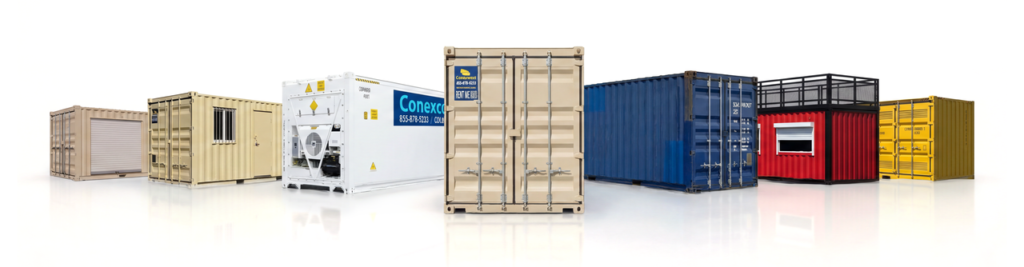
A portable storage container is a lockable steel box that is delivered to your property, filled where you need it, and moved by truck when you are done. You can rent one by the month or buy one outright. At Prime Cargo Box you can own a portable storage container for good: a used 20ft costs $1,000, a one trip 20ft is $1,550, and a used 40ft is $1,900, before delivery. No monthly fees, no return date, and it is still yours when the job is finished.
This guide is for homeowners, people moving house, renovators, small businesses, contractors and farmers weighing up whether to rent or buy a portable storage container. It covers costs over time, sizes, where you can put one, permits, delivery, moving it later, security and the mistakes that cost people money. Every price links to a container we sell right now.
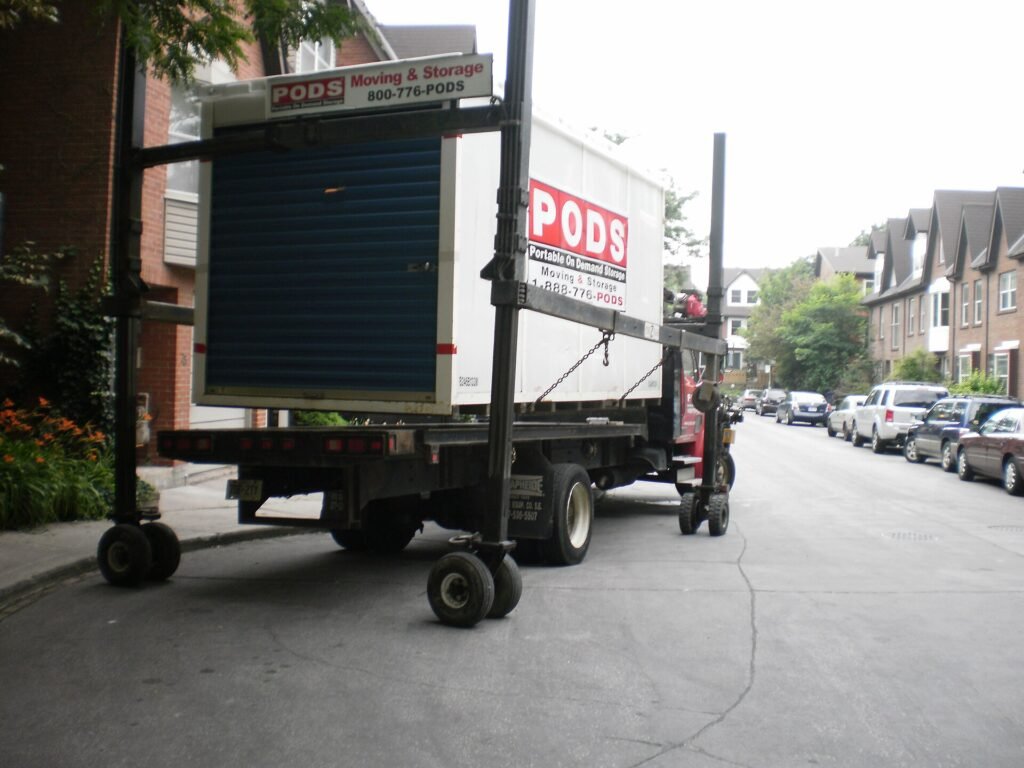
Table of Contents
Portable storage container: the short answers
- What it is: a steel storage box delivered to your site and picked up or moved by truck.
- Rent or buy: renting suits a few weeks. If you need storage for many months, buying often costs less overall and you keep the box.
- Cheapest to own: a used 20ft at $1,000.
- Best looking: a one trip 20ft at $1,550, near new.
- Most space: a used 40ft at $1,900, about 67 m³ inside.
- Before delivery: check space for the truck, level ground and any permit needed if it sits on a road.
What counts as a portable storage container?
The phrase covers two quite different things.
Rental storage pods
Storage companies rent out their own boxes, often smaller than a shipping container, delivered to your driveway and collected later. You pay delivery, a monthly fee while you keep it, and collection. Some will also take it to their warehouse or move it to a new address for an extra charge. The box is never yours.
Shipping containers you buy
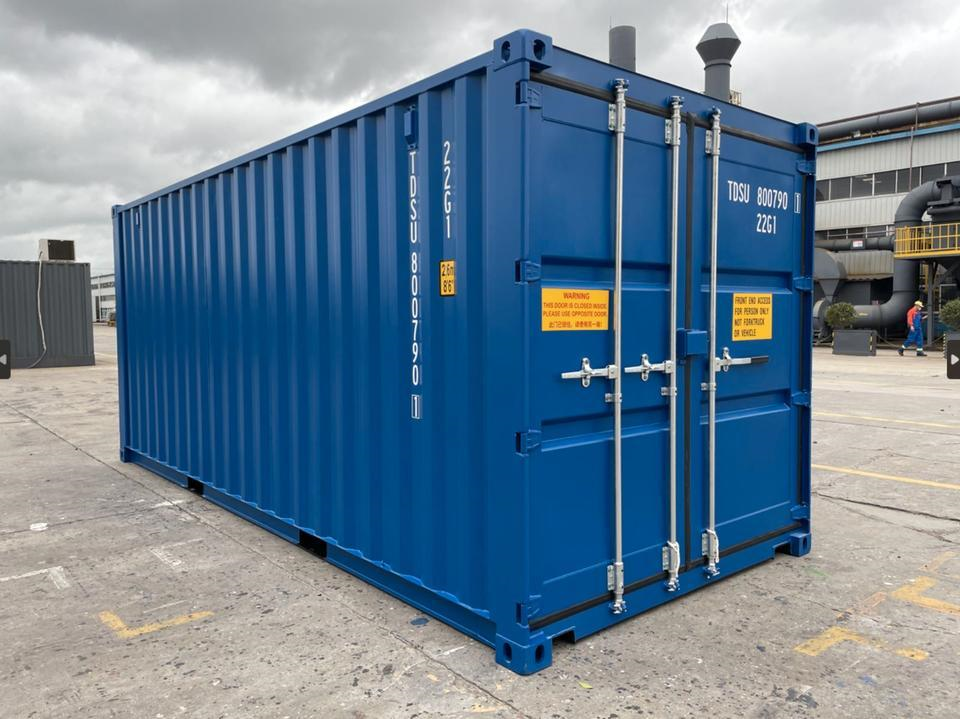
A steel ISO shipping container does the same job: it arrives on a truck, sits on your land, locks up tight and can be moved again by truck. The difference is that you own it. A 20ft container is also usually bigger and stronger than a typical rental pod, built to cross oceans loaded with cargo and stacked on ships.
For many buyers, a shipping container is the portable storage container that makes the most sense once you look past the first month’s price. Our storage containers for sale guide covers choosing a steel box in more depth.
Rent or buy a portable storage container?
This is the real question, so let us work through it properly.
When renting makes sense
- You need storage for a few weeks only.
- You want the company to take the box away to a warehouse.
- You are moving locally and want the same company to move the box with your things inside.
- You have nowhere to keep a container long term.
When buying makes more sense
- You need storage for several months or longer.
- You have space on your property to keep it.
- You want storage that is always there, with no monthly bill.
- You may want to move it later to a new home, farm or site.
- You like the idea of selling it when you are done.
How to work out your break-even point
Rental prices vary a lot by country, city and company, so we will not quote other firms’ prices. Use this simple sum with your own quotes:
Total rental cost = delivery + (monthly fee x months) + collection.
Total cost to own = container price + delivery − what you could sell it for later.
Here is an illustration with made-up rental numbers, just to show the maths. Say a rental pod costs $100 to deliver, $200 a month and $100 to collect. Over 6 months that is $1,400. Over 12 months it is $2,600. A used 20ft from us is $1,000 plus delivery, and you still own a steel container at the end that can be resold. In that example, buying wins somewhere around the half-year mark. Run the sum with your real quotes; the point is that the longer you need storage, the more buying pulls ahead.
Rent vs buy at a glance
| Point | Rented storage pod | Owned portable storage container |
|---|---|---|
| Upfront cost | Low | Container price plus delivery |
| Monthly cost | Ongoing fee | None |
| Who owns it | The rental company | You |
| Typical size | Often smaller than 20ft | 20ft or 40ft standard sizes |
| Build | Varies by company | Corrugated weathering steel, ISO standard |
| Time limit | As long as you pay | None |
| Value at the end | Nothing | Can be sold or reused |
| Moving it later | Company moves it for a fee | Any container truck can move it |
Portable storage container vs a self-storage unit
The other common choice is renting a unit at a self-storage building. Here is how the two compare.
| Point | Self-storage unit | Owned portable storage container |
|---|---|---|
| Location | At the storage facility | On your own property |
| Access | During opening hours, drive there each time | Any time, steps from your door |
| Moving things in | Load a van, drive, unload | Carry straight from the house |
| Monthly cost | Ongoing rent | None after purchase |
| Security | Facility security plus your lock | Your lock, lock box and site |
| Space | Choice of unit sizes | 20ft or 40ft standard sizes |
| Value at the end | None | Resell or reuse |
If you have the space at home, a portable storage container saves the van trips, the drive and the monthly rent. If you live in a flat with no outside space, self-storage may be your only option.
Rent or buy: four example situations
These are examples to show how people think through the choice, not stories about real customers. Rental figures are made up for illustration; use your own quotes.
A family renovating a kitchen for six weeks
They need somewhere for dining furniture and boxes for a month and a half, then the space goes back to normal. Renting a pod is probably cheaper here, unless they also want permanent garden storage afterwards. If they do, buying a used 20ft portable storage container for $1,000 solves both problems.
A couple whose house sale and purchase dates do not line up
They need storage for an unknown period, maybe three months, maybe eight. Rental costs keep rising every month the dates slip. Buying a one trip 20ft at $1,550 caps the cost, and the container can be delivered to the new home and kept as a garden store or sold.
A small online business outgrowing the spare room
Stock storage is needed indefinitely. Paying monthly rent forever makes little sense. A used 40ft portable storage container at $1,900 in the yard gives about 68 m³ of space with no monthly bill.
A builder moving between sites
Tools and materials need to follow the jobs. An owned 20ft container can be moved from site to site by any container truck, and it pays for itself compared with renting over a year or two.
The pattern is clear: the shorter and more certain the need, the more renting makes sense. The longer or less certain, the more owning a portable storage container wins.
Portable storage container prices
Here is what it costs to own a portable storage container from us. Delivery is quoted separately once we know the address.
| Container | Condition | Price | Good for |
|---|---|---|---|
| 20ft standard | Used | $1,000 | Home and yard storage on a budget |
| 20ft standard | One trip | $1,550 | Driveways and gardens where looks matter |
| 20ft standard | New | $2,400 | Long-term, perfect finish |
| 20ft high cube | Used | $1,650 | Tall furniture and stacked boxes |
| 20ft double door | Used | $1,950 | Access from both ends |
| 20ft double door | One trip | $2,500 | Organised storage, near new |
| 40ft standard | Used | $1,900 | Businesses, farms, whole-house storage |
| 40ft high cube | One trip | $2,900 | Maximum space, long life |
Prices change with stock, so the product page has the latest. For more on what moves prices, see our shipping container prices guide, and for budget options, cheap shipping containers.
Portable storage container sizes
Shipping containers come in standard sizes set by ISO 668, the international standard for freight container dimensions. That is why any container truck can deliver and move them.
| Container | Outside (L x W x H) | Inside volume (approx.) | Roughly holds |
|---|---|---|---|
| 20ft standard | 6.06 x 2.44 x 2.59 m | 33 m³ | Contents of a small to medium home, or a garage full of tools and garden gear |
| 20ft high cube | 6.06 x 2.44 x 2.90 m | 37 m³ | As above, with room for tall wardrobes and higher stacks |
| 40ft standard | 12.19 x 2.44 x 2.59 m | 68 m³ | A larger home, business stock or farm equipment |
| 40ft high cube | 12.19 x 2.44 x 2.90 m | 76 m³ | The most space for bulky, light items |
“Roughly holds” is a general guide, not a promise; how much fits depends on how well you pack. Our shipping container dimensions guide lists inside and door sizes, and 20ft vs 40ft helps you choose.
Which size is most “portable”?
A 20ft is the easiest portable storage container to place. It fits on most driveways, needs less room for the delivery truck, and can be moved by more types of truck. A 40ft gives double the space but needs a long, straight run for delivery. We do not currently stock 10ft units.
Quick decision guide: 20ft or 40ft?
- Choose a 20ft if: it is going on a driveway or garden, access is tight, you are storing one home or a garage, or you may move it again.
- Choose a 40ft if: you have a yard or farm with plenty of room, you are storing business stock or a large home, or you want the lowest cost per cubic metre.
- Choose a high cube if: you have tall furniture, plan to fit shelving, or want to stack boxes higher.
- Choose double doors if: you want to reach things at both ends without unpacking the middle.
Still unsure? A 20ft is the safest first portable storage container for most people. You can always add a second one later.
What fits in a portable storage container?
People usually underestimate how much a 20ft holds. As a rough guide, and depending on how carefully you pack:
- Living room: a three-seat sofa, armchairs, coffee table, TV unit and boxed books fit with room to spare in a 20ft.
- Bedrooms: beds and mattresses on their sides, wardrobes, chests of drawers and boxed clothes.
- Kitchen: fridge-freezer, washing machine, table and chairs, boxed crockery.
- Garage and garden: mower, bikes, tools, garden furniture, barbecue.
A typical two or three-bedroom home often fits in a 20ft portable storage container if packed tightly, while larger homes may need a 40ft or a 20ft high cube for the extra height. If you are not sure, list your big items and send the list to us; we will tell you honestly which size to buy.
Tips for fitting more in:
- Take legs off tables and beds.
- Stand mattresses and sofas on end where safe.
- Use the full height with sturdy boxes at the bottom.
- Fill drawers and wardrobes with soft items.
What people use a portable storage container for
Moving house
Pack the container at your old home at your own pace, have it delivered to the new place, or store it in between if the dates do not line up. If you are moving overseas, a cargo worthy container can carry your belongings by sea. See our cargo worthy container guide.
Home renovations
Clear rooms before builders arrive. Furniture stays dry and safe on your own driveway instead of in a storage unit across town.
Decluttering and long-term home storage
Seasonal items, sports gear, garden furniture, tools, bikes and things you cannot part with. A portable storage container in the garden or yard is always there when you need it. Our shipping container shed guide shows how to set one up for good.
Small business stock
Online sellers, tradespeople and shops use a portable storage container for stock, tools and seasonal displays, avoiding warehouse rent.
Construction sites
Secure storage for tools and materials that can move from one job to the next. See our construction storage container guide.
Farms
Feed, seed, tools and equipment, safe from weather and rodents. Read farm storage containers.
Vehicles
Classic cars, motorbikes, quad bikes and boats. Our car storage container guide covers what fits.
Events and seasonal businesses
Festival kit, market stalls and seasonal stock stored between events, then moved to the next venue.
Using a portable storage container to move house
- Book delivery a week or two before moving day so you can pack calmly.
- Prepare the spot on the driveway or yard, and get a street permit if needed.
- Pack heavy items first, against the far wall and along the floor.
- Load furniture next, wrapped and strapped to the lashing rings.
- Fill gaps with boxes and soft items so nothing shifts.
- Lock the doors and photograph the load.
- Book the truck to move the container to the new home, or keep it in place until the new home is ready.
- Unload at your own pace at the other end.
- Keep the container as storage, or sell it when you are done.
For moves overseas, a sea-going container needs to be cargo worthy and the load must be declared and weighed. Our cargo worthy container guide walks through it.
Portable storage container for business
Many businesses pay warehouse or self-storage rent every month for space they could own outright. A portable storage container on your own premises can replace that.
- Retail: seasonal stock, displays and overflow stock behind the shop.
- Trades: tools, materials and equipment, locked up at the yard or moved to a job.
- Restaurants and cafes: dry goods, furniture and equipment. For chilled goods, see our cold storage container guide.
- Online sellers: stock and packaging close to the packing bench.
- Schools and clubs: sports kit, event equipment and furniture.
- Event companies: staging, lighting and marquees between jobs.
Business owners also like that a portable storage container is an asset on the books rather than a monthly expense, and it can be sold if the business moves or changes.
Where can you put a portable storage container?
On your driveway or yard
Private land is the simplest place. Make sure the ground is firm and level, there is room for the truck to reach, and the doors can open fully. On soft lawn, lay a stone base or concrete pads first so the container does not sink.
On the street
Putting a portable storage container on a public road usually needs permission from the local highways authority. Brighton & Hove City Council’s licence conditions for skips and other containers on the public highway are a good example of what to expect: containers must not obstruct the road, must be kept clean and tidy, must be removed when the licence expires, and any damage to the road from placing or removing the container must be paid for by the licence holder (Brighton & Hove licence conditions for containers on the public highway). Rules differ everywhere, so ask your local council or city office before delivery.
In a garden for the long term
If the container will stay for a long time, it may count as an outbuilding. In England, for example, the Planning Portal sets a maximum height of 2.5 metres for a building, enclosure or container within two metres of a boundary (Planning Portal guidance on outbuildings). A standard container is 2.59 metres tall, so placement matters. Check your local rules.
On a business or site
Landlords, site owners and event organisers usually have their own rules. Get permission in writing.
Portable storage container delivery: what you need to know
Most portable storage container deliveries use a tilt-bed truck that slides the box off the back, or a truck with a crane arm for tight spots. Some rental pods use special lifting frames instead.
- Space: a 20ft delivery needs a straight run behind the truck plus room for the container. A 40ft needs much more.
- Overhead clearance: watch for cables, branches and gateways.
- Ground: firm enough for a heavy truck. Soft lawns and steep drives can be a problem.
- Door direction: decide which way the doors should face before the truck arrives.
- Someone on site: to show the driver exactly where to place it.
Our shipping container delivery guide covers truck types and clearances, and our shipping and delivery policy explains how we arrange delivery worldwide.
Moving your portable storage container later
When you own the container, moving it is simple: book a container truck. A tilt-bed or crane truck can lift a 20ft with contents inside if the weight is within the truck’s limits and the load is secured. For long moves, many owners empty the container first. If you are moving overseas, see the cargo worthy guide.
Before moving a loaded portable storage container:
- Secure everything inside with straps to the lashing rings.
- Put heavy items low and spread along the floor.
- Check the total weight with the haulier.
- Lock the doors and record the contents.
Setting up a portable storage container for long-term use
If your container is staying, a few upgrades make it far more useful.
- Base: concrete pads or sleepers under the corners, level and slightly raised.
- Shelving: freestanding racks along one wall, strapped to the lashing rings.
- Lighting: battery LED or solar lights make it usable on dark evenings.
- Ramp: a short ramp for wheelbarrows, bikes and trolleys.
- Vents: extra vents if you store fabric, paper or anything that dislikes damp.
- Paint: a colour that blends with the garden or matches your house.
- Lock box: fitted before you fill it.
Ask about our custom container modifications if you want vents, a lock box or a side door fitted before delivery.
Selling or reusing your portable storage container
The big difference between renting and owning shows up at the end. When you no longer need storage, an owned container still has value.
- Keep it: as a permanent garden store, workshop or garage.
- Move it: to your new home, a family member or another site.
- Sell it: farmers, builders, exporters and homeowners all buy used containers.
- Convert it: into an office, studio or pop-up shop. See our shipping container pop up shop guide.
How much it sells for depends on its condition and the local market, so we will not promise a figure. But a container that has been kept on a level base, painted and locked up will always be worth more than nothing, which is what a rental leaves you with.
Why a steel container makes a strong portable storage container
Shipping containers are made from corrugated weathering steel, designed to survive years at sea. This steel forms a tight surface layer that slows corrosion in the open air, though it loses that advantage if it sits wet all the time (Total Materia on Corten weathering steel). Keep it off wet ground and it will last for decades.
- Weatherproof: steel walls and roof, rubber door seals.
- Secure: four locking bars and a padlock hasp, no windows.
- Pest resistant: rodents cannot chew through steel.
- Strong floor: thick marine plywood on steel cross members.
- Standard size: any container truck can move it.
Packing a portable storage container properly
- Plan the layout. Heavy, sturdy items at the back and along the floor; things you need often near the doors.
- Use pallets. Keep boxes and furniture off the floor.
- Wrap furniture. Blankets and stretch wrap protect against scuffs.
- Do not seal damp items inside. Wet things cause condensation and mould.
- Add desiccant tubs. They soak up moisture in a closed box.
- Leave an aisle if you will need to reach things at the back.
- Strap tall items to the lashing rings so they cannot fall.
- Keep a list of what is where.
Stopping condensation in a portable storage container
Steel gets cold at night. Warm, damp air inside meets the cold roof and water forms. In a portable storage container full of furniture or paper, that matters.
- Keep the vents clear.
- Use moisture absorbers.
- Do not pack damp items.
- Raise the container slightly off the ground.
- For valuable or sensitive items, consider an insulated container. See our insulated shipping container guide.
Portable storage container weather and climate tips
- Hot climates: a light paint colour and shade reduce heat inside. Avoid storing heat-sensitive items like candles, paint or electronics without insulation.
- Cold climates: condensation is the main risk. Keep vents open and use moisture absorbers. Some liquids can freeze.
- Wet climates: raise the container and slope the ground away so water does not pool under it.
- Windy sites: an empty container is heavy enough not to move, but keep loose items inside secured.
- Coastal sites: touch up scratches promptly; salt air speeds rust on bare steel.
Security for a portable storage container
A steel box is already much tougher than a garden shed, but a cheap padlock can be cut in seconds.
- Lock box: a steel shroud over the hasp so bolt croppers cannot reach the padlock.
- Hardened padlock: closed or shrouded shackle.
- Position: doors facing the house or a lit area.
- Alarm or camera for valuable contents.
- Insurance: tell your home or business insurer about the container and contents.
Our secure storage containers guide goes deeper.
Specifications of our most popular portable storage container units
Used 20ft ($1,000)
- Outside: 20 ft x 8 ft x 8 ft 6 in (6.06 x 2.44 x 2.59 m)
- Inside volume: about 33 m³
- Tare: about 2,200 to 2,300 kg
- Condition: wind and watertight, cosmetic wear
One trip 20ft ($1,550)
- Outside: 6.06 x 2.44 x 2.59 m
- Build: corrugated weathering steel, marine plywood floor, four-bar locking doors
- Condition: one voyage only, near new
Used 40ft ($1,900)
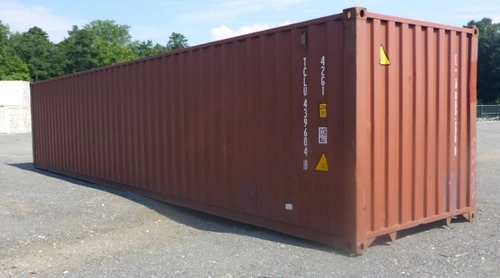
- Outside: 40 ft x 8 ft x 8 ft 6 in (12.19 x 2.44 x 2.59 m)
- Inside volume: about 68 m³
- Tare: about 3,700 to 3,800 kg
- Condition: wind and watertight
Full details for every portable storage container we sell are on each product page.
How long does a portable storage container last?
On land, kept off wet ground and given basic care, a steel container can serve as storage for decades. New and one trip containers give you the longest life. Simple maintenance keeps it going:
- Touch up scratches and rust spots with primer and paint once a year.
- Clear leaves and standing water from the roof.
- Grease door hinges and locking bars.
- Check door seals and replace damaged gaskets.
- Keep vents clear.
Insurance and responsibility
When you rent, the provider may offer contents cover as an add-on. When you own a portable storage container, you arrange cover yourself.
- Home insurance: ask whether contents in a container on your property are covered, and whether a lock box or specific padlock is required.
- Business insurance: list the container and stock on your policy.
- On the street: licences for containers on public roads often require the holder to cover damage to the road and liability to the public.
- During moves: check what the haulier’s insurance covers while the container is on the truck.
Photos of the container, the contents and the locks make any claim easier.
New, one trip or used portable storage container?
- Used: dents and surface rust, but wind and watertight. Best value for yards, farms and sites. Browse used shipping containers for sale.
- One trip: near new, clean paint, smooth doors. The best choice for driveways and gardens where neighbours will see it.
- New: factory fresh. Browse new shipping containers for sale.
See one trip vs used shipping container for the full comparison.
Portable storage container door options
- Standard end doors: the most common and cheapest.
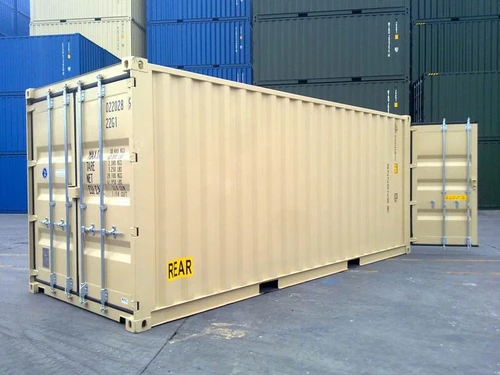
- Double door (tunnel): doors at both ends make long containers easy to organise. See our double door container guide.
- Open side: the full side opens for wide items and easy access. Read the open side container guide.
Questions to ask any portable storage provider
- Is the box rented or sold, and what happens at the end of the period?
- What are the inside measurements and door size?
- What is it made of, and is it weatherproof and lockable?
- What are the delivery, monthly and collection charges, in writing?
- Who arranges any street permit?
- Can it be moved with contents inside, and at what cost?
- Is there a minimum or maximum hire period?
- What insurance covers the contents?
For a portable storage container you buy from us, the answers are simple: you own it, it is a standard steel ISO container, and there are no monthly charges.
Common myths about portable storage containers
“Buying is always more expensive”
Only for short periods. Once rental fees run for several months, owning a portable storage container often costs less, and you keep something with resale value.
“Containers always rust and leak”
Weathering steel is built for life at sea. A wind and watertight container on a level, dry base stays dry inside for many years with simple care.
“You need a concrete slab”
No. Firm, level ground or pads under the four corners are enough for most sites.
“Once it is delivered it can never move”
Any container truck can pick it up and move it, which is exactly what makes it a portable storage container.
“Everything inside will get damp”
Only if you pack damp items, block the vents or leave it on wet ground. Follow the packing and condensation tips above and contents stay dry.
Common mistakes with a portable storage container
- Renting for a year when buying would have cost less.
- No room for the truck. Measure the access route, not just the spot.
- Placing it on soft ground. The container sinks and the doors jam.
- Forgetting street permits. Fines and forced removal.
- Packing damp items. Mould by spring.
- Cheap padlock. Defeats the steel.
- Ignoring garden height rules for long-term placement.
- Doors facing the wrong way. Decide before delivery.
How to order a portable storage container from Prime Cargo Box
- Choose size and condition. Browse all our containers or the 20ft range.
- Tell us where it is going and which way the doors should face.
- Send photos of the spot and the access route.
- Get your delivery quote.
- Pay and book. See our billing and payment policy.
- Prepare the ground and any permit needed.
- Take delivery and start loading.
New to buying containers? Read how to buy a shipping container. Questions? Contact us.
Portable storage container terms you will hear
- Pod: a common name for a rental portable storage unit.
- One trip: a container built new and used for a single voyage before sale.
- Wind and watertight: sound and weatherproof, suitable for storage.
- Cargo worthy: fit to carry goods by sea.
- High cube: a container one foot taller than standard.
- Tilt-bed truck: a truck that tilts its bed to slide a container on and off.
- Lock box: a steel shroud protecting the padlock from bolt croppers.
- Lashing rings: tie-down points inside the container for straps.
- Highway licence: council permission to place a container on a public road.
Portable storage container FAQs
How much does a portable storage container cost to buy?
At Prime Cargo Box, from $1,000 for a used 20ft, $1,550 for a one trip 20ft and $1,900 for a used 40ft. Delivery is extra.
Is it cheaper to rent or buy?
Renting is usually cheaper for a few weeks. For several months or more, buying often costs less overall, and you keep a container you can reuse or sell.
What size portable storage container do I need?
A 20ft suits most homes and small businesses. A 40ft suits larger homes, business stock and farms.
Can I put a portable storage container on the street?
Usually only with a permit from the local highways authority. Check before delivery.
Can it be moved with my things inside?
Often yes, if the weight is within the truck’s limits and the load is secured. Check with the haulier first.
Will my things stay dry?
Yes, if you keep vents clear, avoid packing damp items and use moisture absorbers. An insulated container gives extra protection.
Do I need a foundation?
No. Firm, level ground or pads under the corners are enough.
Do you deliver worldwide?
Yes. Send your address and site photos for a quote.
How quickly can a portable storage container be delivered?
It depends on stock and distance. Tell us your address and preferred date and we will confirm what is possible in your quote.
Can I paint my portable storage container?
Yes. Clean the surface, treat any rust, prime bare metal and use a paint made for steel. New and one trip containers take paint best.
Can I put two containers side by side?
Yes. Leave enough space between them for the doors to open and for maintenance. With a roof across the gap, two containers can even become a covered barn or carport. Our shipping container barn guide explains how.
Is a used container safe for storing furniture?
Yes, as long as it is wind and watertight and clean inside. Sweep it out, check for daylight through the roof and walls, and use pallets and moisture absorbers.
About Prime Cargo Box
Prime Cargo Box sells new, one trip and used shipping containers to homeowners, businesses, contractors and farms worldwide. Each product page shows photos, a condition grade and a clear price, and we help you choose the right portable storage container and plan delivery. Read more about us.
Final word
A portable storage container you own gives you secure, weatherproof storage with no monthly bill, and you can move it, reuse it or sell it later. If you need storage for more than a few months, work out the rent-versus-buy sum; buying often wins. For most homes, a used 20ft at $1,000 or a one trip 20ft at $1,550 is the right start, while a used 40ft at $1,900 gives the most space. Browse our containers or ask for a quote today.