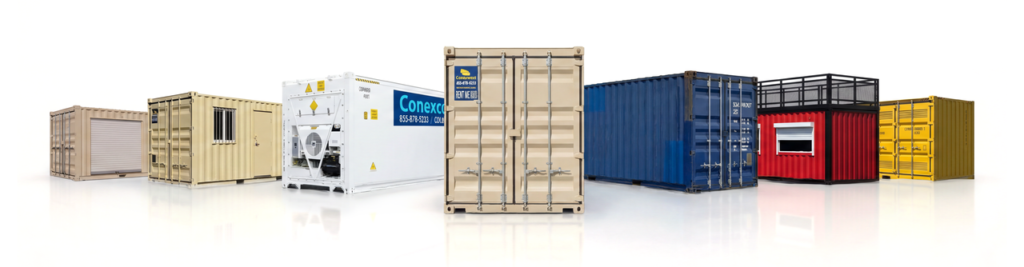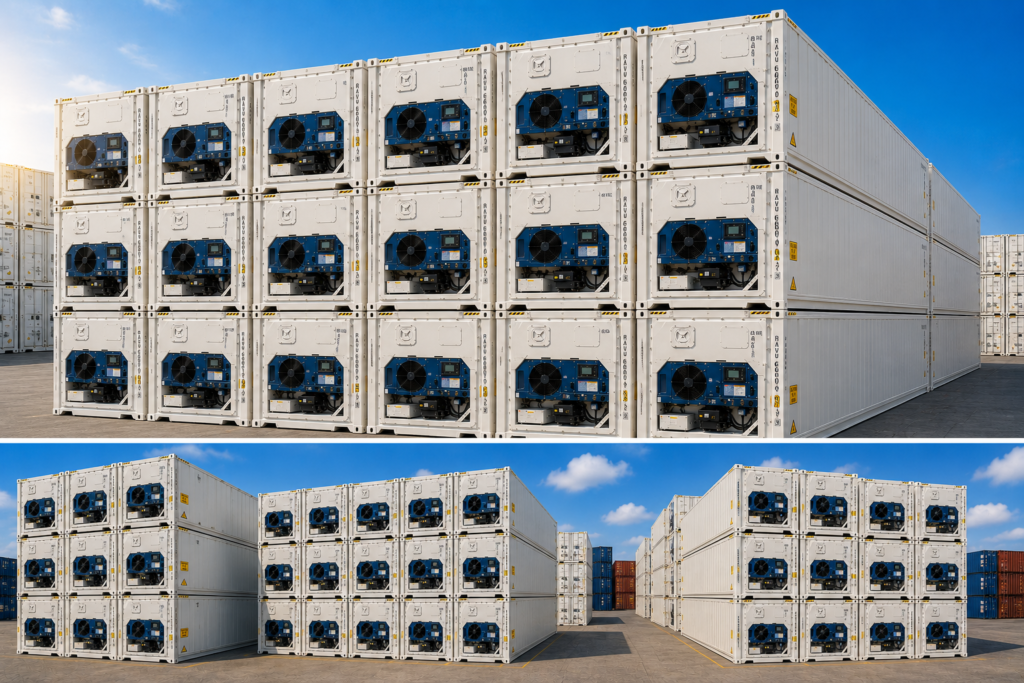

A cargo worthy container is a shipping container that is structurally sound and safe to carry goods by sea, rail and road, with a valid CSC safety plate and no damage that would get it stopped at a port. If you plan to ship your own goods in your own box, this is the grade you need. At Prime Cargo Box, every new and one trip container we sell is cargo worthy: a one trip 20ft costs $1,550, a one trip 40ft high cube is $2,900 and a new 40ft high cube is $3,800, before delivery. Used cargo worthy units are available on request.
This guide is for exporters, importers, freight forwarders, people moving overseas, project cargo shippers and anyone buying a box to send goods one way. It explains what cargo worthy really means, how it differs from IICL and wind and watertight, which paperwork matters, what a surveyor looks at, and how to buy the right cargo worthy container without overpaying. Every product link goes to a unit we sell now.
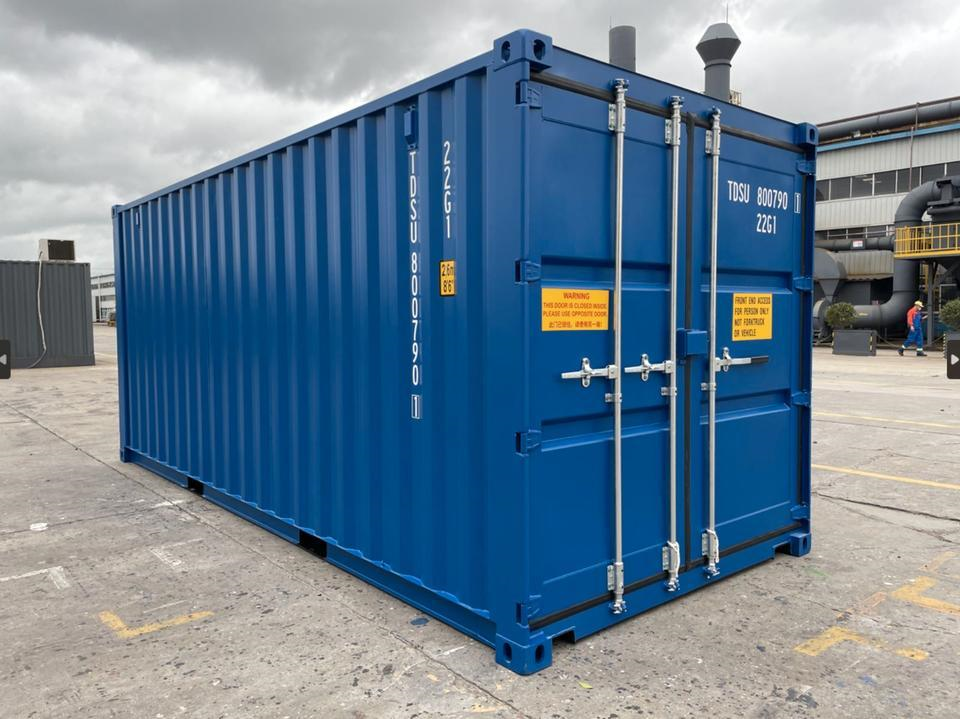
Table of Contents
Cargo worthy container: the short answers
- What it means: fit to carry cargo in international transport. Sound frame, sound floor, weatherproof, doors that lock and seal, and a valid CSC plate.
- Who needs one: anyone shipping goods in a container they own (a shipper owned container, or SOC).
- Best value for shipping: a one trip 20ft at $1,550 or a one trip 40ft high cube at $2,900.
- Not the same as: “wind and watertight”, which only promises the box keeps weather out. That is fine for storage, not for shipping.
- Key document: the CSC safety approval plate, plus a valid examination date or ACEP marking.
- Before it sails: the packed weight must be verified and declared by the shipper.
What “cargo worthy” actually means
Here is the part most sellers skip: there is no single global legal definition of a cargo worthy container, even though the phrase is used every day. The term comes from the container industry, not from one law.
TT Club, a specialist insurer of transport and logistics operators, explains that shipping lines and container owners usually set their own in-house inspection rules, and that these rules are widely called “cargo worthy”. They are meant to keep containers safe and legal while keeping repair costs down, so they vary from one operator to the next (TT Club on cargo worthy containers). The same article notes that the Container Owners Association has published criteria for cargo worthy units, including guidance for shipper owned containers.
What every version agrees on is the baseline. The international packing code for cargo transport units, known as the CTU Code, expects the frame, walls and roof to be in good condition and not badly distorted, cracked or bent, and the box to be clean and free of cargo residues and pests (IMO, ILO and UNECE CTU Code). On top of that, no cargo worthy container can breach the safety rules of the International Convention for Safe Containers.
So in plain words, a cargo worthy container is one that a shipping line, terminal or surveyor would accept for loading with goods inside, without asking for repairs first.
Container grades compared
You will see several grades on the market. Knowing where cargo worthy sits saves you from paying for more than you need, or buying less than you need.
| Grade | What it means | Fit for shipping? | Typical buyer |
|---|---|---|---|
| New | Never carried cargo. Factory fresh. | Yes | Exporters wanting the best box, long-term users |
| One trip | Built new, used for one voyage, then sold | Yes | Most exporters and movers |
| IICL | Meets the inspection standard leasing companies use when boxes go on and off lease | Yes | Lessors, operators, picky exporters |
| Cargo worthy (CW) | Used, but sound and safe enough to carry cargo | Yes | Budget exporters, one-way shipments |
| Wind and watertight (WWT) | Keeps weather out. Not checked for shipping. | Not guaranteed | Storage buyers |
| As is | Sold with known damage | No | Scrap, parts, low-cost projects |
TT Club describes the IICL inspection standard as the highest level containers are repaired and maintained to, which is why it sits above general cargo worthy in this table. Every new and one trip box is, in practice, a cargo worthy container that also clears that higher bar on day one.
If you are still deciding between conditions, our one trip vs used shipping container guide goes deeper, and types of shipping containers covers the different box styles.
Who needs a cargo worthy container
Exporters shipping in their own box
Most cargo travels in boxes owned by the shipping line. But many shippers prefer to buy their own and ship it as a shipper owned container. Reasons include shipping to places where carrier boxes are scarce, keeping the container at the destination as storage, or avoiding the line’s equipment detention charges while goods wait to be unpacked. A shipper owned box still has to be a cargo worthy container or the line can refuse it.
People moving abroad
Families and small businesses relocating overseas often buy a container, pack it at home, ship it and then keep it as a garden store or workshop at the new place. Buying a cargo worthy container that you get to keep is often better value than paying for a removal company’s box and then buying storage at the other end.
Project cargo, aid and remote sites
Mining camps, construction projects, NGOs and aid groups ship equipment to sites where the container itself becomes the store, office base or workshop on arrival. The box must travel safely first.
Vehicle, machinery and car exporters
Cars, bikes and machinery shipped in containers need a sound floor and strong lashing points. A cargo worthy container gives you that. See our car storage container guide for what fits.
Traders reselling containers abroad
Some buyers ship a cargo worthy container full of goods, sell the goods, then sell the box. Containers hold their value, especially newer ones.
Your own cargo worthy container vs the shipping line’s box
Before you buy, it is worth comparing the two ways to ship a full container load. Neither is always better. It depends on your route, your timing and what happens to the box after it lands.
| Point | Your own cargo worthy container (SOC) | Carrier owned container (COC) |
|---|---|---|
| Upfront cost | You buy the box | No purchase; the box comes with the freight booking |
| Time to unpack | As long as you like; the box is yours | Free days are limited; after that the line charges for keeping its box |
| After arrival | Keep, reuse or sell the container | Must be returned empty to the line’s depot |
| Availability | You control it | Depends on the line having boxes where you load |
| Paperwork | You prove the box is fit and marked correctly | The line handles the box’s condition |
| Best for | One-way moves, remote sites, slow unpacking, keeping the box | Regular trade on busy routes |
The deciding question is usually this: will you want the container at the other end? If the answer is yes, buying a cargo worthy container nearly always makes sense, because you pay once and get freight equipment and a long-life store in one purchase. If you will never want the box again and ship on a busy trade lane, carrier boxes are often simpler.
Port storage charges at the terminal still apply to your own box, so plan collection promptly whichever route you choose.
The CSC plate: the one document that matters most
Every container built for international transport carries a CSC safety approval plate, usually on the left-hand door. Under the International Maritime Organization’s Convention for Safe Containers, an approved maker fixes this plate to containers that pass the design and testing rules. It shows the country of approval, date of manufacture, identification number, maximum gross weight, stacking and racking test values.
Examination dates and ACEP
The plate is only part of it. A container also has to be examined at set intervals. According to the Institute of International Container Lessors, the first examination of a new container must happen within five years of manufacture, and after that examinations must be no more than 30 months apart (IICL questions and answers on CSC). The next exam date is marked on or near the plate. Instead of fixed dates, many owners use an approved continuous examination programme, shown by an ACEP marking on the plate.
When you buy a cargo worthy container for shipping, check that:
- The CSC plate is present, legible and firmly fixed.
- The next examination date has not passed, or there is an ACEP marking.
- The details on the plate match the container number on the doors.
- The maximum gross weight on the plate suits your cargo.
New and one trip boxes are the easy option here because they are so recent. With a used cargo worthy container, the plate and exam status are the first things to look at.

What a surveyor checks on a cargo worthy container
If you or your shipping line want proof, an independent container surveyor can inspect the box and issue a report or certificate. These are the areas they look at, and they are worth checking yourself on any used unit.
Structure
- Corner posts and corner castings of the cargo worthy container: no cracks, heavy dents or bad old repairs. These take the load when containers are lifted and stacked.
- Top and bottom rails: straight, without deep dents or cuts.
- Cross members under the floor: not bent, cracked or rotted through.
- Forklift pockets on 20ft units: not torn or crushed.
Floor, walls and roof
- Floor: solid plywood or bamboo boards, no soft spots, holes or delamination, and no heavy staining that could taint cargo.
- Walls and roof: no holes. Dents are judged on depth and position. Surface rust is usually acceptable; rust that has eaten through or weakened steel is not.
- Light test: close yourself inside on a bright day. If you see daylight anywhere, water and air can get in too.
Doors
- Locking gear: all four bars turn freely and the cams seat properly.
- Gaskets: complete, not torn, and sealing all the way round.
- Hinges: no cracks, doors swing without dragging.
- Seal points: the door handles must take a standard customs bolt seal.
Cleanliness and markings
- Clean inside, dry, free from smells, old cargo residues, labels for dangerous goods that no longer apply, and pests.
- Container number, owner code and size-type code clearly marked.
Owner codes and markings on a cargo worthy container
Each cargo worthy container carries a number made of a four-letter prefix, six digits and a check digit, painted on the doors, sides and roof. The Bureau International des Containers keeps the global register of container owner codes under the ISO 6346 standard, which lets carriers, terminals and customs systems identify a box and its owner.
For a shipper owned cargo worthy container this matters in two ways. First, terminal and line systems expect a valid number, so a box with no proper marking can cause booking and tracking headaches. Second, if you buy a used box, the old owner’s code stays on it until it is changed. Some shippers ship under the existing marking with the paperwork showing they bought it; regular SOC shippers often register their own owner code. Ask your forwarder what your line expects before you book.
Cargo worthy container weight ratings and the VGM rule
A cargo worthy container also has to carry the weight you put in it, and the ship has to know what that weight is.
Know the ratings
| Container | Approx. tare (empty) | Max gross (box + cargo) | Inside volume |
|---|---|---|---|
| 20ft standard | about 2,200 to 2,300 kg | up to 30,480 kg on many units | about 33 m³ |
| 20ft high cube | about 2,300 kg | up to 30,480 kg | about 37.4 m³ |
| 40ft standard | about 3,700 to 3,800 kg | 30,480 to 32,500 kg depending on build | about 67.7 m³ |
| 40ft high cube | about 3,900 kg | 30,480 to 32,500 kg depending on build | about 76.3 m³ |
The figures that count for your shipment are the ones on the CSC plate of the actual box. Road weight limits in your country are often lower than the container’s rating, so ask your haulier what they can legally carry.
Verified gross mass (VGM)
Since 1 July 2016, international rules require the gross mass of a packed container to be verified before it is loaded on a ship. The International Maritime Organization explains that misdeclared container weights can lead to wrong stowage decisions, collapsed stacks and boxes lost overboard, which is why SOLAS regulation VI/2 was amended to make verification mandatory (IMO on verification of the gross mass of a packed container). The shipper is responsible for this, either by weighing the packed box or by weighing all the contents and adding the tare. Your forwarder will tell you how it works at your port.
Cargo worthy container prices
These are our current prices for containers that are ready to ship goods. New and one trip units are cargo worthy as standard. Used cargo worthy boxes are picked from stock on request, so ask us for a quote.
| Container | Condition | Price | Shipping notes |
|---|---|---|---|
| 20ft standard | One trip | $1,550 | Best for heavy, dense cargo |
| 20ft standard | New | $2,400 | Factory fresh, longest life |
| 20ft high cube | One trip | $2,950 | Taller loads on a short footprint |
| 20ft double door | One trip | $2,500 | Load and unload from both ends |
| 40ft standard | One trip | $3,200 | General cargo, household moves |
| 40ft standard | New | $3,400 | New box at a small premium |
| 40ft high cube | One trip | $2,900 | Most volume per dollar |
| 40ft high cube | New | $3,800 | Light, bulky cargo, long-term reuse |
| 40ft double door | One trip | $3,500 | Split loads, easy access |
| 20ft open top | One trip | $3,150 | Tall machinery loaded by crane |
| 20ft reefer | One trip | $6,200 | Chilled or frozen goods |
Prices change with stock; the product page always shows the latest. Our shipping container prices guide explains what moves container prices around the world.
Why do we steer most exporters to one trip rather than used? Because the price gap is small next to the cost of a rejected box. If a terminal turns away a used unit at the gate, you pay for trucking twice, maybe miss your sailing, and may still have to buy another box. A one trip cargo worthy container takes that risk off the table for a few hundred dollars more.
Specifications of our most popular cargo worthy containers
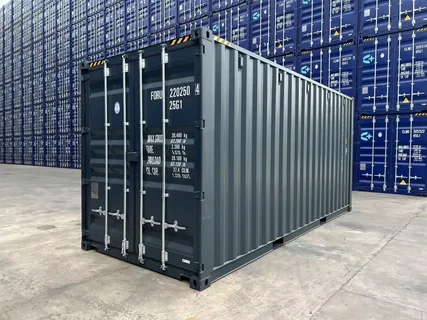
One trip 20ft standard ($1,550)
- Outside size: 20 ft x 8 ft x 8 ft 6 in (6.06 x 2.44 x 2.59 m)
- Inside volume: about 33 m³
- Tare: about 2,200 to 2,300 kg
- Build: corrugated weathering steel, marine plywood floor, four-bar locking cargo doors
- Plating: CSC plated, ISO marked
- Condition: one voyage only, near new
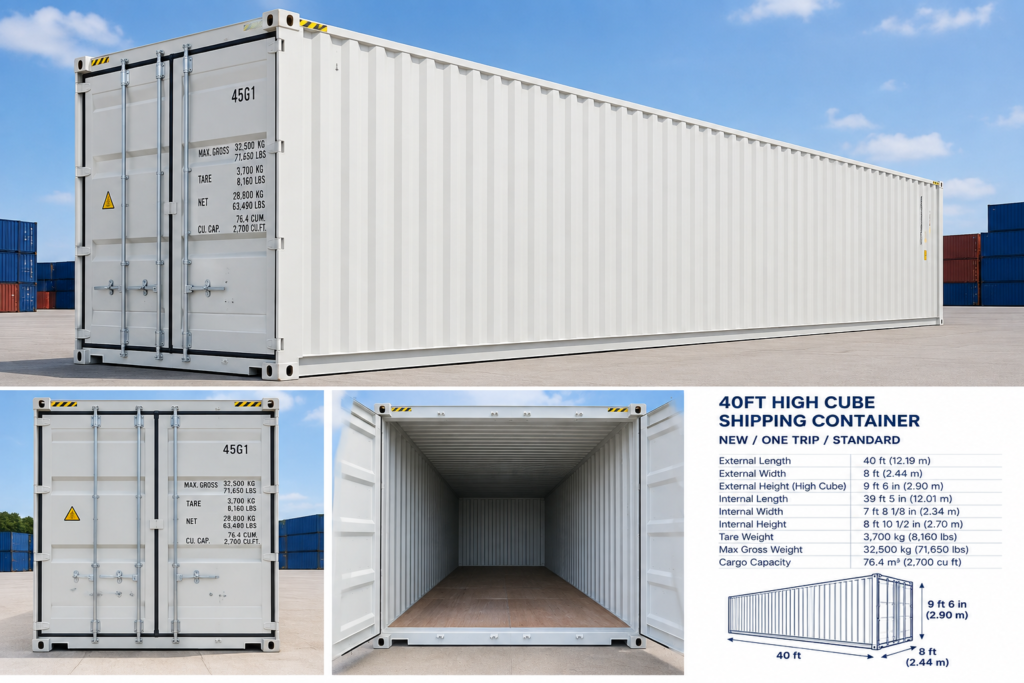
One trip 40ft high cube ($2,900)
- Outside size: 40 ft x 8 ft x 9 ft 6 in (12.19 x 2.44 x 2.90 m)
- Inside height: about 2.70 m
- Inside volume: about 76.3 m³
- Tare: about 3,900 kg; max gross 30,480 to 32,500 kg depending on build
- Build: corrugated weathering steel, marine plywood floor, CSC plated
- Condition: one voyage only, near new
Full specifications for every cargo worthy container we sell, including inside and door sizes, are on each product page and in our shipping container dimensions guide.
Which cargo worthy container size and type should you ship in?
20ft for heavy cargo
For a cargo worthy container carrying dense goods like tiles, stone, metal, machinery parts, bagged cement or paper you reach the weight limit long before the box is full, so a 20ft is the natural choice. Read our 20ft shipping container guide for full specs.
40ft high cube for volume
For a cargo worthy container carrying furniture, household moves, clothing, plastics and other light, bulky goods fill space before weight. A 40ft high cube gives about 76 cubic metres, and often costs little more to ship than a standard 40ft. See high cube vs standard container and our 40ft shipping container for sale guide.
Double door for mixed loads
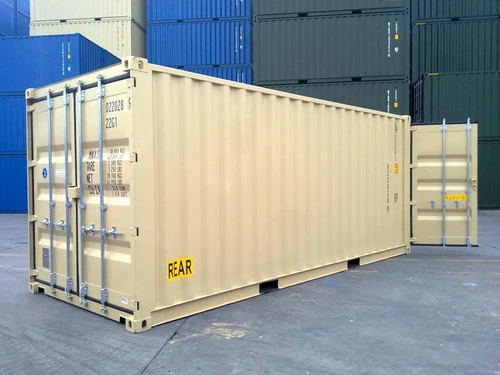
Doors at both ends let you pack two consignments and unload each from its own end. Handy for shippers splitting a load between two receivers. More in our double door container article.
Open top for tall items
Machinery and equipment too tall for the doors of a standard cargo worthy container go in from above by crane, then a tarp goes over. See our open top container guide.
Reefer for temperature-sensitive goods
Food, flowers and some chemicals need a refrigerated cargo worthy container. Our guide to buying a reefer container explains what to check on the machinery.
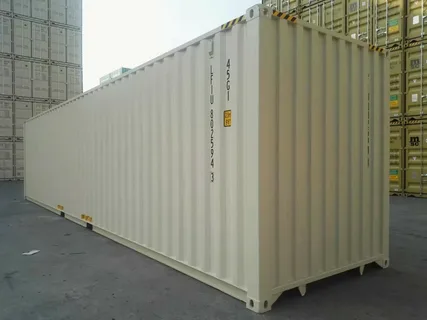
How shipping your own cargo worthy container works, step by step
- Talk to a freight forwarder or the shipping line first. Confirm they accept shipper owned containers on your route and what condition and paperwork they want.
- Buy the right cargo worthy container. Size, type and condition to suit the cargo and the line’s rules.
- Check the plate and markings on delivery, and keep the sale invoice. It shows you own the box.
- Get a survey if needed. Some lines or buyers want an independent cargo worthy certificate, especially for used units.
- Pack and secure the load following the CTU Code. Spread weight evenly, block and brace, and use the lashing points.
- Weigh and declare the VGM. Send it to the carrier before the cut-off.
- Seal the doors with a high-security bolt seal and record the seal number on the shipping documents.
- Truck it to the terminal for your booked sailing.
- At destination, clear customs, unpack, and keep the box, reuse it or sell it.
Customs rules on importing the container itself vary by country. Some places charge duty on the box as well as the goods, others allow temporary import. Your forwarder or customs broker can tell you before you ship.
Example: moving overseas in your own cargo worthy container
This is an illustration of how the process tends to run, not a real customer story. Say a family is moving from one country to another with furniture, appliances, tools and a motorbike.
- Size: they choose a 40ft high cube because household goods are bulky but light, and the extra height fits wardrobes and stacked boxes.
- Condition: they pick a one trip cargo worthy container so there is no risk of the terminal refusing it, and so it looks good as a garden store later.
- Delivery: the box is delivered to their driveway for a weekend of packing, then collected by a haulier for the port.
- Packing: heavy items go in first along the floor, the motorbike is strapped to the lashing rings, and gaps are filled with blankets and airbags.
- Weight: they weigh the packed container at a certified weighbridge and send the VGM to the forwarder.
- Arrival: customs clear the goods; the box is delivered to the new house and unpacked over a week, with no carrier detention charges ticking.
- Afterwards: the cargo worthy container becomes a lockable store for garden tools and the motorbike.
The same pattern works for a small business moving stock and equipment, or an NGO shipping supplies to a field base.
Delivery-day checklist for your cargo worthy container
When the truck sets the box down, take fifteen minutes before the driver leaves. It is far easier to sort out a problem then than after you have packed it full.
- Match the number. The container number on the doors should match your invoice.
- Read the CSC plate. Present, legible, with an in-date exam or ACEP marking.
- Walk round the outside. Look at the corner posts, rails and roof edges for fresh damage from transport.
- Open and close both doors. All four locking bars should turn and seat without force.
- Step inside and close the doors. Look for daylight in the roof, walls and door edges.
- Walk the floor. Feel for soft spots, and check for loose or lifted boards.
- Smell it. A cargo worthy container for goods should be free of chemical or rotten smells.
- Take photos. Plate, doors, floor, roof and all four sides, with the date.
If something is wrong, tell us straight away with photos. That record also helps your forwarder if the line asks about the box later.
Packing tips for a cargo worthy container
- Keep the weight in the cargo worthy container centred and low. Heavy items on the floor, spread along the length. Avoid putting most of the weight at one end.
- Fill gaps. Airbags, timber bracing or dunnage stop cargo shifting when the ship rolls.
- Use the lashing rings. Strap vehicles and machinery to the floor and rail points, never just to the walls.
- Protect against moisture. Long ocean voyages through changing climates cause condensation, often called container rain. Desiccant bags and dry pallets help.
- Check fumigation rules for timber packaging. Many countries require treated and marked wood.
- Do not overload. Stay under the max gross on the CSC plate and under road limits for the truck.
- Photograph the load before you close the doors. It helps with insurance claims.
Insurance and responsibility
Owning the container changes who answers for what. With a carrier box, the line provides equipment that should be fit for use. With a shipper owned cargo worthy container, that duty moves to you. A few practical points:
- Cargo insurance: arrange marine cargo insurance for the goods. Carrier liability for lost or damaged cargo is usually limited, and rarely covers full value.
- Container insurance: ask your insurer whether the box itself can be covered while in transit, especially if it is new or one trip.
- Condition records: keep photos of the container, the CSC plate, the packed load and the sealed doors. They help settle disputes.
- Packing responsibility: the CTU Code puts duties on shippers and packers to check the unit and pack it properly. Use an experienced packer for heavy or awkward cargo.
After your cargo worthy container arrives: keep, reuse or sell
One of the best parts of shipping in your own cargo worthy container is that the box still has value when the voyage ends.
- Keep it as storage: a secure store on the farm, site or new home. Our shipping container shed and secure storage containers guides show how to set one up.
- Reuse it for the next shipment: keep it maintained and its CSC exams in date.
- Sell it: a one trip box that has done one more voyage is still a good used container, and demand is strong in many countries.
- Convert it: office, workshop or shop. Ask about our custom container modifications.
Keeping a cargo worthy container cargo worthy
If you plan to ship in the same box more than once, a little care keeps it in condition.
- Keep CSC examinations in date. Book an examination before the date on the plate runs out, or enrol the box in an ACEP scheme through an approved operator.
- Repair properly. TT Club advises that even where owners use their own inspection rules, repairs themselves should follow the IICL repair methods. Bad welds and patched floors are what get used boxes rejected.
- Treat rust early. Surface rust is cosmetic; rust that eats into rails, cross members or corner posts is structural and must be fixed.
- Look after the floor. Keep it dry, avoid point loads that crack boards, and replace damaged sections with proper container flooring.
- Grease the doors. Hinges and locking bars that move freely seal better and pass inspection.
- Store it on a level base between trips so the frame stays square.
A cargo worthy container that is looked after like this can make many voyages and still have resale value at the end.
Storage only? You may not need a cargo worthy container
If the container will never leave your yard, you do not need to pay for cargo worthy status. A wind and watertight box keeps your things dry and secure just the same. Our used 20ft at $1,000 and used 40ft at $1,900 are good examples. Browse our used shipping containers for sale or read storage containers for sale.
The one exception is if you think you might ship it later and will need a cargo worthy container then. In that case, a one trip box gives you both: great storage now and a cargo worthy container when you need it.

Red flags when buying a “cargo worthy” container
- No CSC plate, or a loose, painted-over or unreadable one.
- Examination date long past with no ACEP marking.
- Holes or daylight visible from inside.
- Soft or patched floor with fresh plywood screwed over damage.
- Fresh paint over heavy rust hiding structural damage.
- Doors that need a hammer to open or close.
- Bad welding on corners or rails from poor repairs.
- A price far below the market for a box sold as cargo worthy.
- No photos of the actual unit and no clear seller details.
Our guide to cheap shipping containers explains how to get a good price without falling for these traps.
Common mistakes when shipping in your own container
- Buying first, asking the line later. Not every line or route takes shipper owned boxes. Confirm before you buy a cargo worthy container.
- Buying a storage-grade box to ship. A cheap wind and watertight unit can be turned away at the gate.
- Ignoring the plate date. An out-of-date examination can stop the box even if it looks fine.
- Overloading. Going past the plate rating, or past local road limits for the truck.
- Poor load securing. Unbraced cargo shifts at sea and damages both goods and container.
- Missing the VGM cut-off. No verified weight, no loading.
- Forgetting customs on the box itself. Some countries treat an imported container as goods with duty to pay.
- No photos or records. Hard to prove condition if there is a dispute later.
Questions to ask any seller of a cargo worthy container
- Is this unit sold as cargo worthy, and by whose criteria?
- When was it built, and what does the CSC plate say?
- Is the next CSC examination in date, or is it on ACEP?
- Can you send photos of the plate, doors, floor and roof of this exact unit?
- Can an independent surveyor inspect it before delivery?
- What are the tare and max gross weight?
- What is the full delivered price to my address or to my packing site?
A good seller of a cargo worthy container answers all of these without fuss. If you get vague replies, walk away.
How to order a cargo worthy container from Prime Cargo Box
Buying a cargo worthy container from us is simple, and we deliver worldwide.
- Choose size, type and condition. One trip or new for the easiest shipping. Browse all our containers, the 20ft range, the 40ft range or new shipping containers for sale.
- Tell us it is for shipping. Say which port or route if you know it, and whether you need a used cargo worthy unit or a survey.
- Give us the delivery address. Your premises, your packer’s warehouse or a depot near the port.
- Get your delivery quote. We confirm the truck type and total.
- Pay and book. See our billing and payment policy.
- Take delivery. Check the plate and doors, then pack. Our shipping container delivery guide and shipping and delivery policy explain the delivery side.
Not sure which unit suits your cargo? Contact us with what you are shipping, roughly how much it weighs, and where it is going. You can also read how to buy a shipping container for the full buying process.
Cargo worthy container FAQs
What is a cargo worthy container?
A container that is structurally sound, weatherproof, lockable and carries a valid CSC plate, so a shipping line will accept it for carrying goods.
Is a one trip container cargo worthy?
Yes. One trip containers are almost new, recently built and plated, so they are cargo worthy and usually clear stricter standards too.
What is the difference between cargo worthy and wind and watertight?
Wind and watertight only means the box keeps weather out. A cargo worthy container is also checked for structure, floor, doors and plating so it is safe to ship goods.
What is the difference between cargo worthy and IICL?
IICL is the stricter inspection standard used by leasing companies when containers go on and off lease. Cargo worthy is a broader term for boxes that are safe to carry cargo but may have more cosmetic wear.
How much does a cargo worthy container cost?
At Prime Cargo Box, a one trip 20ft is $1,550, a one trip 40ft high cube is $2,900 and a new 40ft high cube is $3,800. Used cargo worthy units are quoted on request. Delivery is extra.
How often does a container need a CSC examination?
The first exam must be within five years of manufacture, then at intervals of no more than 30 months, unless the container is on an approved continuous examination programme (ACEP).
Do I need a certificate to ship my own container?
The CSC plate is the essential document. Some shipping lines and buyers also ask for an independent cargo worthy survey, especially for used boxes. Check with your line or forwarder.
Can I ship goods in a container I bought?
Yes. This is called a shipper owned container. The line must accept SOC on your route, and the box must be cargo worthy with correct markings.
Who is responsible for the container’s weight?
The shipper. The verified gross mass of the packed container must be provided to the carrier before loading.
Can I use a cargo worthy container for storage afterwards?
Yes. It makes an excellent store, and you can sell or reuse it later.
Can I buy a used cargo worthy container from you?
Yes. Our used stock is sold wind and watertight as standard, and we can pick cargo worthy units on request. Tell us your route and we will quote a suitable used cargo worthy container or suggest a one trip box if that suits your shipment better.
About Prime Cargo Box
Prime Cargo Box sells new, one trip and used shipping containers to exporters, businesses, farms and homeowners around the world. Each product page has photos, a condition grade and a clear price, and we help you choose the right cargo worthy container for your route, your cargo and your budget. Read more about us.
Final word
A cargo worthy container is the box that gets your goods onto a ship without trouble at the gate. Look at the CSC plate and exam status first, make sure the frame, floor and doors are sound, keep the weight within the plate rating and declare the VGM. For most shippers the simplest route is one trip: a one trip 20ft at $1,550 for heavy goods or a one trip 40ft high cube at $2,900 for bulky ones. Browse our containers or ask for a quote today.