A 40ft shipping container is a steel box 12.19 m long, 2.44 m wide and either 2.59 m tall (standard) or 2.90 m tall (high cube), with about 67.7 m³ or 76.3 m³ of space inside. We sell the 40ft shipping container new, one trip and used, in standard and high cube, from $1,900 for a used 40ft shipping container to $3,800 for a new 40ft high cube, and we deliver worldwide.
If you are reading this, you probably already know you want a forty. The questions left are the ones that change what you pay and how happy you are with it a year from now: standard or high cube, new or one trip or used, what your site needs, and whether a specialist forty with extra doors or a removable roof would suit the job better. This page answers those, using the prices and specs from our own listings.
Table of Contents
Quick answers
- Cheapest 40ft shipping container: the used 40ft standard at $1,900.
- Cheapest high cube: the used 40ft high cube at $2,200.
- Best value near-new: the one trip 40ft high cube at $2,900. At the time of writing it is listed below the one trip standard, so you get the extra height for less.
- Factory new: the new 40ft shipping container at $3,400 or the new 40ft high cube at $3,800.
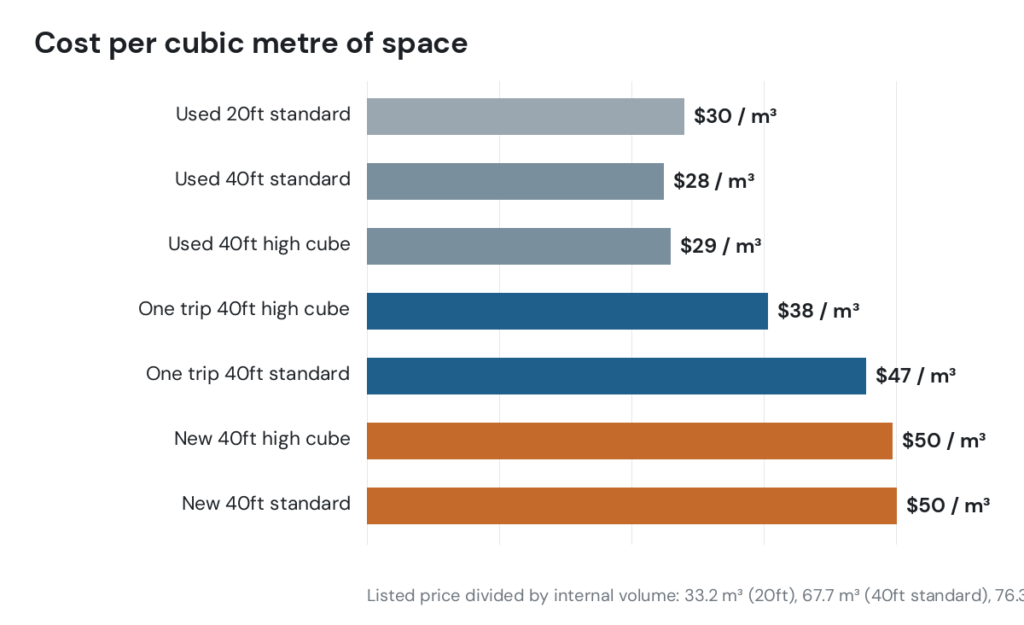
- Most space per dollar: used 40ft boxes, at about $28 to $29 per cubic metre.
- Delivery: worldwide, quoted to your address.
What is a 40ft shipping container?
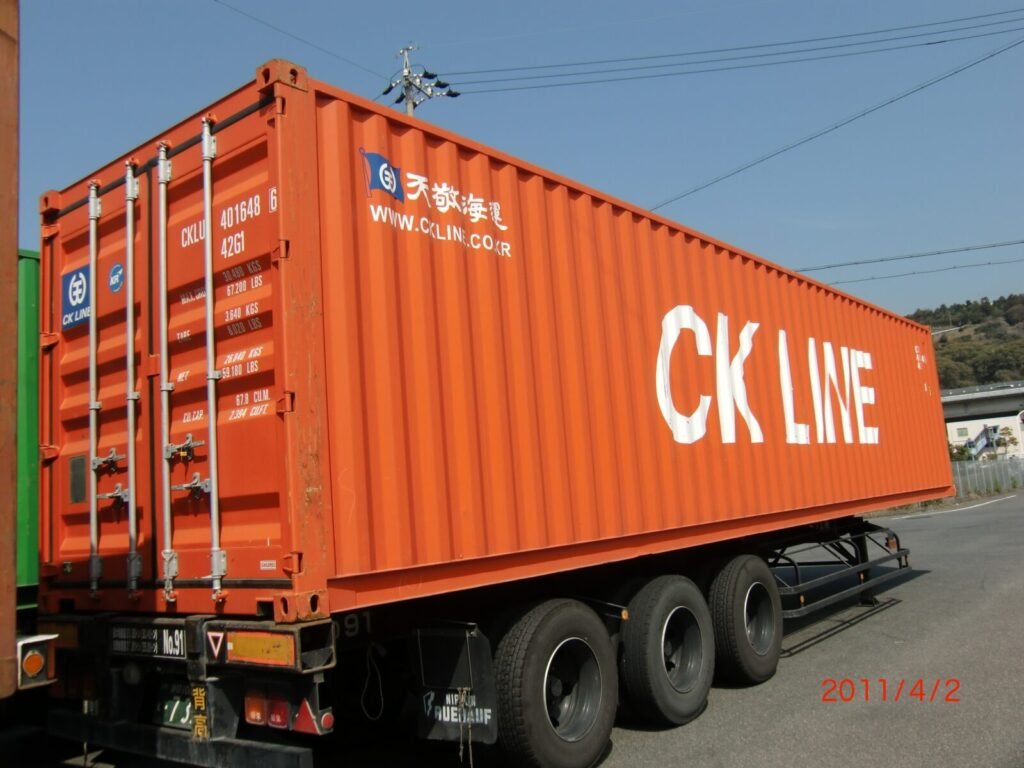
It is the long version of the standard steel cargo box you see on ships, trains and trucks. The outside dimensions are fixed by ISO 668, the international standard for freight container sizes and ratings, which is why a 40ft shipping container from any factory fits the same trailers, cranes and twist locks anywhere in the world.
The build is simple. Corrugated Corten steel walls and roof, a steel frame with a corner casting at each corner, a marine plywood floor on steel cross members, and a pair of cargo doors at one end with four locking bars. The corrugation is what lets a container carry heavy stacking loads while staying fairly light. Units built for sea service carry a safety plate under the International Convention for Safe Containers (CSC), which records the maximum gross weight and stacking rating.
Standard or high cube?
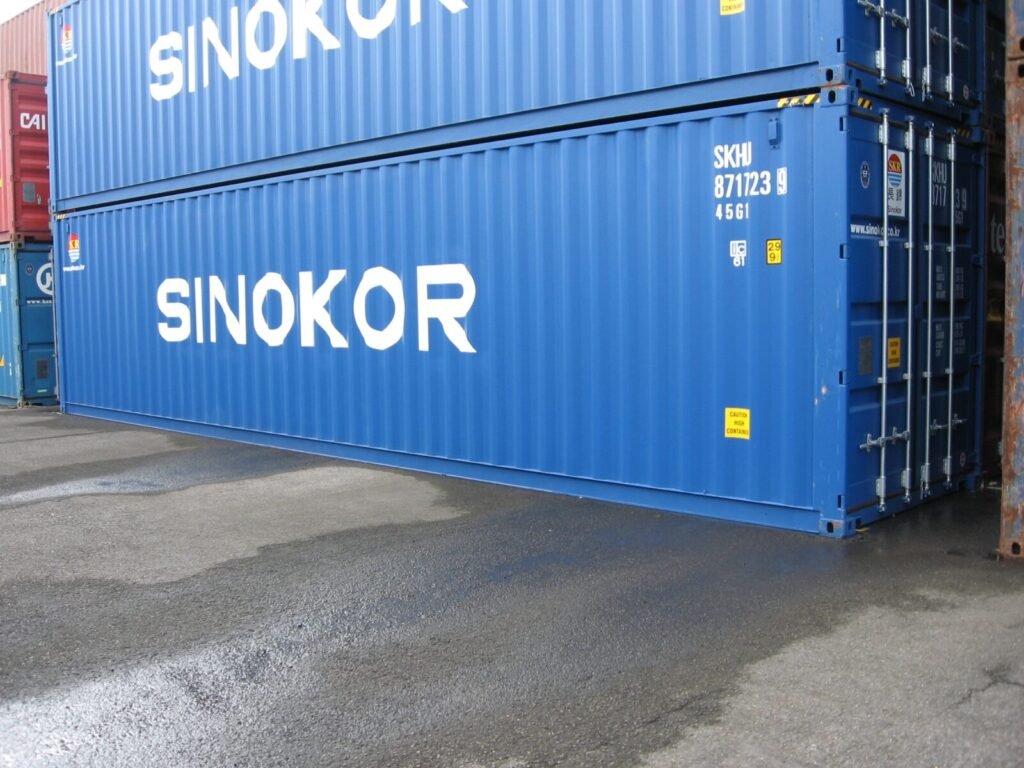
There are two heights. The standard forty is 8 ft 6 in (2.59 m) tall on the outside. The high cube is 9 ft 6 in (2.90 m). That extra foot outside gives you about 30 cm more headroom inside, which matters for tall racking, machinery, stacked pallets and anything you want to stand up in. In shipping paperwork you will see the standard written as 40′ GP or 40DV, and the high cube as 40′ HC or 40HQ. The ISO type codes are 42G1 for the standard and 45G1 for the high cube.
Why 40ft rather than 20ft?
A forty gives you a bit more than double the volume of a 20ft for a lot less than double the money, and you only prepare one base and book one delivery. Our 20ft vs 40ft shipping container guide goes through the trade-off in detail. The short version: if your site has room for 12 m of box plus the truck to get in, the 40ft shipping container is almost always better value.
40ft shipping container dimensions and specifications
These are the figures from our listings. The standard forty matches the published numbers from major carriers, for example the Hapag-Lloyd 40ft standard container specification. Exact weights vary by factory, so we confirm the plate data of your unit on the quote.
| Specification | 40ft standard (40′ GP) | 40ft high cube (40′ HC) |
|---|---|---|
| External size | 12.19 x 2.44 x 2.59 m (40 x 8 x 8 ft 6 in) | 12.19 x 2.44 x 2.90 m (40 x 8 x 9 ft 6 in) |
| Internal length | approx. 12.03 m | approx. 12.03 m |
| Internal width | approx. 2.35 m | approx. 2.35 m |
| Internal height | approx. 2.39 m | approx. 2.70 m |
| Door opening | approx. 2.34 m wide x 2.29 m high | approx. 2.34 m wide x 2.58 m high |
| Floor area | approx. 28.3 m² | approx. 28.3 m² |
| Cubic capacity | approx. 67.7 m³ (2,390 cu ft) | approx. 76.3 m³ (2,694 cu ft) |
| Tare weight | approx. 3,700 to 4,000 kg | approx. 3,900 to 4,100 kg |
| Max gross weight | 30,480 or 32,500 kg depending on build | 30,480 or 32,500 kg depending on build |
| Payload | approx. 26,700 to 28,750 kg | approx. 26,600 to 28,600 kg |
| Floor | marine plywood on steel cross members | marine plywood on steel cross members |
A few things in that table are worth slowing down on.
Floor space is the same. A high cube is taller, not longer or wider. If you are storing things that sit on the floor and do not stack, like vehicles or furniture, a standard 40ft shipping container gives you the same footprint for less.
Payload is rarely the limit. Most people fill a forty with space long before they reach 26 tonnes. The weight rating matters more if you are shipping dense goods like steel, stone or tiles, and then a 20ft is often the better box anyway.
The door is smaller than the inside. The opening is about 2.34 m wide. Anything you load has to clear that. The high cube door is taller, about 2.58 m, which helps with tall machines.
How many pallets fit?
On the floor, a 40ft shipping container takes about 20 to 21 standard pallets (1.2 x 1.0 m) or about 23 to 24 euro pallets (1.2 x 0.8 m), depending on how you turn them. Stack them two high in a high cube and you can roughly double that for light goods. Those are working figures, not promises, because pallet overhang and loading method change the count.
40ft shipping containers we sell right now
Prices are in US dollars before freight and delivery, and they move with stock. The product page always shows the live price. Every unit is wind and watertight with lockable doors.
Used 40ft shipping container: $1,900
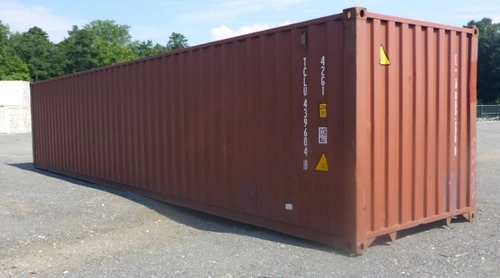
The used 40ft shipping container is the box most people buy for storage. It has worked in shipping for years, so it will have dents, faded paint, old logos and some surface rust. What it does have is a sound floor, a straight frame, doors that lock and seal, and no holes. For yards, farms and building sites that is all that matters.
Short spec: 40 x 8 x 8 ft 6 in (12.19 x 2.44 x 2.59 m); 40′ GP standard dry; approx. 67.7 m³; tare approx. 3,700 to 4,000 kg; used, wind and watertight; cargo worthy units available.
Used 40ft high cube container: $2,200
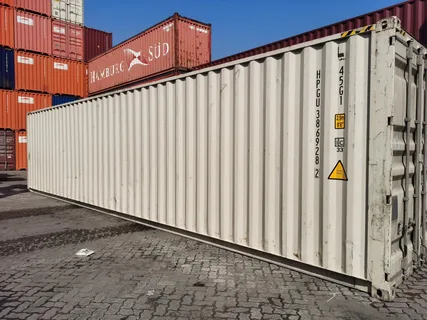
For $300 more than the used standard, the used 40ft high cube container gives you an extra 8.6 m³ and room to stand up straight inside. If you plan to rack the walls or stack pallets, this is the used forty to buy.
Short spec: 40 x 8 x 9 ft 6 in (12.19 x 2.44 x 2.90 m); 40′ HC; internal height approx. 2.70 m; approx. 76 m³; tare approx. 3,900 to 4,100 kg; used, wind and watertight; cargo worthy units on request.
One trip 40ft high cube container: $2,900
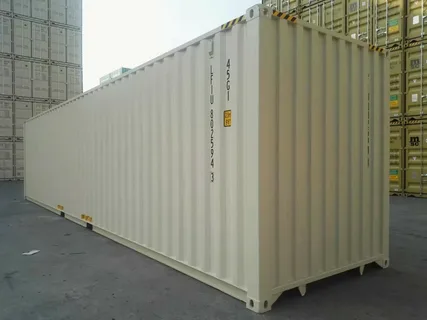
A one trip box has carried one load from the factory and then been sold. You get straight panels, factory paint, fresh door seals and a clean floor, at well under the price of new. The one trip 40ft high cube is currently priced lower than our one trip standard, which makes it the stand-out deal in the range while that lasts.
Short spec: 40 x 8 x 9 ft 6 in; 40′ HC; internal height approx. 2.70 m; approx. 76.3 m³; tare approx. 3,900 kg; max gross 30,480 to 32,500 kg; Corten steel; marine plywood floor; CSC plated.
One trip 40ft standard shipping container: $3,200
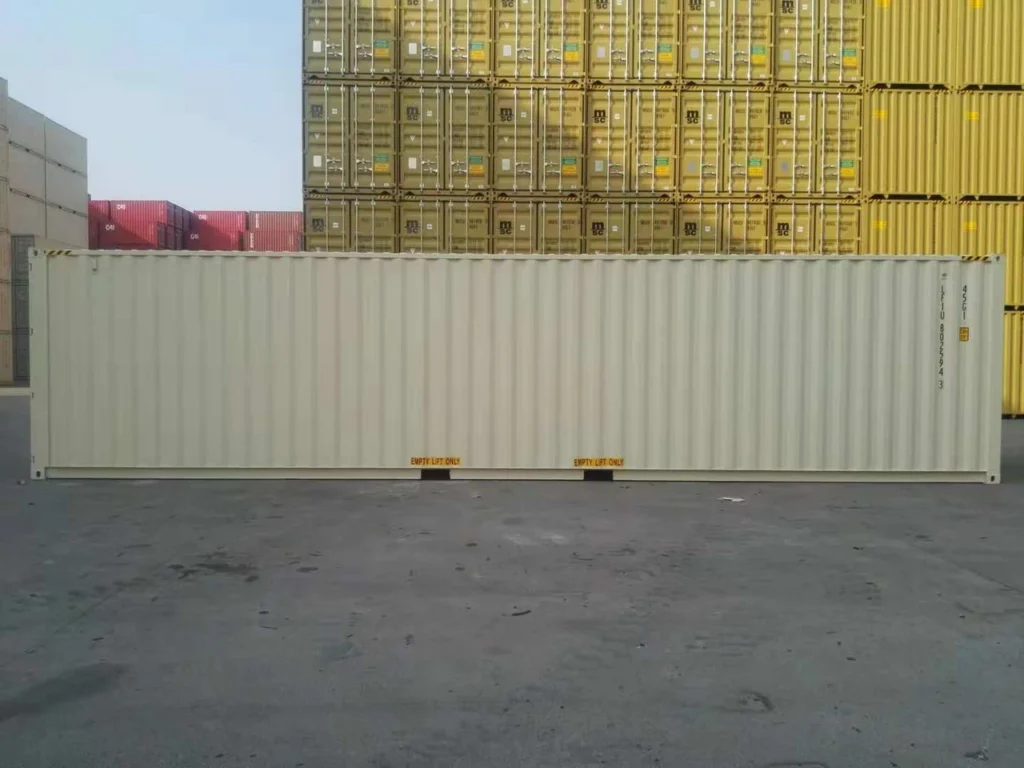
The 40ft one trip shipping container is the standard-height version in near-new condition. Pick it over the high cube if you need the lower overall height, for example under a carport roof, a low bridge on the delivery route, or to match other standard boxes on your site.
Short spec: 40 x 8 x 8 ft 6 in; 40′ GP; approx. 67.7 m³; tare approx. 3,750 kg; max gross 30,480 to 32,500 kg; Corten steel; CSC plated; one loaded voyage only.
New 40ft shipping container: $3,400
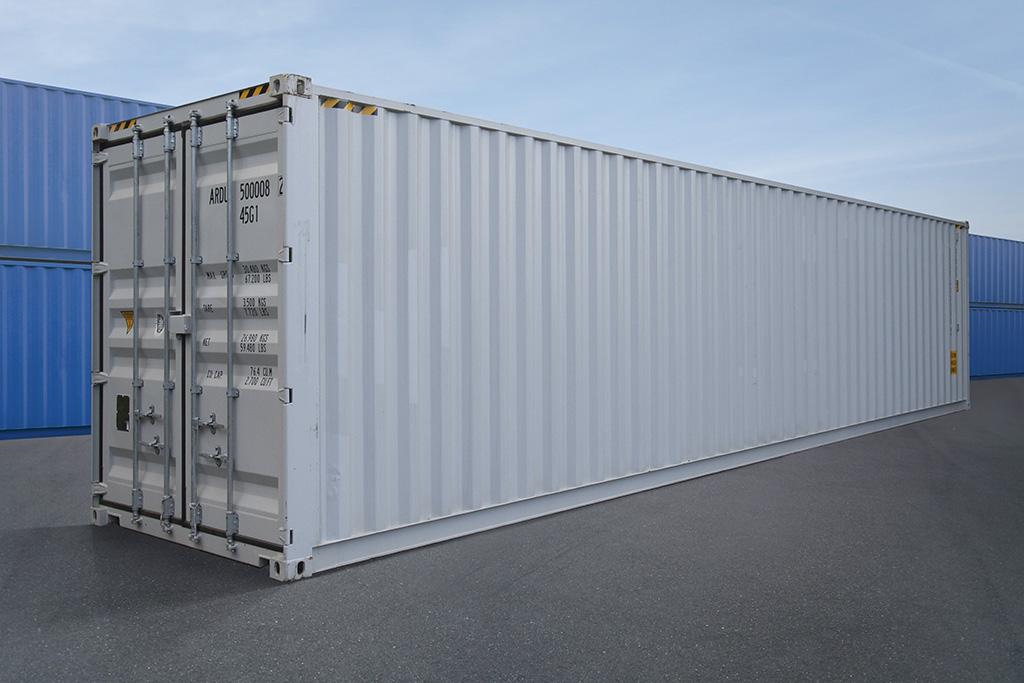
The new 40ft shipping container has never carried cargo. No handling marks, no old owner codes, door gaskets that have never been squashed for a decade. Buy new when the container is going to be seen every day, or when you want it to last as long as possible outside.
Short spec: 40 x 8 x 8 ft 6 in; internal approx. 12.03 x 2.35 x 2.39 m; door opening approx. 2.34 x 2.29 m; 67.7 m³; tare approx. 3,750 kg; max gross 30,480 or 32,500 kg; CSC plated.
New 40ft high cube container: $3,800
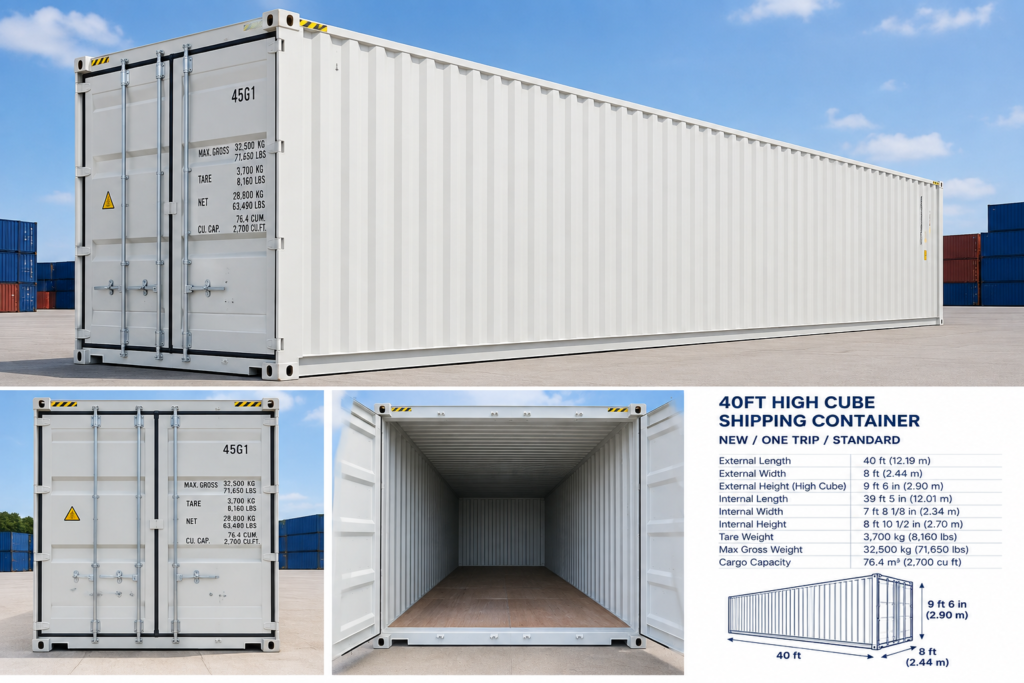
The new 40ft high cube container is the top of the range: brand new, full height, 76.3 m³. It is the usual choice for container offices, workshops and conversions, because the extra height leaves room for insulation and lining without the ceiling feeling low.
Short spec: 40 x 8 x 9 ft 6 in; internal height approx. 2.70 m; approx. 76.3 m³; tare approx. 3,900 kg; max gross 30,480 to 32,500 kg; Corten steel; CSC plated.
You can browse every unit in our 40ft shipping containers, 40ft high cube containers and 40ft standard containers categories.
How much does a 40ft shipping container cost?
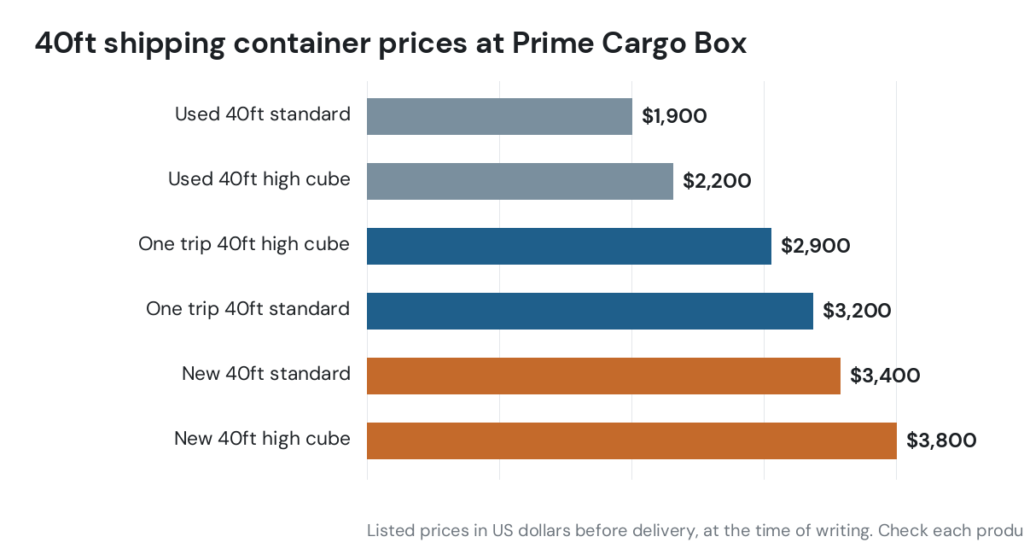
On our current listings, a standard or high cube 40ft shipping container costs $1,900 to $3,800 before delivery. That spread is almost entirely down to condition and height. Size is fixed, and the steel is the same in all of them.
Cost per cubic metre
Price on its own hides what you are buying, which is space. Divide the price by the inside volume and the picture is clearer.
| Container | Price | Volume | Cost per m³ |
|---|---|---|---|
| Used 20ft standard | $1,000 | 33.2 m³ | about $30 |
| Used 40ft standard | $1,900 | 67.7 m³ | about $28 |
| Used 40ft high cube | $2,200 | 76.3 m³ | about $29 |
| One trip 40ft high cube | $2,900 | 76.3 m³ | about $38 |
| One trip 40ft standard | $3,200 | 67.7 m³ | about $47 |
| New 40ft high cube | $3,800 | 76.3 m³ | about $50 |
| New 40ft standard | $3,400 | 67.7 m³ | about $50 |
Three things jump out. Used forties are the cheapest space you can buy in a container, cheaper per cubic metre than a used 20ft. The one trip high cube is far better value right now than the one trip standard. And once you are buying new, the high cube costs about the same per cubic metre as the standard, so the extra height is close to free.
What else adds to the cost
- Delivery. Distance, the truck your site needs, and for export, freight and import charges. Our shipping container prices guide explains how it adds up.
- Base. Blocks, sleepers, gravel or a concrete pad. Often a few hundred dollars, sometimes nothing if your ground is already firm and level.
- Locks. A lock box and a good padlock. Small cost, big difference.
- Modifications. Extra doors, windows, vents, power, shelving. See our custom container modifications page.
If price is the main thing, our cheap shipping containers guide covers where the real savings are.
New, one trip or used 40ft shipping container?
| Grade | What you get | Our price range (40ft) | Best for |
|---|---|---|---|
| New | Never used, no marks, full paint | $3,400 to $3,800 | Offices, shops, conversions, longest outdoor life |
| One trip | One voyage, near new, factory paint | $2,900 to $3,200 | Most buyers, tidy and long lasting |
| Used | Years in service, dents and faded paint, sound and sealed | $1,900 to $2,200 | Storage on yards, farms and building sites |
The gap between one trip and new is small. You are paying a few hundred dollars for no handling marks. The gap between used and one trip is bigger, about $1,000. What that money buys is mostly looks and a longer life outside: a one trip box has a full paint system and fresh door gaskets, while a used one has been loaded and unloaded hundreds of times.
For straight storage where nobody cares how it looks, buy used. If the box will sit in front of customers, or you want 15 or more years out of it, buy one trip or new. Our one trip vs used shipping container guide goes into the grades in more detail.
What “cargo worthy” means
A used box sold as cargo worthy is fit to carry goods by sea, which means its structure meets the standards for loading on a ship. Wind and watertight means it keeps the weather out, which is what you need for storage. Cargo worthy is a higher grade. If you only want storage, you do not need to pay for it. If you plan to ship goods in the box, ask for a cargo worthy unit.
Standard or high cube: which 40ft shipping container should you buy?
Buy the high cube if
- You will rack the walls or stack pallets two high.
- You want to stand up inside comfortably, or will add insulation and a lined ceiling.
- You are turning it into an office, workshop or living space.
- You store tall machinery, plant or vehicles that are close to 2.3 m high.
Buy the standard if
- Your delivery route or site has a height limit. The high cube is 31 cm taller on the truck.
- You want to stack it with other standard boxes or match an existing row.
- You only store things on the floor and will never use the top 30 cm.
Our high cube vs standard container guide has more on the height question. In practice, with the current one trip and used prices so close, most buyers end up with the high cube.
Specialist 40ft containers
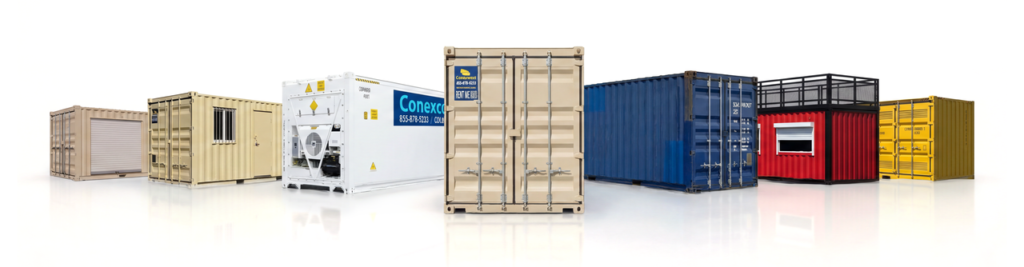
A plain 40ft shipping container suits most jobs. Some jobs need a different door layout, a removable roof or cooling. We sell all of these in 40ft.
Double door (tunnel) 40ft
Doors at both ends, so nothing is ever more than 6 m from a door. Good for pass-through loading and stores you open every day. Our one trip 40ft double door container is $3,500, and our used 40ft double door container is currently listed at $1,150. Read more in our double door container guide.
Open side 40ft
Bi-fold doors along almost the whole long side, about 11.5 m of access. Built for daily forklift picking and shop fronts. The one trip 40ft open side container is $6,200 and the used 40ft open side is $5,500. See our open side container guide.
Open top 40ft
A removable tarpaulin roof for loading long or heavy cargo by crane. The new 40ft open top shipping container is $4,300. Our open top container guide explains how the roof works.
Refrigerated 40ft
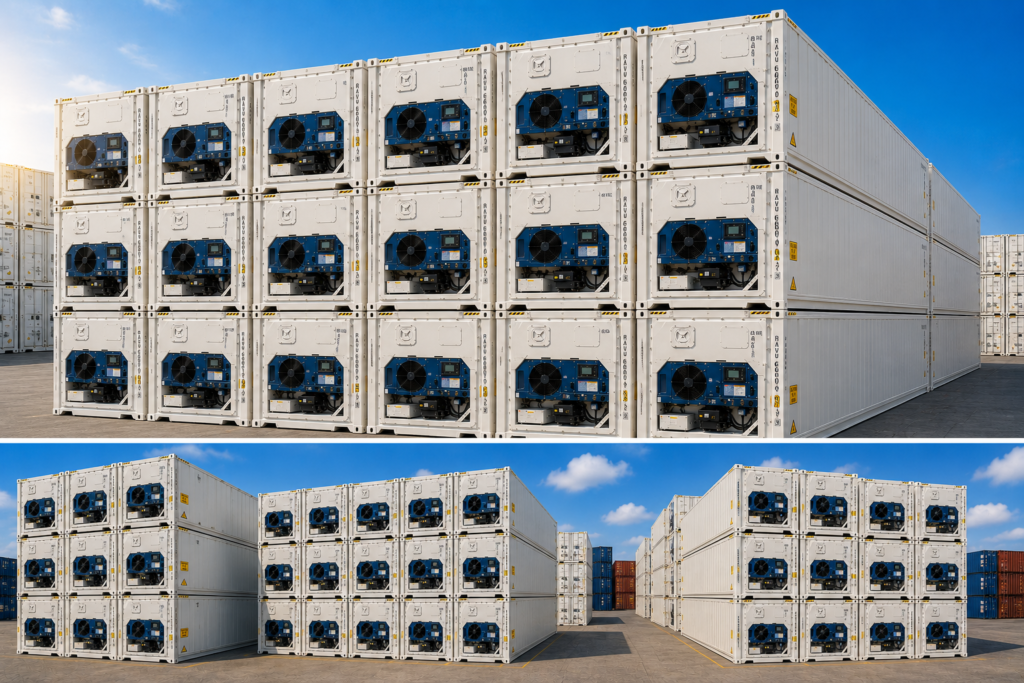
A high cube with an insulated body and a built-in refrigeration unit for chilled or frozen goods. The used 40ft reefer container is $7,800 and the one trip 40ft reefer is $8,500. Before you buy, read our guide to buying a reefer container.
What people use a 40ft shipping container for
Business storage and overflow stock
Retailers, importers and wholesalers use a forty as a cheap, lockable extension of the warehouse. At about 28 m² of floor and 67 to 76 m³ of space, one box holds a lot of stock, and it costs nothing in monthly rent once it is paid for.
Building sites
A forty holds the tools, materials and plant for a whole project. Many contractors run one 40ft shipping container as a store and a second as a site office. Our construction storage container guide covers site use in more detail.
Farms
Feed, seed, fertiliser, fencing, tools and small machinery. A container keeps them dry and away from rodents, and it can be moved if the farm layout changes. See our farm storage containers guide.
Household and moving
A forty holds the contents of a large family home. People use them during renovations, between houses, or as permanent storage for things that do not fit in the garage.
Vehicle and equipment storage
A standard car is roughly 4.5 to 5 m long and under 1.9 m wide, so a 40ft shipping container takes two cars nose to tail, with room for tools at the end. Check your vehicle’s width against the 2.34 m door opening before you plan around it.
Shipping goods abroad
If you are exporting, a container you own can go with the cargo and stay at the other end as storage. This is often called a shipper-owned container (SOC). Every packed container must have its verified gross mass declared before it is loaded on a ship, under the IMO rules on verifying the gross mass of a packed container. Your forwarder will handle the paperwork, but you need the tare weight from the CSC plate.
Offices, workshops and conversions
The high cube is the usual base for conversions, because 2.70 m of internal height leaves room for insulation and a ceiling. Common projects are site offices, workshops, studios and pop-up shops. Our modifications team can cut doors and windows and fit power and lining before delivery.
Preparing your site for a 40ft shipping container
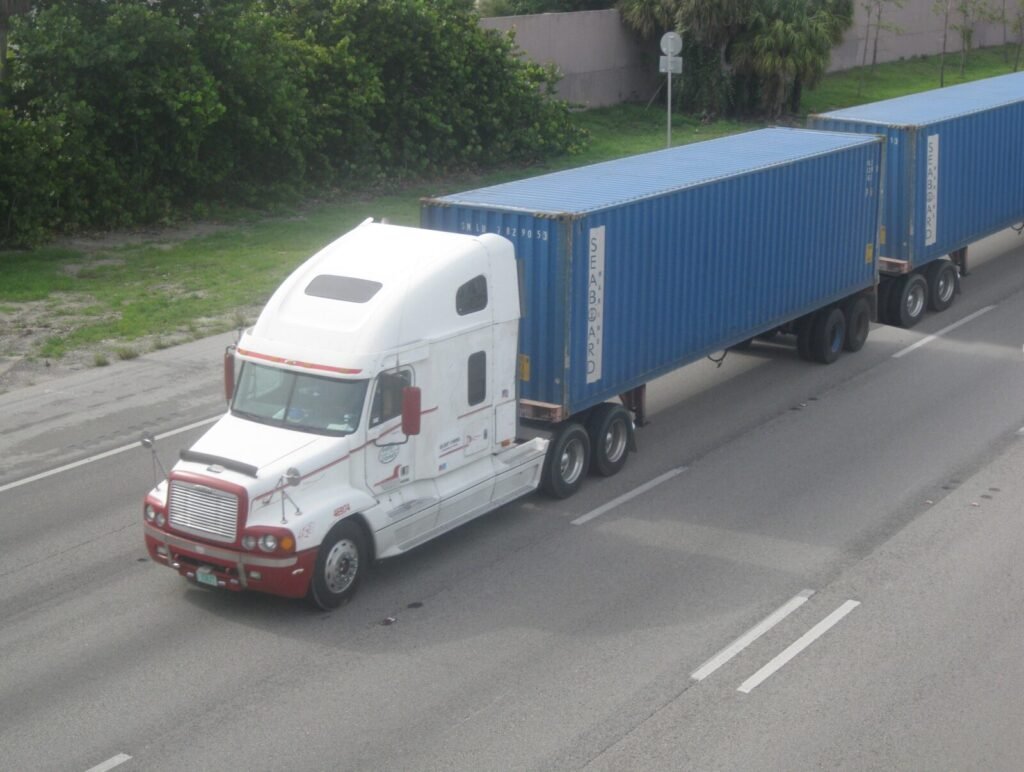
A forty is a big thing to deliver, so most of the planning is about access.
Space for the box
The container needs a level area of about 12.5 x 2.6 m. Add about 2.5 m clear in front of the doors so they can swing fully open and you can get in with a trolley or pallet truck.
Space for the truck
A 40ft shipping container usually arrives on a tilt-bed truck or a side-lifter. A tilt-bed needs a long straight run, often 30 m or more including the truck, plus room to pull forward as the box slides off. A side-lifter needs less length but more width beside the box. Both need firm ground, no soft grass after rain, and clear overhead space with no power lines or branches. Our shipping container delivery guide lists the clearances and has a checklist.
The base
Containers sit on their four corner castings. Put a solid block, sleeper or pad under each corner, and on a forty it is worth adding supports at the middle of each side too. Check it with a level. A slight fall of a few centimetres towards the doors helps any water run out. If the box twists on uneven ground, the doors will stop lining up, which is the most common complaint we hear after delivery.
No forklift pockets
Most 40ft containers do not have forklift pockets the way many 20ft boxes do. A forty is lifted by its corner castings with a crane, a side-lifter or a top-lift machine. Once it is down, plan to leave it where it is.
Planning permission
Some places need permission for a container that stays on a site, especially in residential areas. Check with your local authority before delivery. It is a short phone call and it saves a lot of trouble.
Our shipping and delivery policy explains how we arrange delivery around the world.
Checking your 40ft shipping container on delivery
Spend fifteen minutes on this before the driver leaves.
- Open and close both doors fully. They should swing without forcing and all four locking bars should engage.
- Close yourself inside on a bright day and look for daylight through the roof, walls or door seals.
- Walk the whole floor. It should feel solid with no soft spots, especially near the doors.
- Look at the corner castings and bottom rails for fresh damage from lifting.
- Find the CSC plate on the door and note the tare and max gross weight.
- Check the owner code and number on the door match your paperwork. Codes are registered with the Bureau International des Containers (BIC).
If anything is wrong, take photos and send them to us. Our refund and returns policy explains how we handle it.
Making a 40ft shipping container last
Containers are made of weathering steel (Corten), which forms a tight rust layer that slows further corrosion. Looked after, a box can last decades on land.
- Keep the roof clear of standing water and leaves. Water pooling on the roof is the main cause of rust holes.
- Grease the door hinges and locking bar cams a couple of times a year.
- Touch up scratches with zinc primer and paint before they spread.
- Keep the base level and the ground around it drained.
- Fit vents or leave a gap between goods and walls to reduce condensation. Steel walls sweat when the temperature drops at night.
- Do not let soil or gravel pile against the bottom rails.
How long does a 40ft shipping container last?
In shipping service, a container is usually worked for something like 10 to 15 years before it is sold off. On land, where it is not being lifted, stacked and thrown about at sea, it can last a lot longer than that. A used 40ft shipping container that arrives sound and is kept on a level, drained base with the roof clear can give many more years of storage. A new or one trip box starts with a full paint system, so it has the longest life ahead of it.
What shortens the life is almost always the same list: water sitting on the roof, the bottom rails buried in soil, a twisted base, and scratches left to rust. Deal with those and the steel will outlast most of the things you put in it. These are typical figures, not a guarantee, because climate makes a big difference. A box near the sea or in a very wet place needs more care than one in a dry inland yard.
Security for a 40ft shipping container
A container is already a strong steel box, but the doors are where people try to get in. A few simple things make it a hard target.
- Lock box. A steel shroud welded over the padlock point so bolt croppers cannot reach the shackle. Most of our boxes can take one.
- Closed shackle padlock. A padlock with very little exposed shackle, used inside the lock box.
- Placement. Put the doors where they can be seen from a building or a road, and fit a light if the site is dark at night.
- Bar lock. A steel bar across both doors adds a second lock that is slow to defeat.
- Keep it level. A twisted box has gaps at the door seals. A level one closes tight.
If the box holds valuable stock or tools, tell your insurer it is a steel container with a lock box. Many insurers treat a properly locked container more favourably than a timber shed or an open yard.
How to judge a used 40ft shipping container
Used boxes vary, and it helps to know what is cosmetic and what is not. If you are buying a used 40ft shipping container from us or anyone else, this is what to look at.
Things that do not matter much
- Faded or patchy paint.
- Old shipping line logos and numbers.
- Small dents in the walls. The corrugated panels are built to flex a little.
- Light surface rust on the walls.
Things that do matter
- Holes or rust through the steel, especially on the roof and along the bottom rails.
- Soft spots in the floor. Damaged plywood can be replaced, but it costs money.
- Doors that will not close or lock without a fight, which usually means a bent frame.
- Torn or missing door gaskets. Replaceable, but a sign of hard use.
- Damage to the corner castings, which are what the box is lifted by.
We check every used box we sell for the second list. If you buy elsewhere from photos only, ask for pictures of the roof, the floor, the door seals and all four corners, plus the CSC plate.
Storage vs export: what to ask for
The same 40ft shipping container can be bought for two very different jobs, and the grade you need depends on which one it is.
For storage, ask for wind and watertight. That means no holes, a sound floor and doors that seal. Any of our used, one trip or new boxes meet this.
For export, ask for cargo worthy, and check that the CSC plate is valid. Shipping lines and ports will not accept a box that is not fit for sea service. One trip and new boxes are the easy choice here, because their plates are recent. For used units, we can supply cargo worthy boxes on request.
If you are not sure which you need, tell us what you plan to do with the box and where it is going, and we will quote the right grade.
Mistakes to avoid when buying a 40ft shipping container
- Not checking delivery access first. A forty needs a lot of room. Measure before you order.
- Buying standard height to save money. At current prices, the high cube costs little or nothing extra.
- Paying for cargo worthy when you only need storage. Wind and watertight is enough for storage.
- Putting it on soft ground. The box sinks at one corner, the frame twists and the doors jam.
- Forgetting the door space. Leave room in front of the doors, or you will be climbing in sideways.
- Buying from photos without a plate check. Ask for the CSC plate data and the container number. We provide both on the quote.
How to buy a 40ft shipping container from Prime Cargo Box
Pick the size, height and grade from the product pages above. Add it to your cart or ask for a quote, and give us your delivery address. We confirm the unit, its plate data and the delivered price. For orders going abroad we arrange export paperwork and show local duties separately.
If this is your first container, our step-by-step guide on how to buy a shipping container walks through payment, inspection and delivery. You can also read our conex box for sale guide, compare all types of shipping containers, check every size on our shipping container dimensions page, or browse our used shipping containers and new shipping containers.
40ft shipping container FAQ
How big is a 40ft shipping container?
Outside, 12.19 m long, 2.44 m wide and 2.59 m tall for a standard or 2.90 m for a high cube. Inside, about 12.03 x 2.35 m, with 2.39 m or 2.70 m of height.
How much does a 40ft shipping container cost?
On our current listings, $1,900 used to $3,800 new for standard and high cube boxes, before delivery. Specialist forties with extra doors or cooling cost more.
How much does a 40ft shipping container weigh?
About 3,700 to 4,100 kg empty. The exact tare is printed on the CSC plate on the door.
How much can a 40ft shipping container hold?
About 67.7 m³ in a standard and 76.3 m³ in a high cube, with a payload of roughly 26 to 28 tonnes depending on the gross rating.
Is a used 40ft shipping container good enough for storage?
Yes, as long as it is wind and watertight with a sound floor and working doors. Every used box we sell meets that standard.
What is the difference between one trip and new?
A new box has never carried cargo. A one trip box has made one loaded voyage from the factory. Both are near new, but one trip is cheaper.
Can a 40ft shipping container be delivered to my site?
Usually, if there is a straight, firm approach and enough room for the truck. Tell us about your site and we will confirm the right vehicle.
Can you stack 40ft shipping containers?
Yes. Containers are designed to stack by their corner castings, and the stacking rating is on the CSC plate. On land, two high is common for storage. Use twist locks or bridge clamps to tie them together, and never stack on a soft or uneven base.
Will two cars fit in a 40ft shipping container?
Most of the time, yes. The inside is about 12 m long, so two average cars fit nose to tail. Check each car is narrower than the 2.34 m door opening with its mirrors folded.
Should I buy a 40ft high cube or standard?
For most buyers the high cube. At our current prices it costs little or nothing more, and you get about 30 cm more height. Pick the standard only if height on the route or site is limited.
Do you sell 40ft shipping containers worldwide?
Yes. We quote freight, export documents and local delivery for your address. Use our contact page and tell us where it is going.
Ready to order your 40ft shipping container?
For most buyers the choice comes down to two boxes. If you want near-new condition and the most space for the money, the one trip 40ft high cube at $2,900 is the best deal in our range right now. If you only need dry, secure storage at the lowest price, the used 40ft shipping container at $1,900 does the job. For something unmarked, the new 40ft at $3,400 or new 40ft high cube at $3,800 are ready to order.
Browse the full 40ft shipping containers range, see everything on our products page, or contact our team with your size, site and destination and we will send a delivered price.
Photos: Gazouya-japan (CC BY-SA 4.0) and Wikideas1 and Joseph Madden (CC BY 3.0), via Wikimedia Commons.